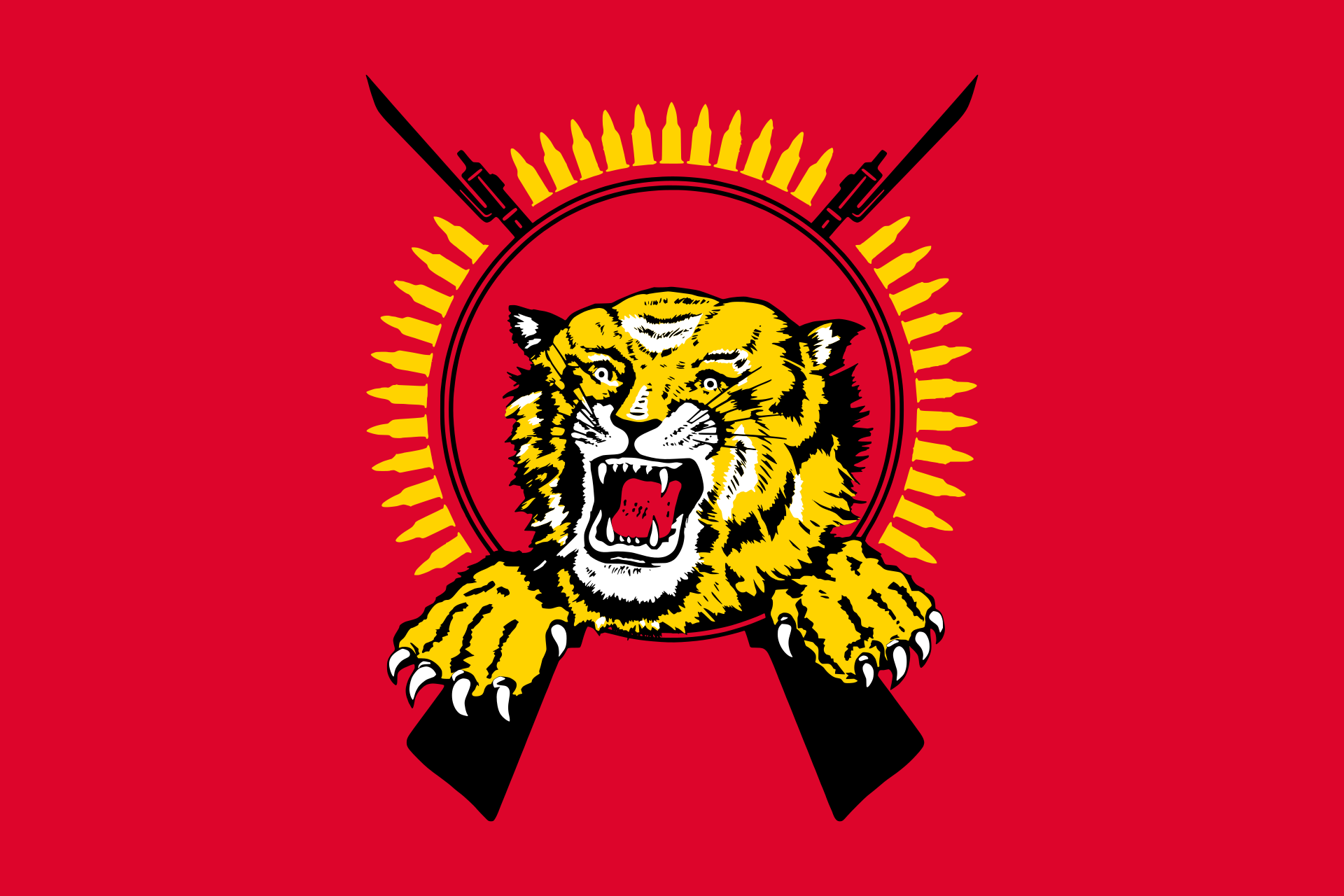
Tamil Eelam was the de facto state built by the Liberation Tigers of Tamil Eelam — the Tamil Tigers — in the Tamil-majority north and east of Sri Lanka. It grew out of decades of grievance after independence, when Sinhala-only language laws and a series of anti-Tamil pogroms, culminating in the violence of 1983, drove thousands into armed separatist groups. The LTTE outfought and eliminated its Tamil rivals, and by the late 1990s it governed a real territory from the town of Kilinochchi: it taxed, policed, ran courts and schools and hospitals, issued its own administration, and fielded a navy and later a small air force. It was never recognised by any state, and the LTTE was designated a terrorist organisation by many governments, but on the ground it functioned as a state across a quarter of the island.
It was destroyed by conquest. After a Norwegian-brokered ceasefire collapsed, the Sri Lankan military — rebuilt and re-equipped — launched a final offensive in 2006 that ground the Tiger territory down over three years. Kilinochchi fell in January 2009, and the LTTE and several hundred thousand Tamil civilians were pushed back into a shrinking strip of coast around Mullivaikal. The last months were catastrophic: the United Nations later estimated that tens of thousands of trapped civilians were killed in the final phase. The LTTE admitted defeat in May 2009, its founder Velupillai Prabhakaran was killed, and the army took the last of the territory. The de facto state was extinguished, its land folded back into Sri Lanka, and its fall remains one of the most contested endings of any modern polity.
Worth remembering
- At its height the LTTE controlled over 15,000 square kilometres — roughly a quarter of Sri Lanka — administering it from Kilinochchi with a police force, seventeen courts, tax and revenue offices, banks, and a development authority that ran health, schools, and transport.
- It built military capacities almost unheard of for a non-state group: the Sea Tigers fought as a real navy, and from 2007 the Air Tigers flew light aircraft on bombing raids — the only insurgent force in the region to operate its own air wing.
Gallery
Watch
Sources
- After retaking Kilinochchi the LTTE built a de facto state with its own police force, courts, and tax offices, running education, transport, health, banking, and revenue collection across the Vanni PBS NewsHour
- The Sri Lankan military announced on 18 May 2009 that LTTE leader Velupillai Prabhakaran had been killed, a day after the Tigers admitted defeat in the 26-year war The Christian Science Monitor
A graveyard tradition: leave a stone to show you came, and remembered.