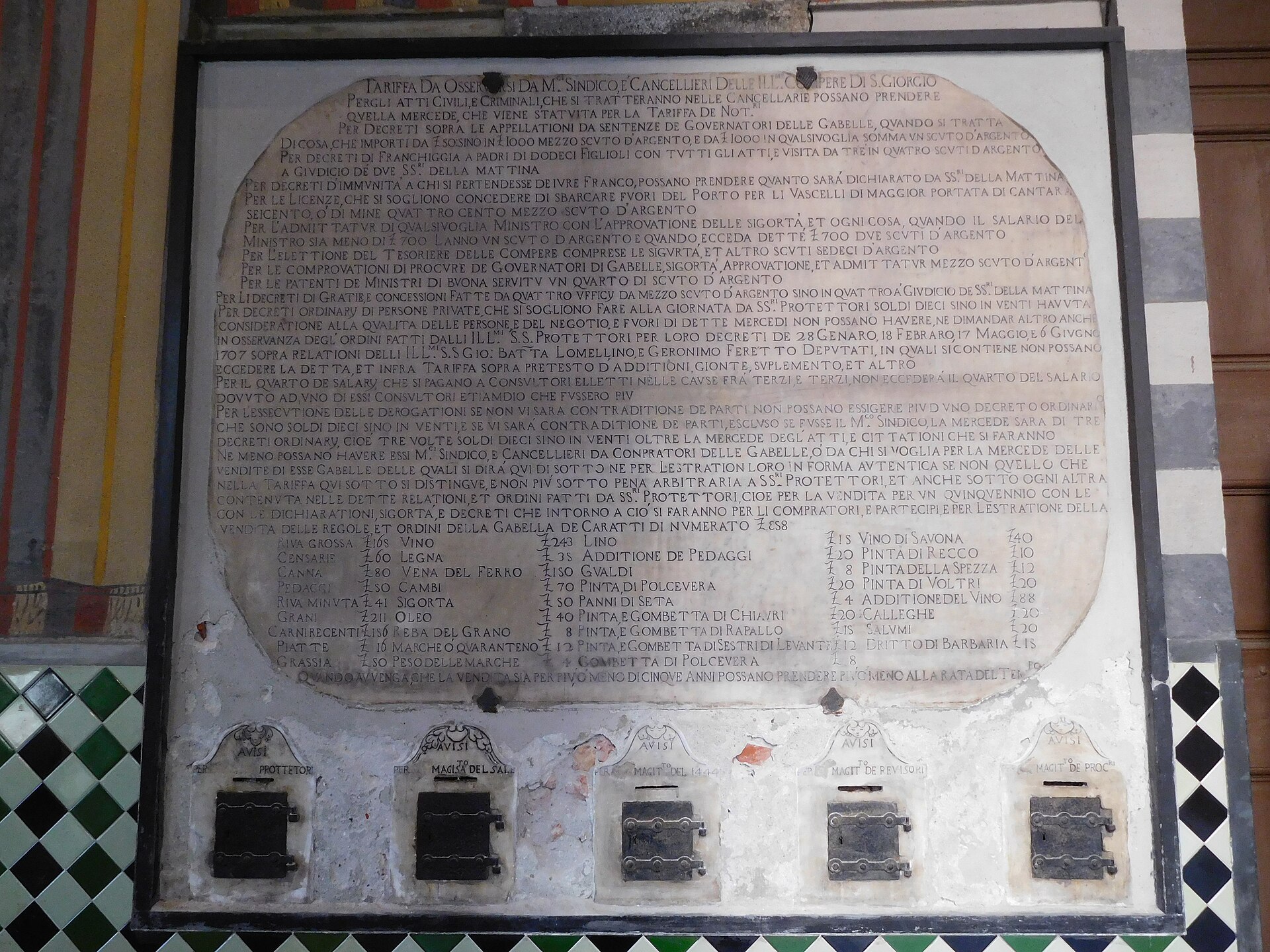
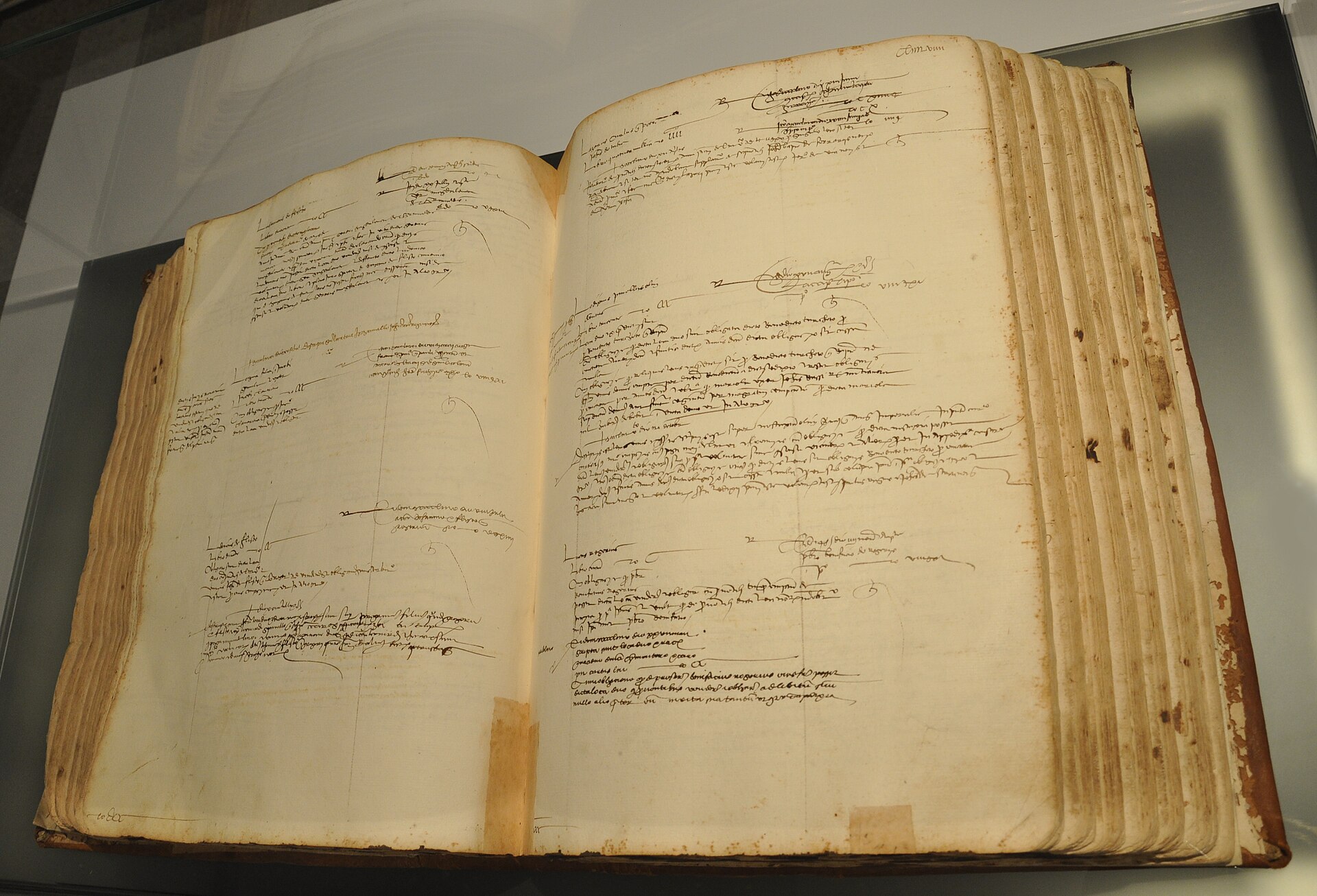
The Bank of Saint George was born from a fiscal emergency. Genoa’s war debts had been parcelled out among hundreds of creditors who held luoghi — tradeable shares in the republic’s earmarked tax revenues, among the earliest government bonds anywhere — and in 1407 these were consolidated under a single institution with its own governance and books, separate from the state. It was something genuinely new: one of the first public banks in the world, and with it one of the first markets in public debt, the shares changing hands and paying interest centuries before the word “bond” carried its modern meaning. Over the next four centuries it banked for Habsburg emperors and Genoese merchants, financed Mediterranean commerce, and governed colonies outright, from Corsica to Caffa, in its Black Sea colonies of Gazaria on the Crimean coast. Columbus kept an account there; David Hume held it up as a model of financial good government.
Its decline tracked Genoa’s own. As Spanish silver dried up and the Atlantic powers eclipsed the Italian city-states, the bank shrank from a colonial sovereign to a municipal creditor. The end was abrupt: when Napoleon’s armies annexed the Ligurian Republic in 1805, there was no longer a Genoese state for the bank to serve, and Napoleonic Europe wanted only one state bank, the Banque de France. Its assets were liquidated into French imperial finance after 398 years. The Palazzo San Giorgio, built in 1260, outlasted the institution it had housed. (A modern Genoese bank that used the name “Banco di San Giorgio” from 1987 to 2012 was a wholly separate company.)
Worth remembering
- Christopher Columbus, Ferdinand and Isabella of Spain, and Emperor Charles V all held accounts at the bank, which the Financial Times later called 'the world's first modern, public bank'.
- Genoa handed it the government of Corsica in 1453, making the bank simultaneously creditor, landlord and colonial ruler; it held the island until selling it to France in 1768 — thirty-nine years before Napoleon was born there.
Gallery
Sources
- Founded 23 April 1407, the Bank of Saint George governed Corsica and the Black Sea colonies of Gazaria, counted Columbus, Ferdinand and Isabella and Charles V among its clients, and was dissolved in 1805 under Napoleon; the modern Banco di San Giorgio (1987–2012) is a separate, unrelated entity Wikipedia
- At its peak the bank administered territories from Corsica to Crimea; David Hume praised its 'integrity and wisdom', and it was dissolved as Napoleonic Europe 'only needed one state bank, the Banque de France' The Tontine Coffee-House
A graveyard tradition: leave a stone to show you came, and remembered.