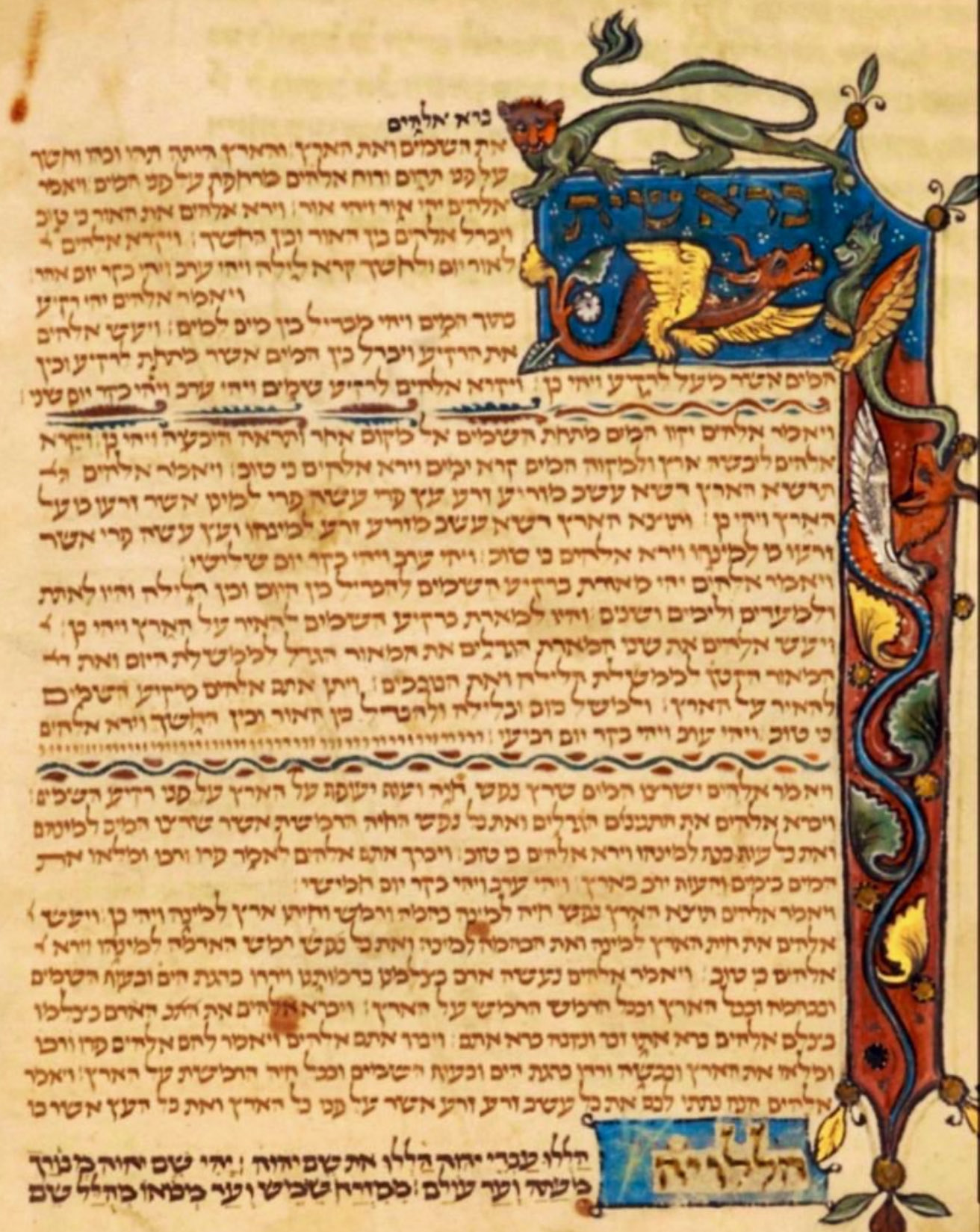
Zarphatic — Judeo-French — was the everyday language of the Jews of medieval northern France, an Old French vernacular written, like other Jewish languages of the diaspora, in the Hebrew alphabet. Its name comes from Tzarfat, the Hebrew name for France. It was the speech of the great Jewish communities of Champagne, Normandy, and the Rhineland, and of their Talmudic academies, and it survives above all in the la’azim: the hundreds of Old French glosses that the eleventh-century scholar Rashi of Troyes scattered through his commentaries to explain hard Hebrew and Aramaic words. Those glosses, preserved because Rashi’s work was copied for centuries, are now read by linguists as some of the most precisely datable evidence for early Old French.
The language died with the dispersal of the communities that spoke it. The Jews of France were expelled and recalled repeatedly across the high Middle Ages — in 1182, again in 1306, and finally, definitively, in 1394. Each expulsion shattered the communal life the language depended on, and the final one ended any organised Jewish presence in northern France. The exiles scattered: those who settled in the Rhineland shifted to Yiddish, carrying a residue of Old French words with them; those who went south or east took up other tongues. No community ever re-established Zarphatic as a living language, and within a couple of generations it was extinct, surviving only as the French hidden inside Hebrew letters in the margins of medieval books.
Worth remembering
- Its largest surviving body is the la'azim — Old French words written in Hebrew letters that Rashi of Troyes (1040–1105) used in his Talmud and Bible commentaries to explain difficult terms; those glosses are now a prized source for historians of early Old French itself.
- The Hebrew alphabet had to be stretched to carry French sounds it was never built for, with vowel-points adapted to mark distinctions like the French u that Hebrew letters could not otherwise show.
Gallery
Sources
- Production of Judeo-French (Zarphatic) texts ended in the 14th century after persecutions and repeated expulsions virtually ended the Jewish presence in France; the definitive expulsion was 1394 Jewish Languages Research Website (Hebrew Union College)
- Judeo-French was the Old French spoken and written by medieval French and Rhenish Jewry in the langue d'oïl territory, preserved mainly in the la'azim — Old French glosses — in Rashi's commentaries; text production ended in the 14th century Encyclopedia.com (Encyclopaedia Judaica)
A graveyard tradition: leave a stone to show you came, and remembered.