The first civilization on Earth — Mesopotamia's city-states of Uruk and Ur, inventors of cuneiform — absorbed so thoroughly its own language became a relic of scholars.
Born
4500 BCE
Died
1750 BCE
Lived
2,750 years
Dead for
3,776 yrs
Cause of death
Assimilation
Replaced by
Babylonia and the broader Akkadian-speaking world
The Obituary
In the marshy plains between the Tigris and Euphrates, Sumer built the first cities, the first writing (cuneiform), the first law codes, and the first epic literature, including the Epic of Gilgamesh. Its city-states such as Uruk, Ur, and Lagash competed and traded for millennia. Sumer was repeatedly conquered by Akkadian-speaking neighbors, and after the fall of the Third Dynasty of Ur, Semitic languages displaced Sumerian in daily life. By around 1750 BCE Sumerian survived only as a written and liturgical tongue, its people merged into Babylonia.
Worth remembering
Sumerians invented cuneiform, the earliest known writing system, around 3200 BCE.
Their city of Uruk may have been the largest settlement in the world, with tens of thousands of people.
Gallery
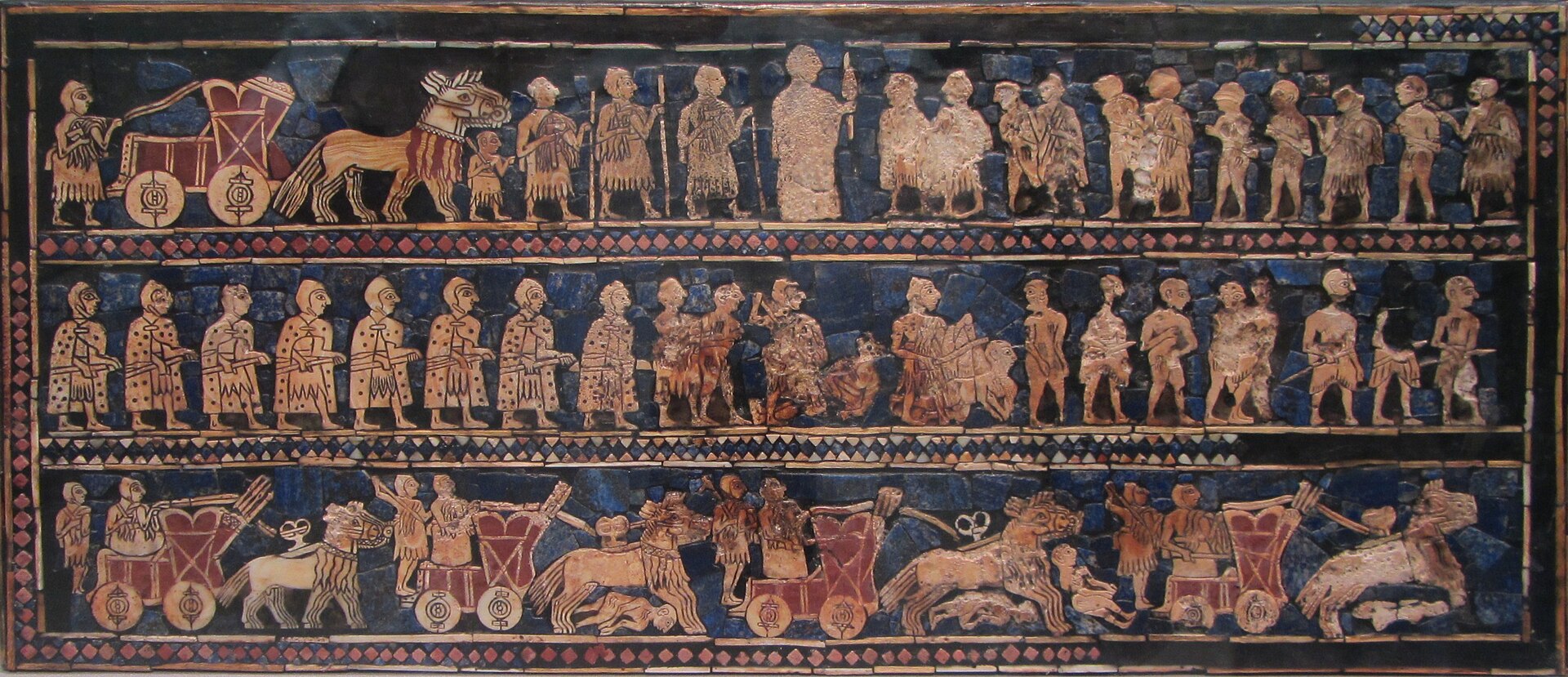
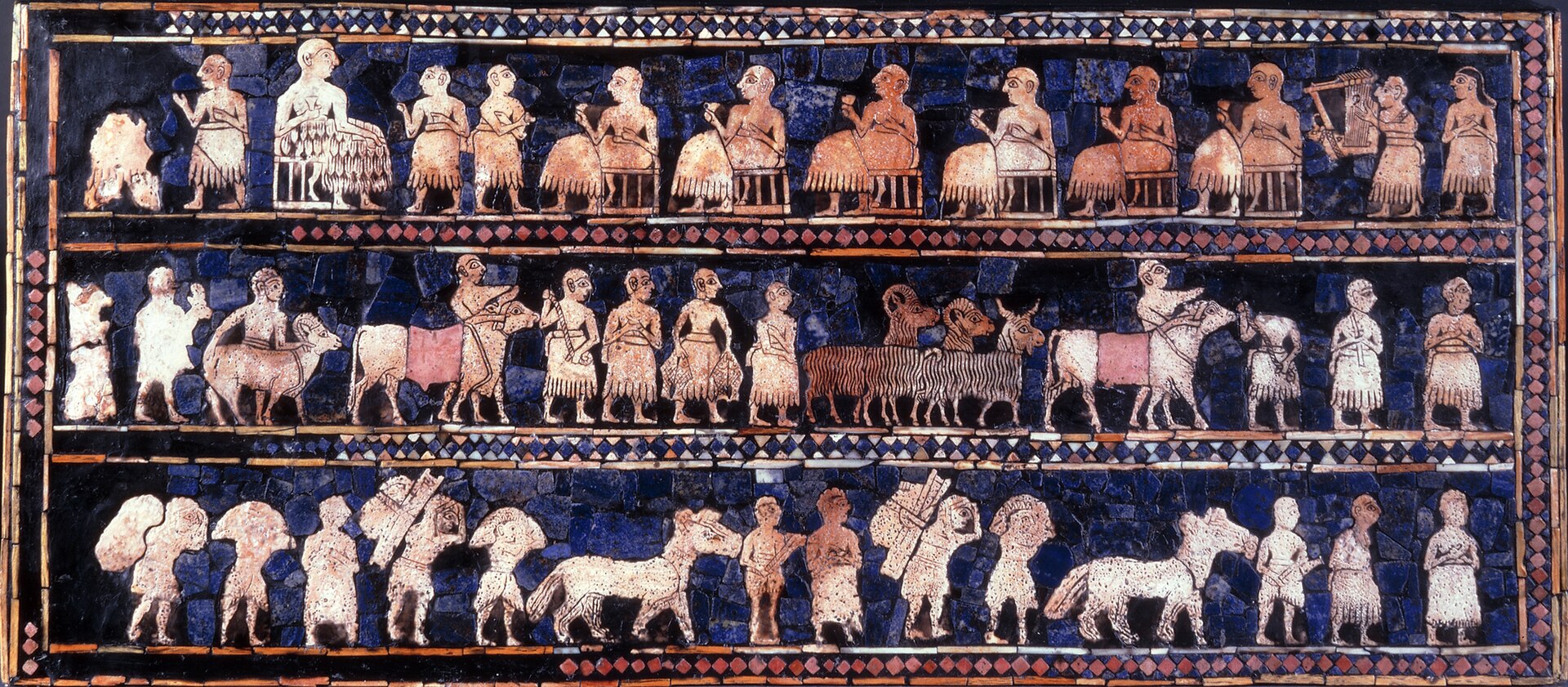
The Peace panel of the Standard of Ur (c. 2600 BCE), depicting a Sumerian banquet, from the Royal Cemetery at UrPublic domainThe restored Great Ziggurat of Ur near Nasiriyah, Iraq, a monumental Sumerian temple platformAlli Khalil · CC BY-SA 4.0
Watch
Ancient Mesopotamia 101 — National Geographic
Sources
Sumer was the earliest known civilization in southern Mesopotamia Wikipedia
Sumerian declined as a spoken language by c. 1750 BCE, surviving liturgically Encyclopaedia Britannica
Sumer produced the earliest known writing system (cuneiform, c. 3200 BCE), the first cities, and foundational legal and literary texts including the Epic of Gilgamesh World History Encyclopedia
Sumerian city-states such as Uruk, Ur, and Lagash operated independent political structures under rulers titled ensi or lugal, and the civilization remained unknown to modern scholars until mid-19th-century excavations World History Encyclopedia
A graveyard tradition: leave a stone to show you came, and remembered.
Buried nearby — by shared fate or a neighbouring lifespan.