Europe's first great civilization, of bull-leapers and the labyrinthine palace of Knossos on Crete, weakened by the eruption of Thera and absorbed by the Mycenaean Greeks who told its myths.
Born
3000 BCE
Died
1100 BCE
Lived
1,900 years
Dead for
3,126 yrs
Cause of death
Assimilation
Replaced by
Mycenaean Greece
The Obituary
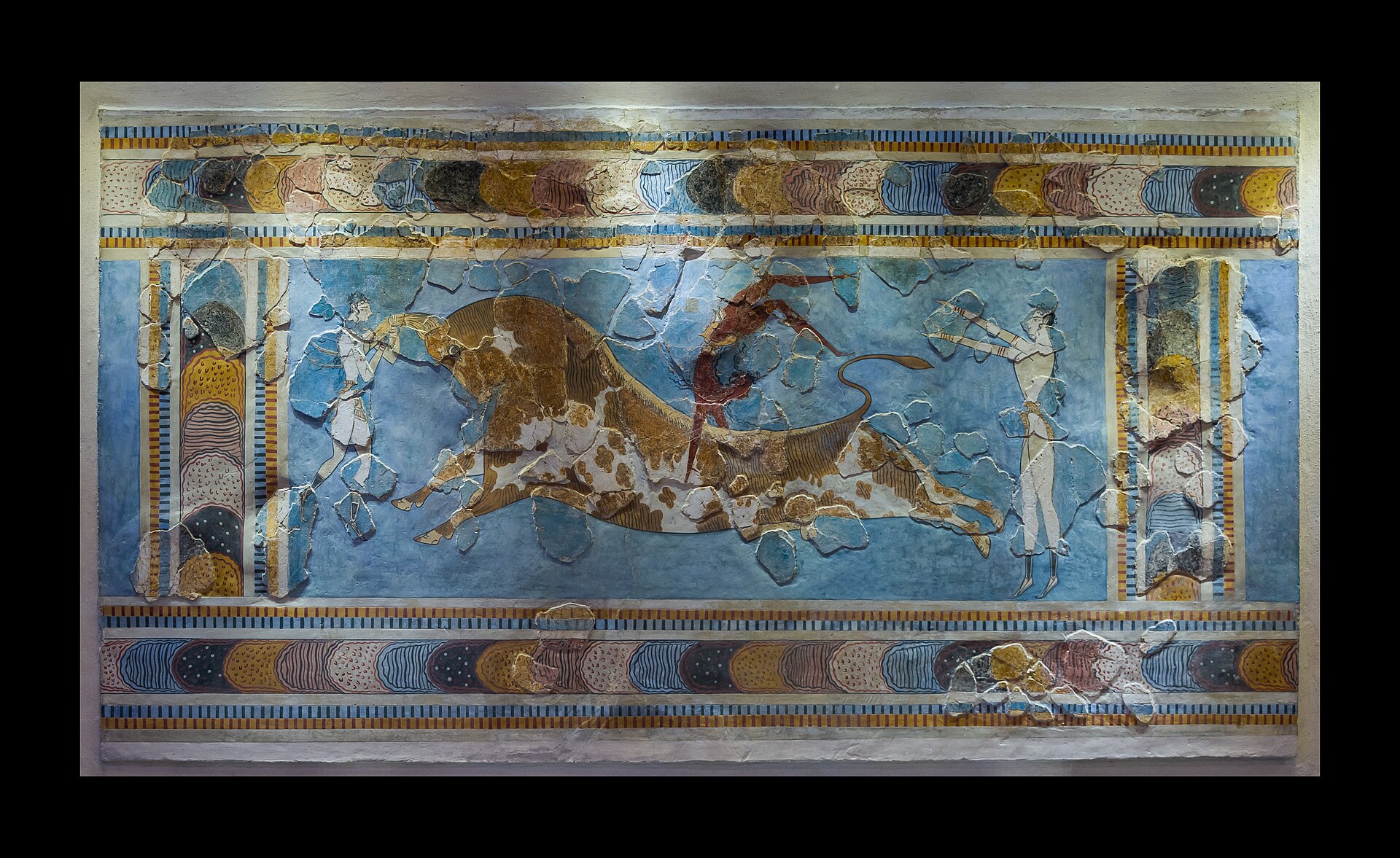
The Minoans, named by archaeologist Arthur Evans after the mythical King Minos, built the first advanced civilization on European soil. From around 3000 BCE they raised sprawling palace complexes on Crete — Knossos, Phaistos, Malia — decorated with vivid frescoes of dolphins, lilies, and acrobats vaulting over charging bulls. They traded across the Mediterranean and wrote in a script still unread. The massive volcanic eruption of Thera, around 1600 BCE, dealt a blow from which they slowly faltered. By 1450 BCE mainland Mycenaean Greeks had taken control of Crete, and Minoan culture was gradually absorbed into the Greek world.
Worth remembering
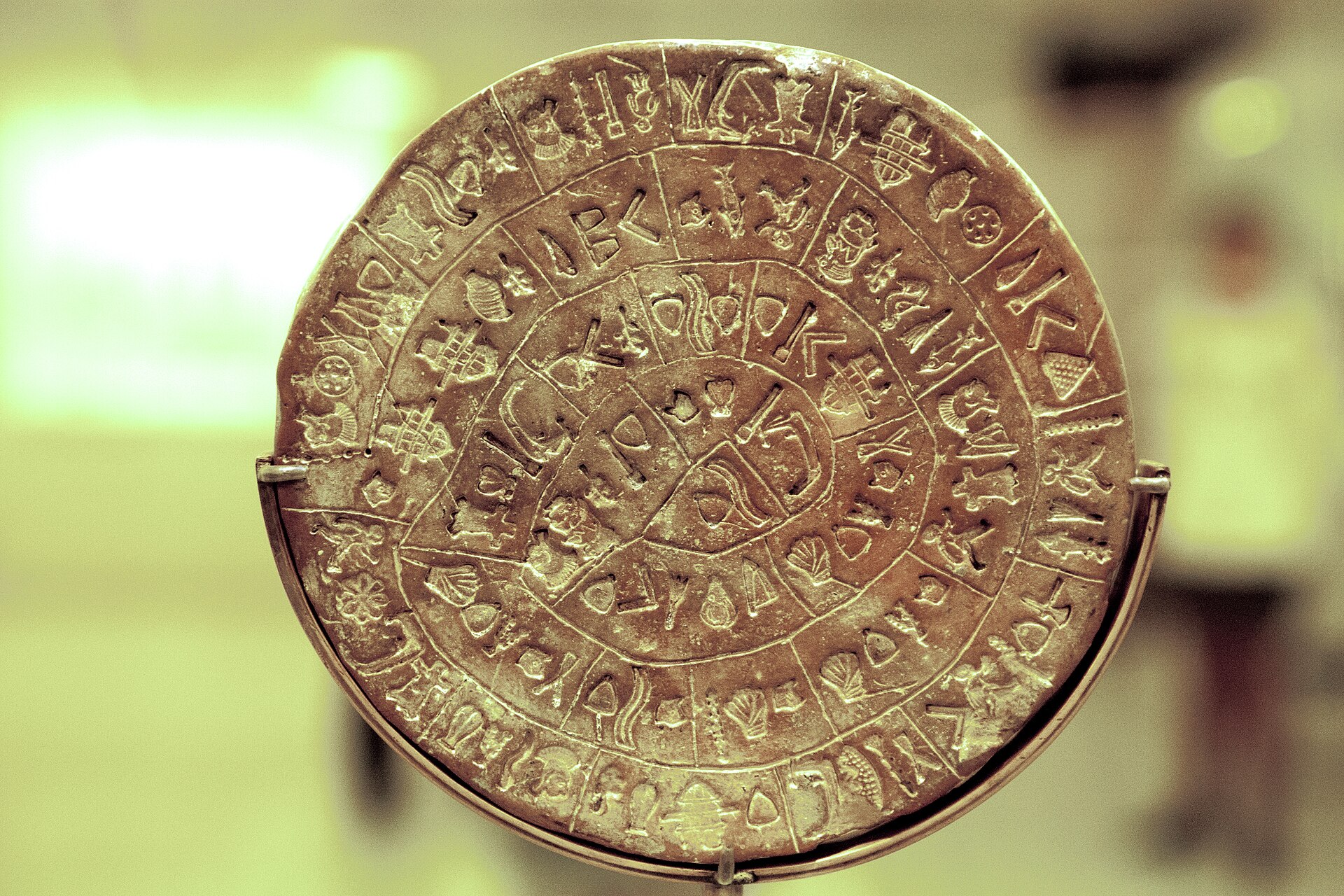
Their script, Linear A, remains undeciphered; the later Linear B was Greek.
The palace at Knossos inspired the Greek myth of the labyrinth and the Minotaur.
Gallery
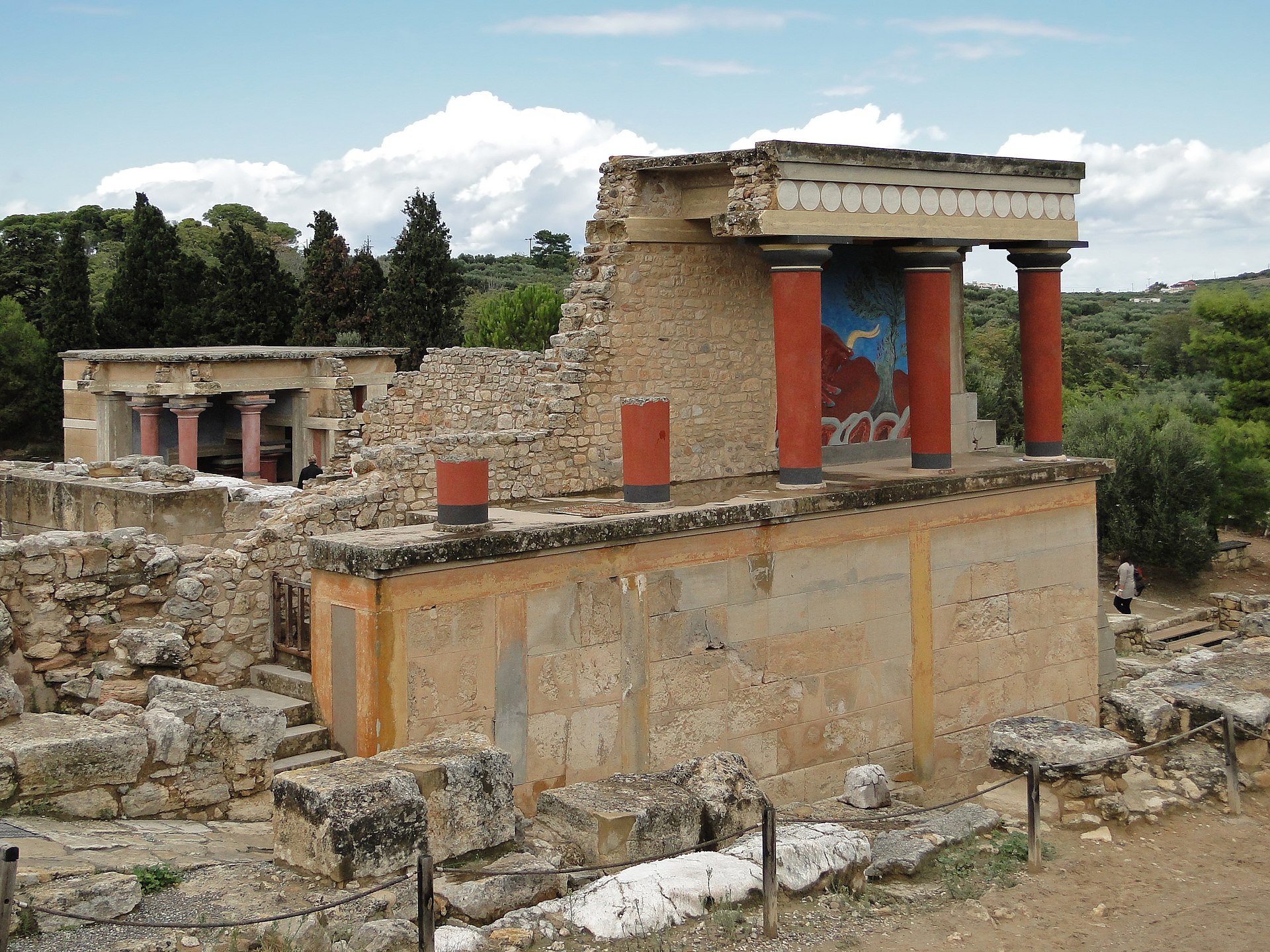
The North Portico ruins of the Palace of Knossos, CreteBernard Gagnon · CC BY-SA 3.0The Phaistos Disc, a Minoan fired-clay disc with stamped symbolsJerzystrzelecki · CC BY-SA 4.0
Watch
Lost Worlds of the Mediterranean (includes Santorini/Minoan) — National Geographic
Sources
Minoan civilization flourished on Crete c. 3000–1100 BCE; declined after the Mycenaean takeover Wikipedia
The Minoan eruption of Thera severely disrupted Aegean Bronze Age society Wikipedia
The Minoan civilization centered on Crete produced Europe's first palace societies; Knossos, the largest palace, covered about 1.3 hectares and may have housed 80,000–100,000 people in the city around it Encyclopaedia Britannica
The Palace of Knossos, excavated by Arthur Evans from 1900, revealed the polychrome frescoes and multi-storey architecture that defined Minoan palace culture Encyclopaedia Britannica
The Minoans developed two writing systems: the undeciphered hieroglyphic script and Linear A, both used before Mycenaean Greeks adapted the latter into the deciphered Linear B World History Encyclopedia
A graveyard tradition: leave a stone to show you came, and remembered.
Buried nearby — by shared fate or a neighbouring lifespan.