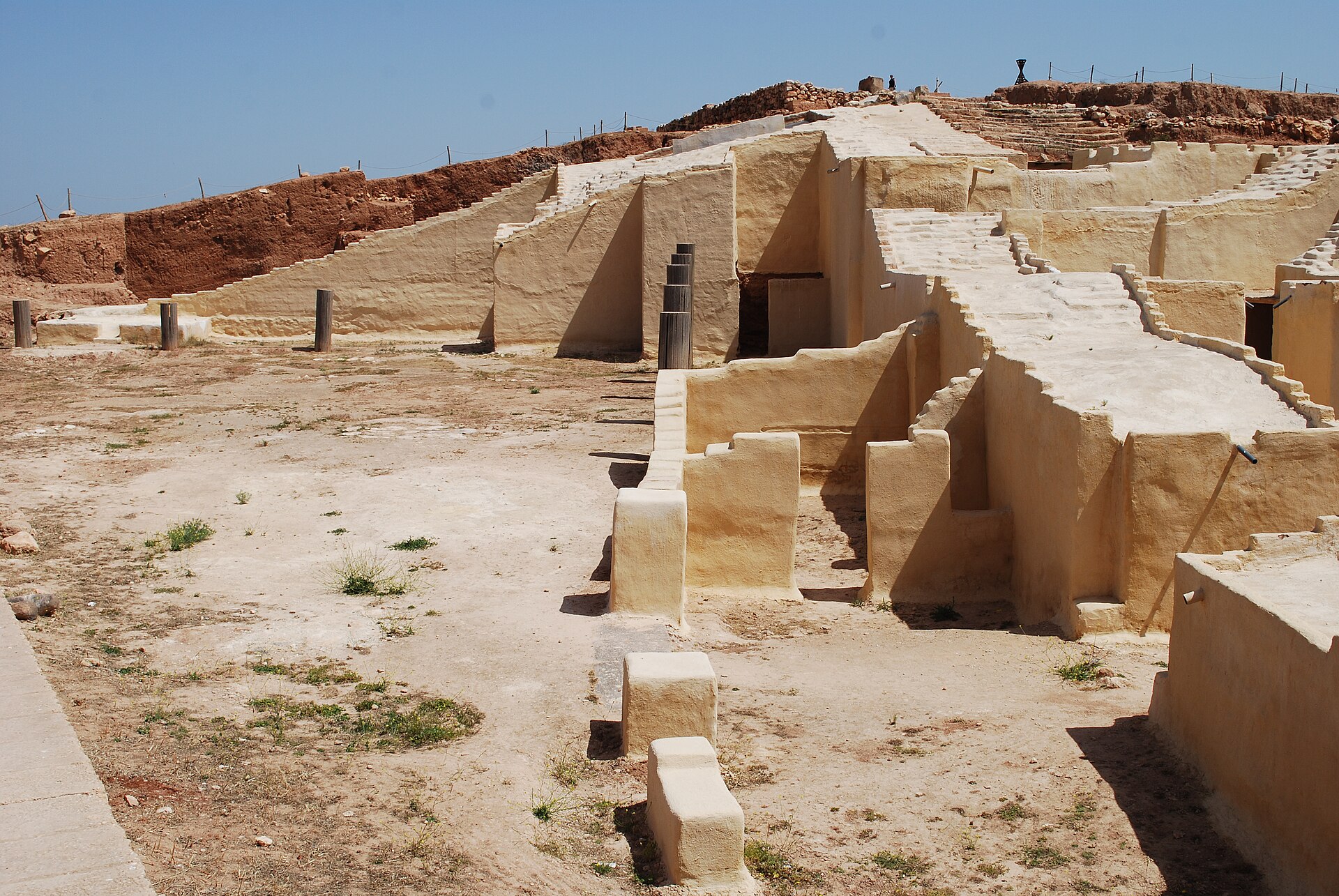
Ebla began as an ordinary Early Bronze Age settlement at Tell Mardikh, in what is now Syria’s Idlib Governorate, around 3500 BCE. By the 24th century BCE it had become one of the major powers of the Near East, ruling a kingdom of perhaps 200,000 people from a capital of roughly 40,000 — large enough, and organized enough, that its scribes kept a state archive.
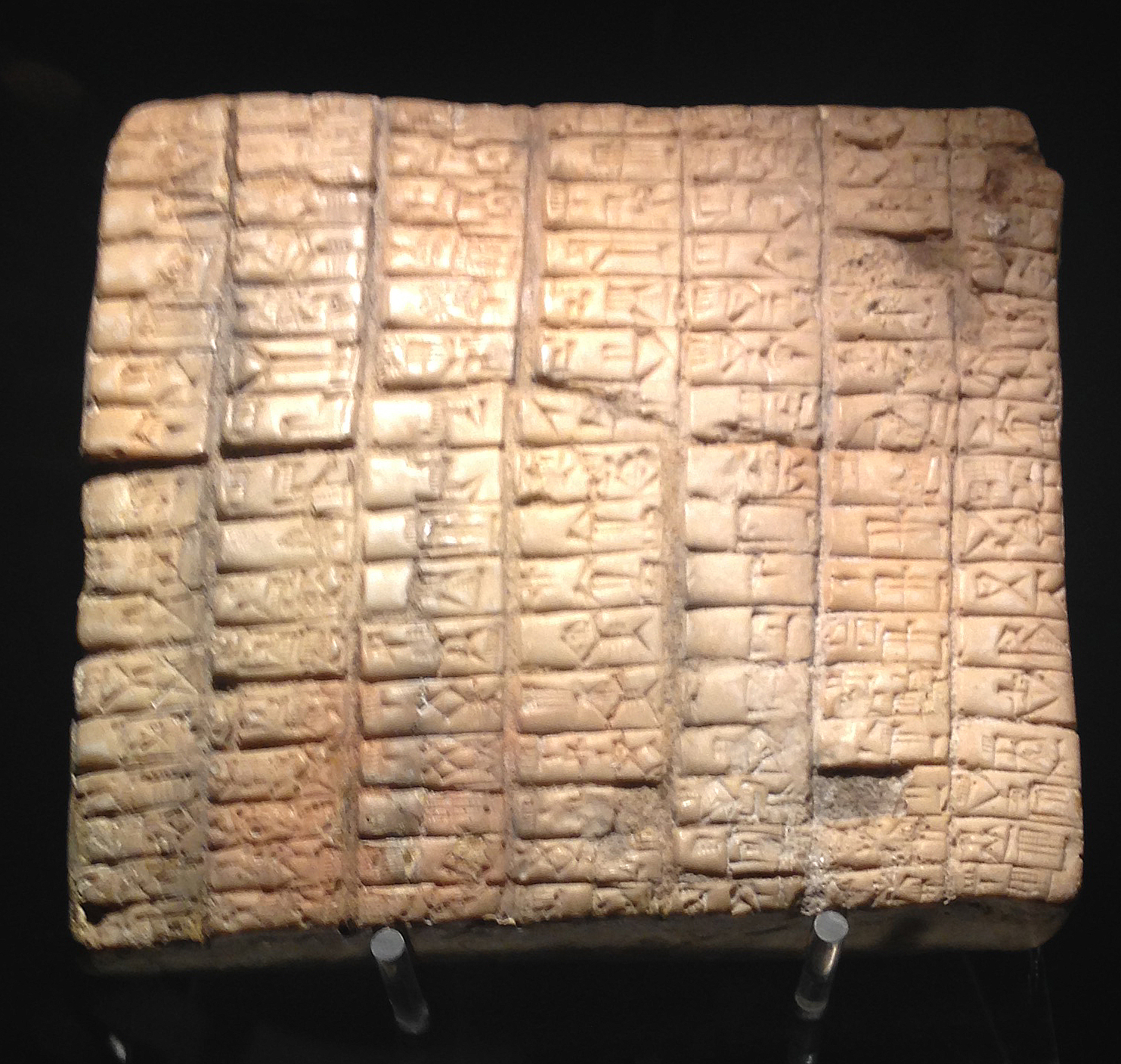
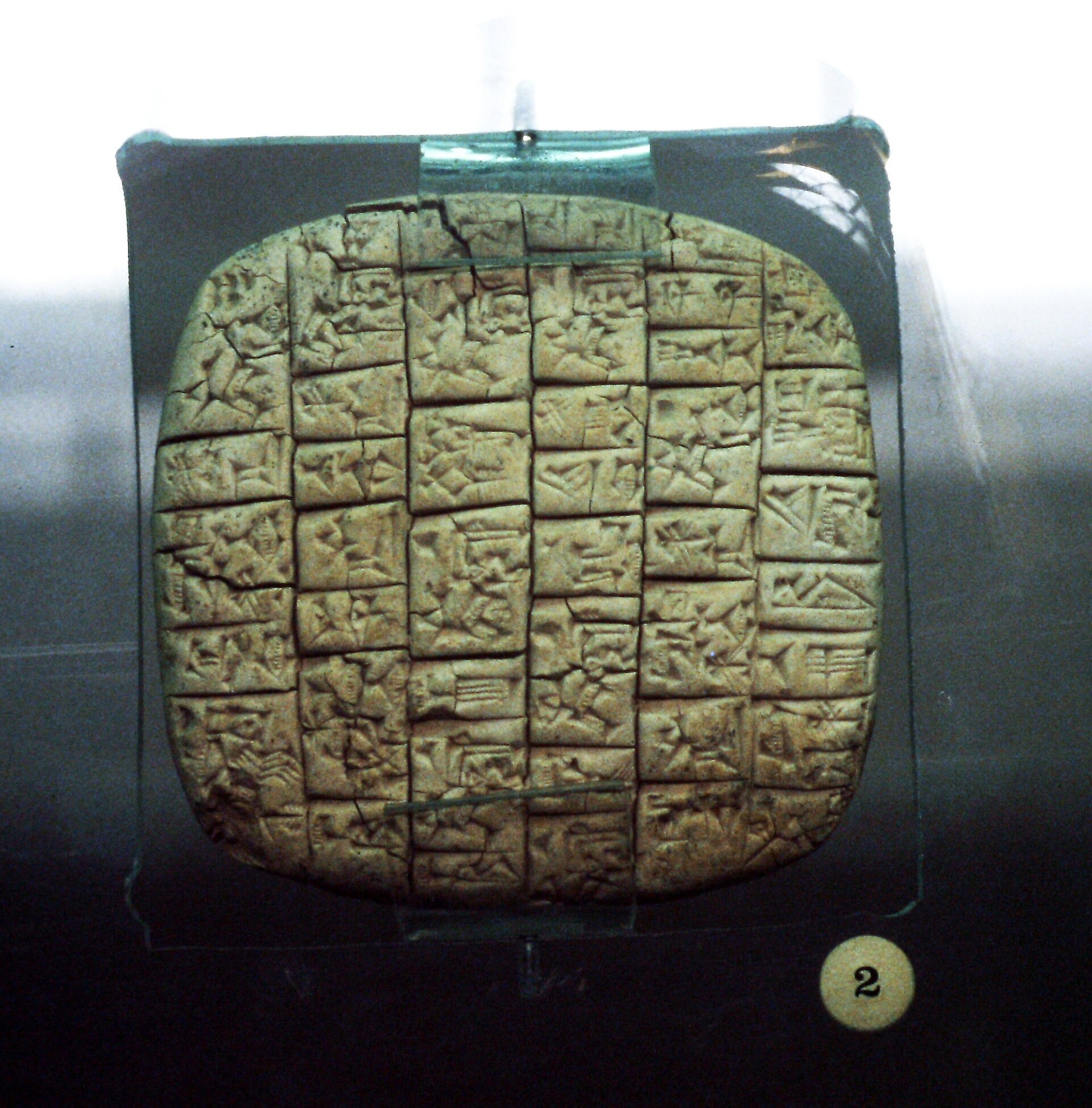
That archive survived by accident. When Ebla’s Royal Palace G burned, the fire that should have destroyed thousands of clay tablets instead fired them like pottery. They sat buried and unread for over four thousand years until Paolo Matthiae’s excavation team cleared the palace floor in 1974-75 and found roughly 17,000 tablets and fragments still stacked where the shelves had collapsed. Written mostly in Sumerian cuneiform, with a large minority in a Semitic language no one had seen before — now called Eblaite — the archive proved that mid-third-millennium Syria was not a periphery of Sumer and Egypt but a literate, bureaucratic civilization in its own right.
Who burned the palace is still argued over. Both Sargon of Akkad and his grandson Naram-Sin claimed in their own inscriptions to have conquered Ebla; radiocarbon dating of the burned material brackets the destruction to roughly 2367-2293 BCE, a window that fits either king’s reign, and Matthiae himself has suggested Naram-Sin may have invoked Ebla’s famous name even for a campaign that technically only reached the nearby town of Armanum. A smaller camp blames Ebla’s rival Mari, or simple accident. What the tablets and the ash agree on is that the kingdom that produced them did not survive the fire.
Ebla did not stay dead. A second kingdom rose under a new dynasty, was destroyed in turn sometime around 2050-1950 BCE, and a third, Amorite-ruled Ebla limped on until the Hittite king Mursili I — the same king who later sacked Babylon — took the city around 1600 BCE. After that there was no fourth Ebla. The site shrank to an unremarkable village and was abandoned by the 7th century CE, its name detached from the ruins until a Belgian-Italian dig confirmed the identification of Tell Mardikh in the 1960s. A kingdom that once stood level with Sumer and Akkad in the record books needed a bulldozed palace floor to be remembered at all.
Worth remembering
- Ebla's royal archive held roughly 17,000 tablets and fragments, most written in Sumerian cuneiform but a large share in a previously unrecorded Semitic language, Eblaite — discovered only because the fire that killed the palace baked the clay tablets hard instead of destroying them.
- Before 1975 no scholar suspected a literate, city-building civilization of Ebla's scale existed in Bronze Age Syria outside the Mesopotamian heartland; the find rewrote assumptions about where early complex society could arise.
The people
-
Paolo Matthiae — Excavator, b. 1940
Italian archaeologist who began digging at Tell Mardikh in 1964 and led the team that uncovered Ebla's royal archive in 1974-75.
-
Naram-Sin of Akkad — Likely conqueror, r. c. 2254-2218 BCE
Akkadian king who, like his grandfather Sargon before him, claimed in a royal inscription to have destroyed Ebla; the archaeological dating fits either reign.
Gallery
Further reading
Sources
- Ebla was first settled around 3500 BCE and grew into a major Bronze Age trading kingdom, reaching its height during the archive period, c. 2400-2300 BCE, when the capital held roughly 40,000 people and the kingdom over 200,000 Wikipedia
- Italian archaeologist Paolo Matthiae began excavating Tell Mardikh in 1964; clearing of Royal Palace G in 1974-75 uncovered a royal archive of roughly 15,000-17,000 cuneiform tablets and fragments (about 1,800 substantially complete), preserved by the fire that destroyed the palace Wikipedia
- The tablets, written in Sumerian cuneiform and a previously unknown Semitic language now called Eblaite, showed mid-third-millennium Syria held a literate, bureaucratic urban civilization comparable to contemporary Sumer and Egypt The International Association for Assyriology
- Both Sargon of Akkad and his grandson Naram-Sin claimed in royal inscriptions to have conquered Ebla; radiocarbon dating of burned material from Palace G brackets the city's destruction to c. 2367-2293 BCE, consistent with the Akkadian claims, though a minority of scholars propose Mari or an accidental fire instead Wikipedia
- A second Eblaite kingdom rose under a new dynasty (c. 2300-2000 BCE) but was destroyed again, and a third, Amorite-dominated kingdom (c. 2000-1600 BCE) was ended when the Hittite king Mursili I sacked the city around 1600 BCE, after which it declined to an unremarkable village, eventually abandoned by the 7th century CE Wikipedia
A graveyard tradition: leave a stone to show you came, and remembered.