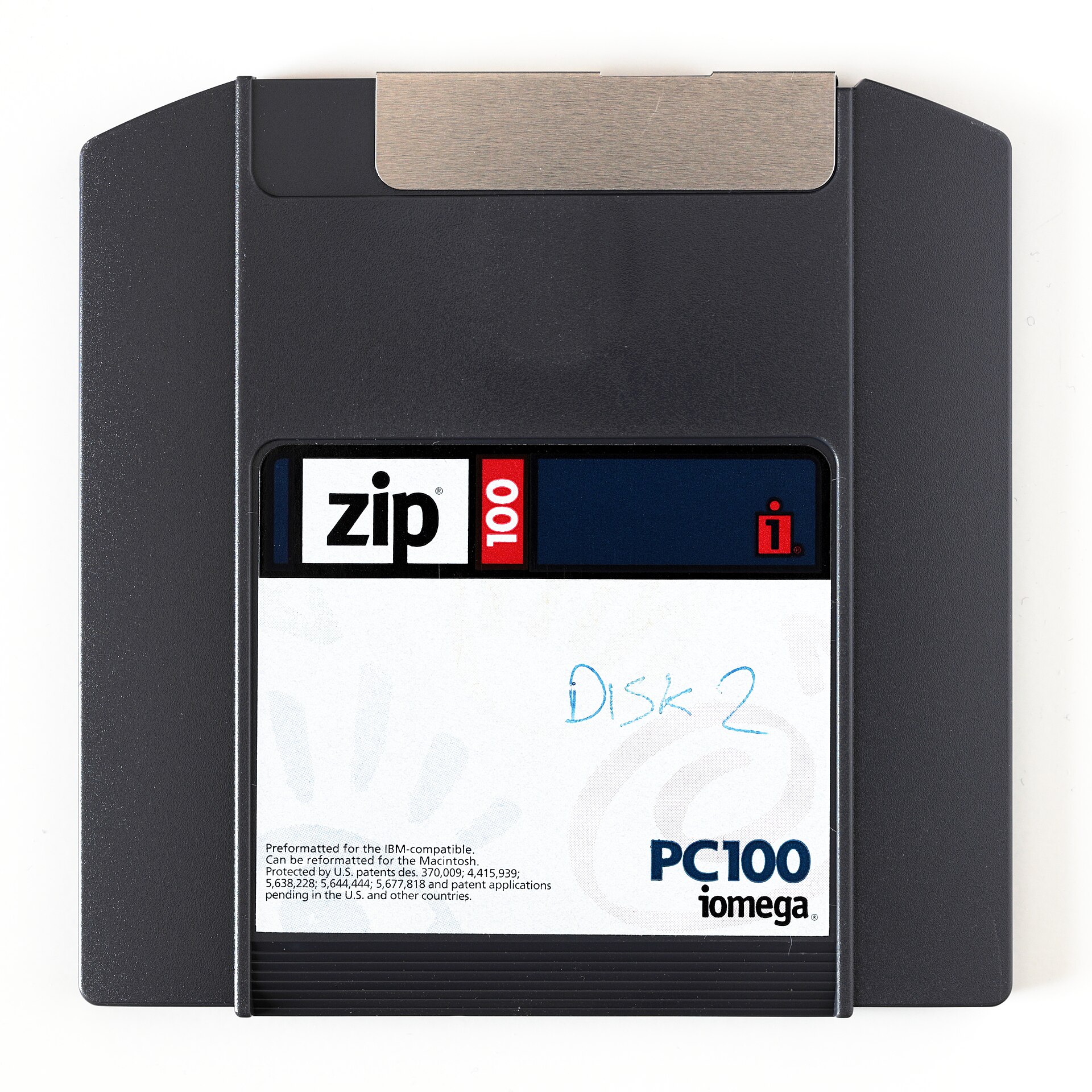
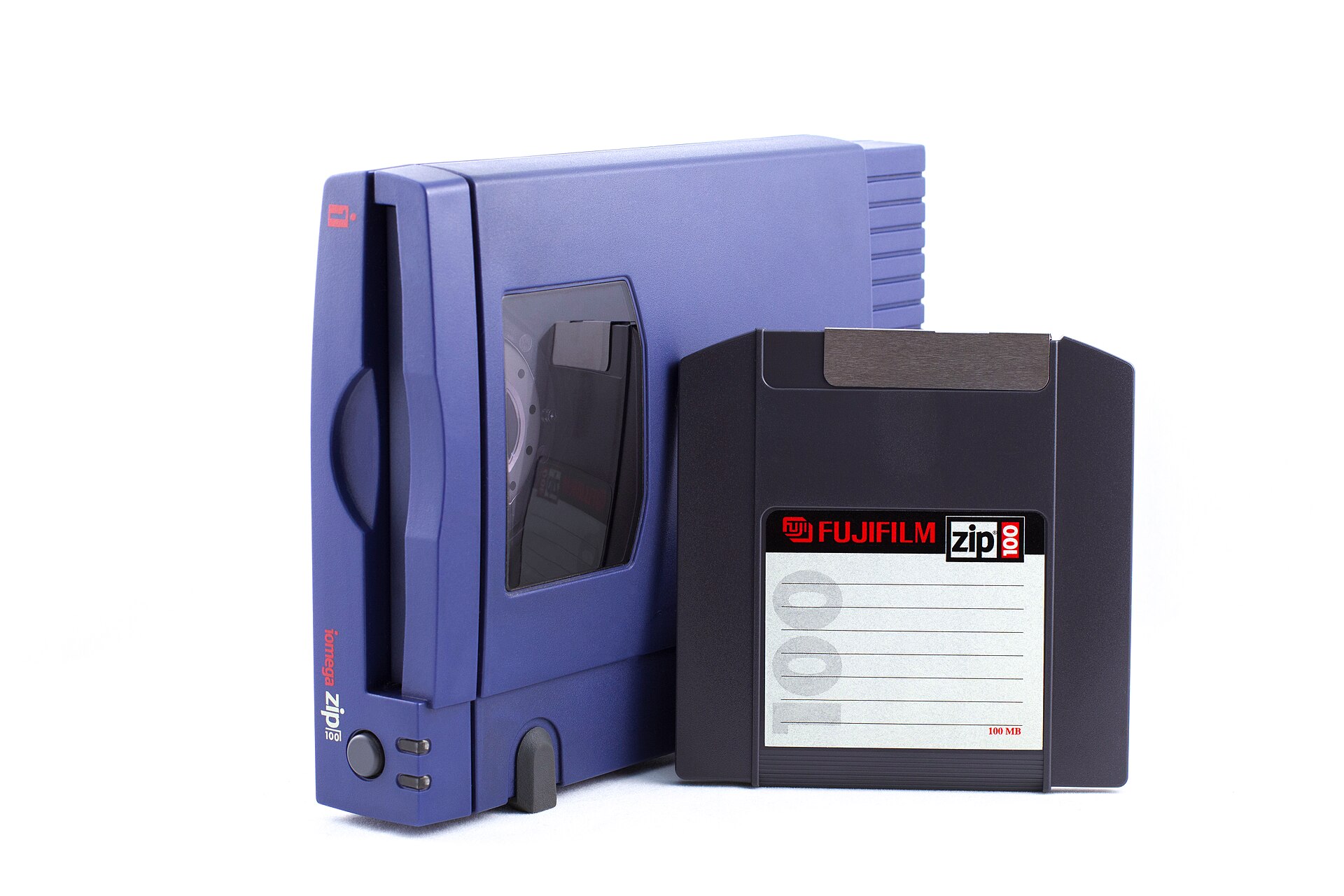
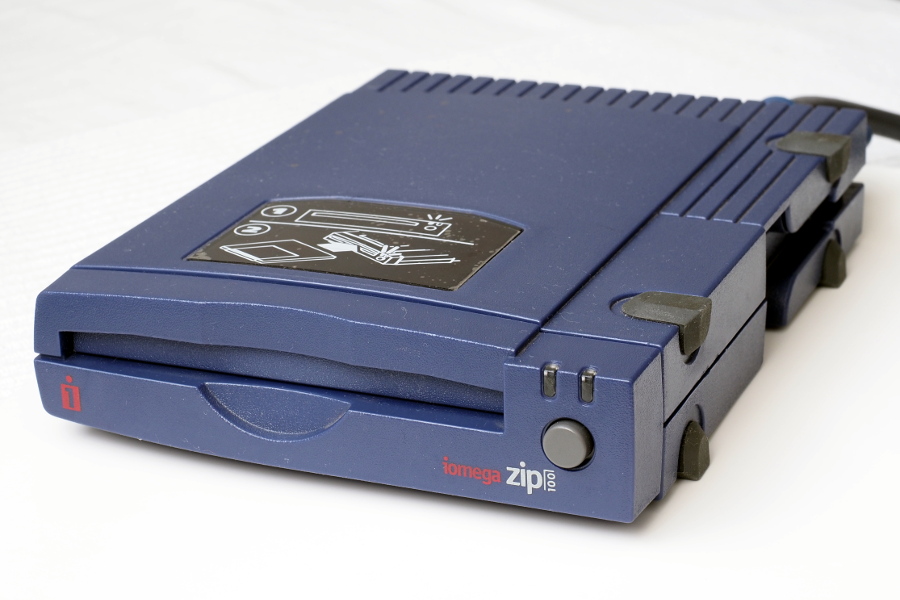
Iomega’s Zip drive, introduced in 1994, answered a real problem: the 1.44 MB floppy was too small for the growing files of the 1990s. A Zip disk held 100 MB, later 250 and 750 MB, in a cartridge slightly thicker than a floppy, and it became a favourite for design studios and home backups. Reliability hurt it; the “Click of Death” failure could destroy a disk and the drive together, and a misaligned drive could spread the fault to other disks. Iomega CEO Kim B. Edwards dismissed the flaw as affecting under 1 percent of drives before being ousted in 1998. Cheap recordable CDs and then USB flash drives offered more capacity for less money, and Iomega wound the product down by around 2010.
Worth remembering
- A single Zip disk held 100 MB, about 70 times a standard floppy, later 250 MB and 750 MB.
- The dreaded 'Click of Death' could wreck both the disk and the drive that read it.
Gallery
Sources
- Iomega introduced the Zip drive in 1994 with 100 MB removable disks Wikipedia
- Zip drives suffered the 'Click of Death' failure mode and were superseded by CD-R and USB Wikipedia
- Iomega's 100 MB Zip disk, introduced in 1994, sat between a floppy and a hard disk in capacity and was widely used for backup and archiving in the late 1990s Computer History Museum
- The Zip drive's 'click of death' spread via contact: a misaligned drive could corrupt other disks inserted into it; Iomega CEO Kim B. Edwards dismissed the flaw as affecting under 1 percent of drives before being ousted in 1998 Tedium
A graveyard tradition: leave a stone to show you came, and remembered.