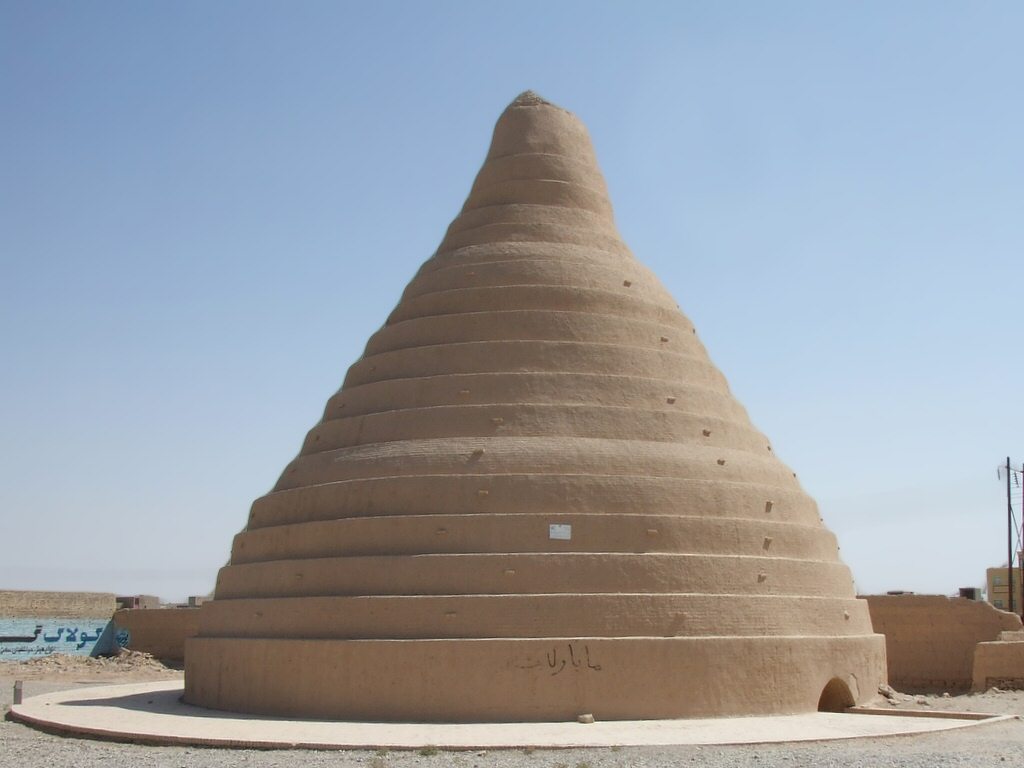
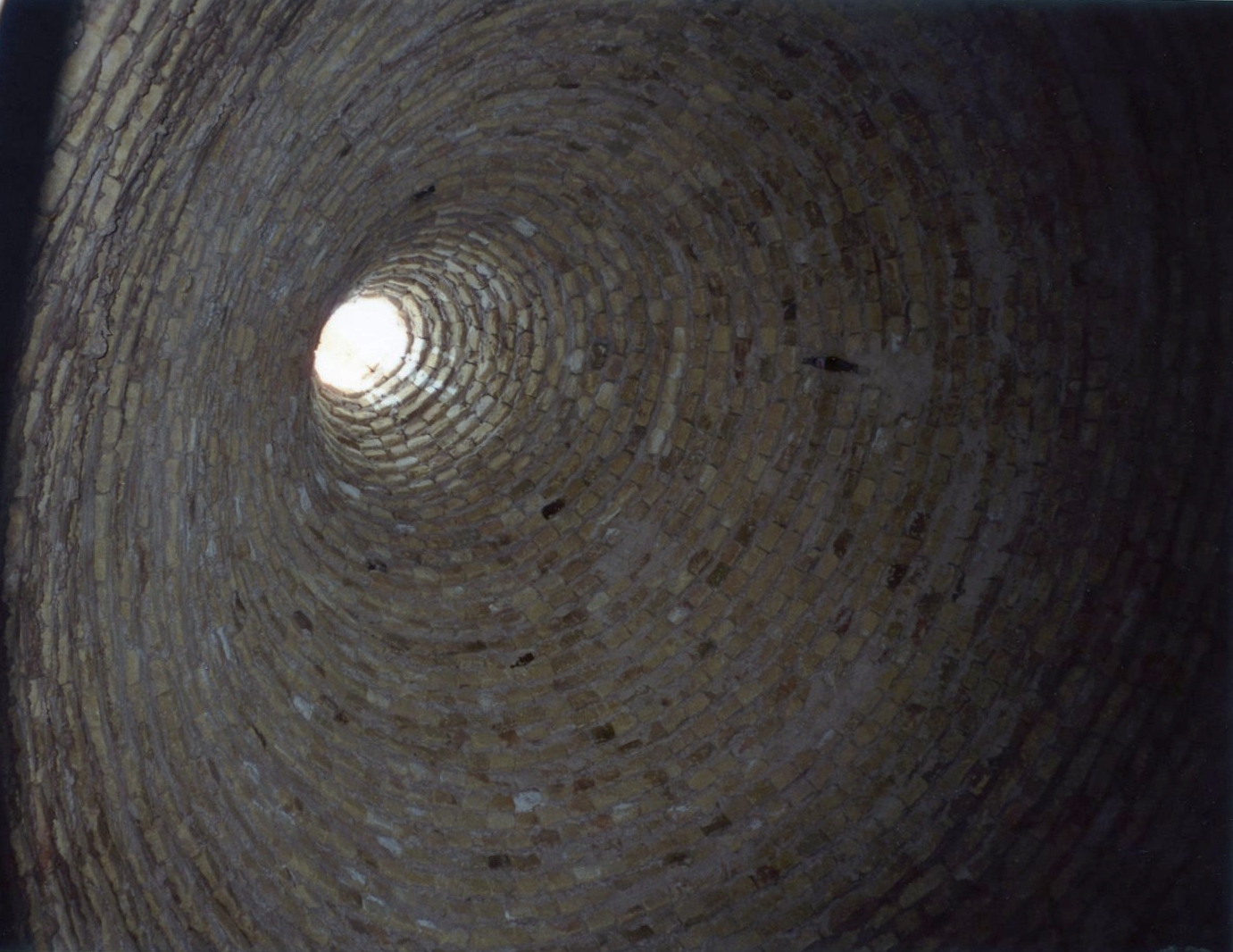
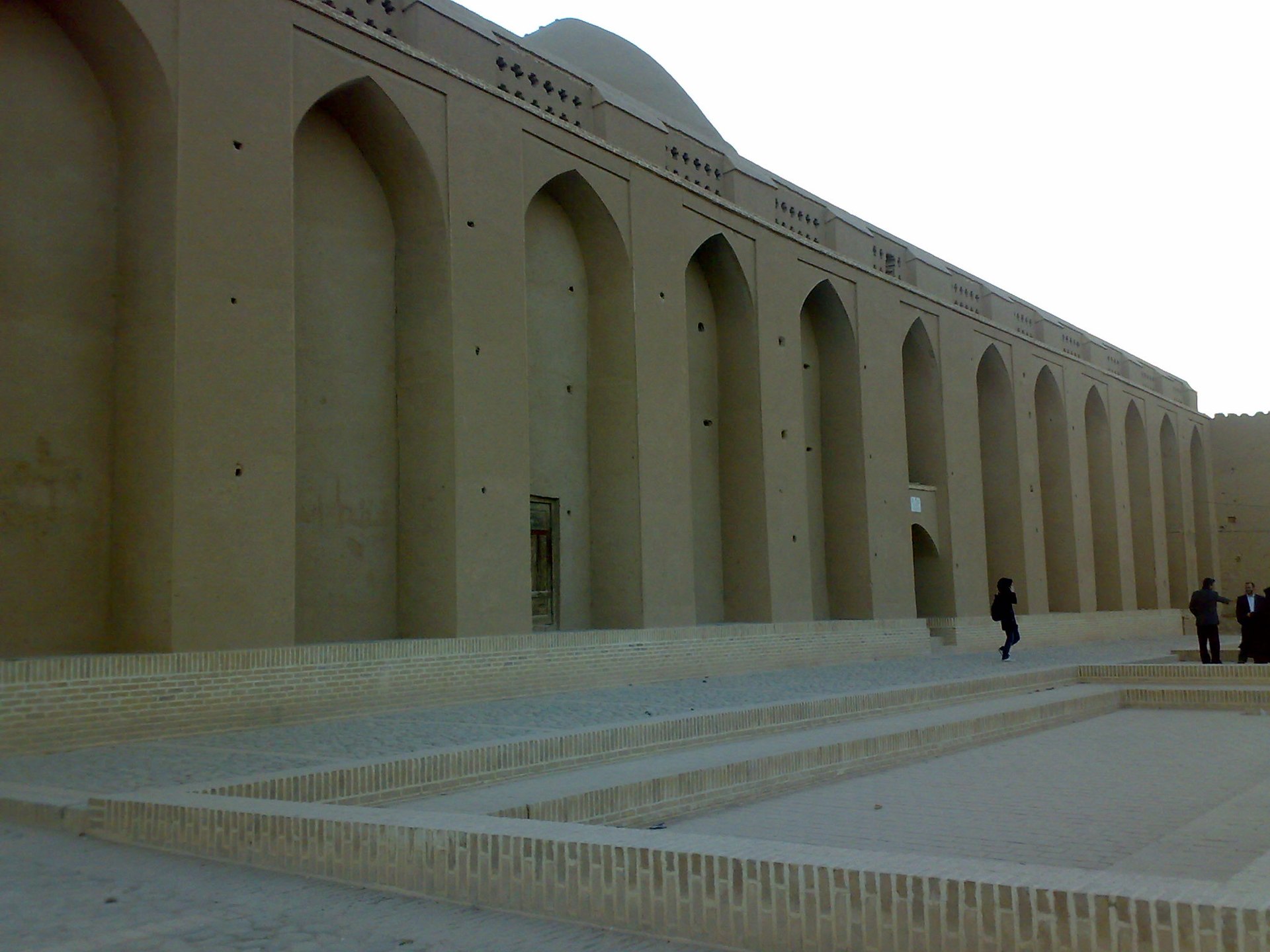
Two and a half thousand years before the compressor, Persian engineers were making ice in the desert. The yakhchāl was the structure that did it: a tall conical dome of mud-brick over a deep storage pit, fed by water from a qanat and cooled by the physics of a dry climate. On winter nights, shallow pools shaded by a long wall lost their heat by radiation to the open sky and froze even when the air stayed above freezing; workers cut the ice and stacked it underground, where the thick adobe and a waterproof mortar called sarooj held the cold through the furnace of a Persian summer. The dome’s shape vented warm air out the top and kept the cold settled at the bottom. It was refrigeration without machinery, run on night sky and evaporation.
It worked for two millennia and then lost, quickly and completely, to a better machine. Industrial ice and then mechanical and electric refrigeration arrived from the late nineteenth century, and there was no longer any reason to build a dome the size of a house to store a winter’s ice. New yakhchāls stopped being raised; the old ones emptied. Around 129 of them still stand across Iran as protected monuments, strange mud cones in the desert that visitors photograph — among them the Mo’ayedi ice house in Kerman (about 20 m tall, listed as national heritage in 1999) and the dome at Abarkuh (about 22 m tall). The clearest sign of the technology’s death is in the language itself: ask for a yakhchāl in Iran today and you will be shown a refrigerator — the electric box that replaced it took its name.
Worth remembering
- It made ice in a desert before electricity: shallow pools lost heat by radiation to the clear night sky and froze, and the ice was packed into a domed pit sealed with sarooj — a mortar of sand, clay, lime, ash and goat hair so waterproof and insulating that a single winter's harvest could last all summer.
- The tall conical dome was an engine, not an ornament: warm air rose and escaped through the apex while cold air pooled in the pit below, and a long east–west shade wall kept the freezing pool out of the sun so the night's ice survived the day.
Gallery
Sources
- The yakhchāl made and stored ice in the desert using shallow freezing pools, radiative cooling to the night sky, qanat water, wind-catchers and thick sarooj-mortar domes; the technology was mastered by about 400 BCE. Max Fordham LLP / UCL Bartlett School of Architecture (PLEA 2017)
- Persian yakhchāls and comparable ice houses became impractical in the mid-19th century with the rise of industrial ice production and mechanical refrigeration. Brewminate
- About 129 yakhchāls still stand in Iran as heritage structures; surviving examples include the Mo'ayedi ice house in Kerman (~20 m tall, listed as national heritage in 1999) and the dome at Abarkuh (~22 m tall). Iran Safar
A graveyard tradition: leave a stone to show you came, and remembered.