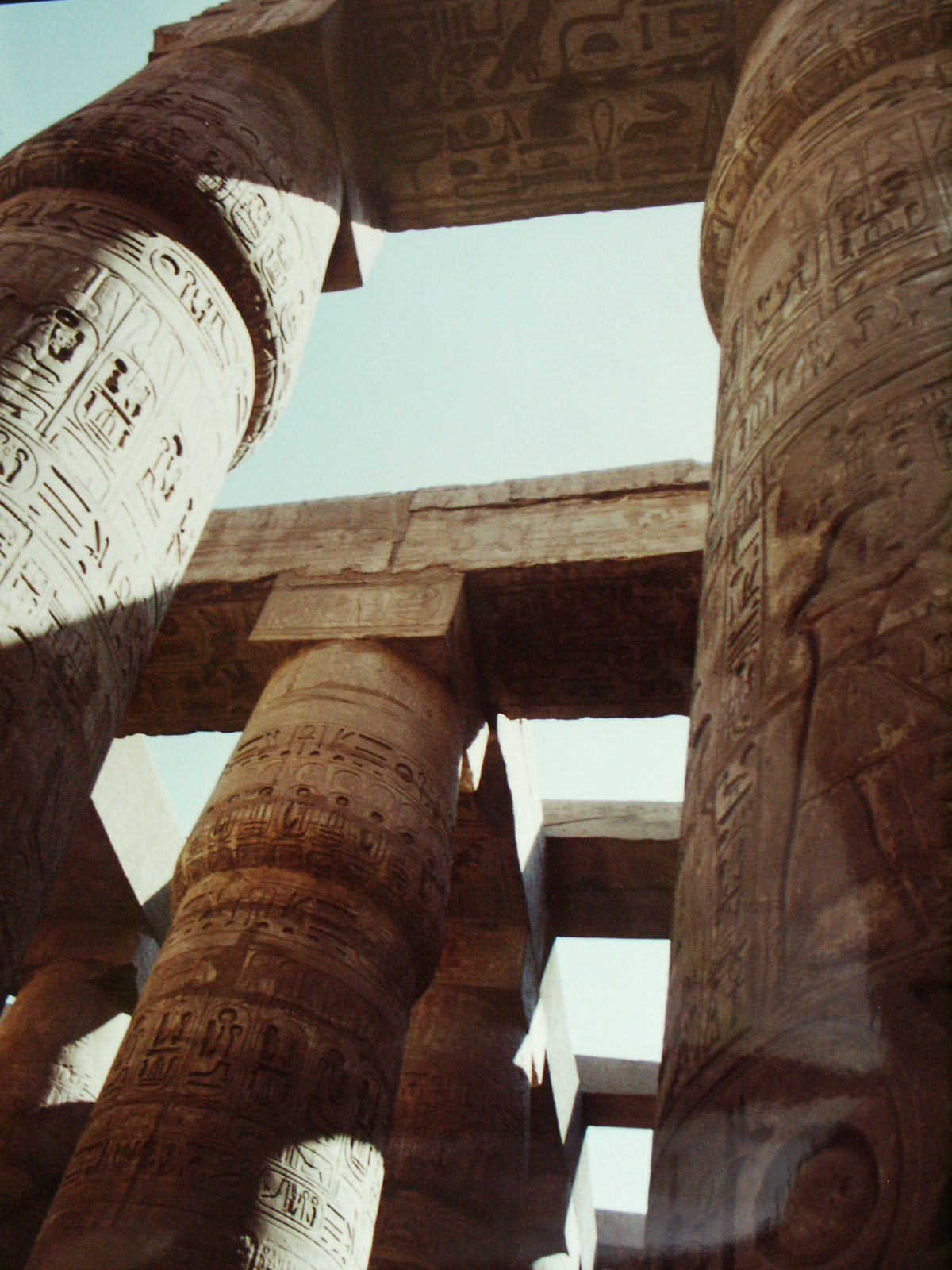
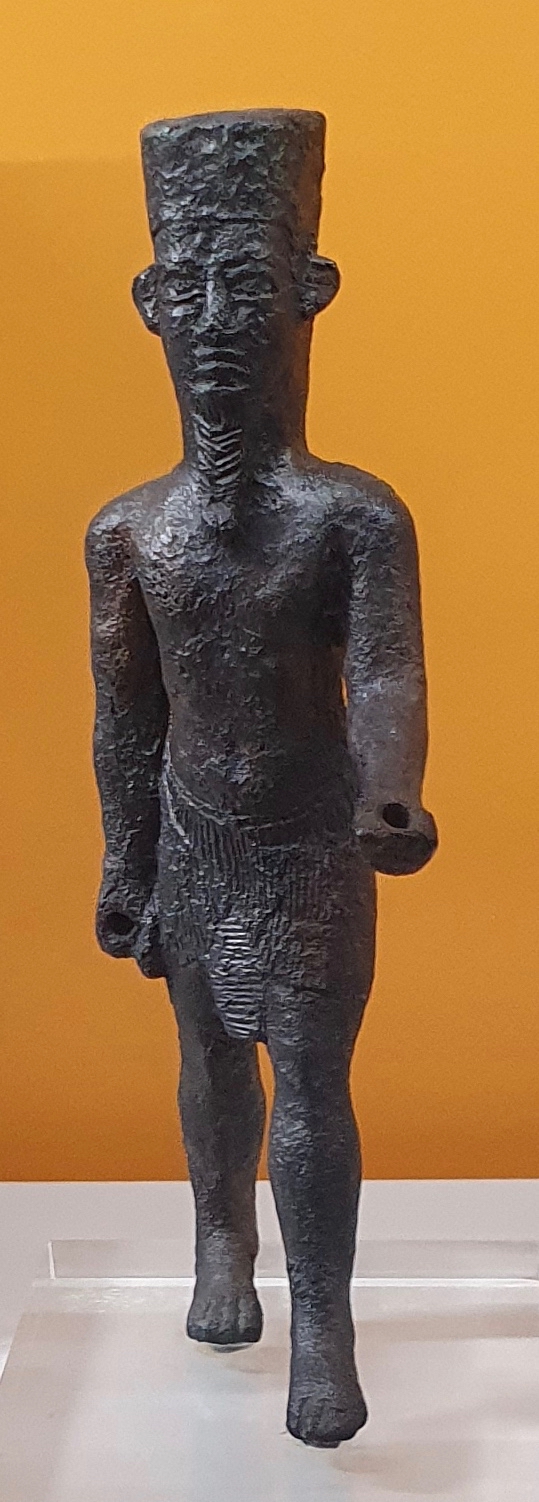
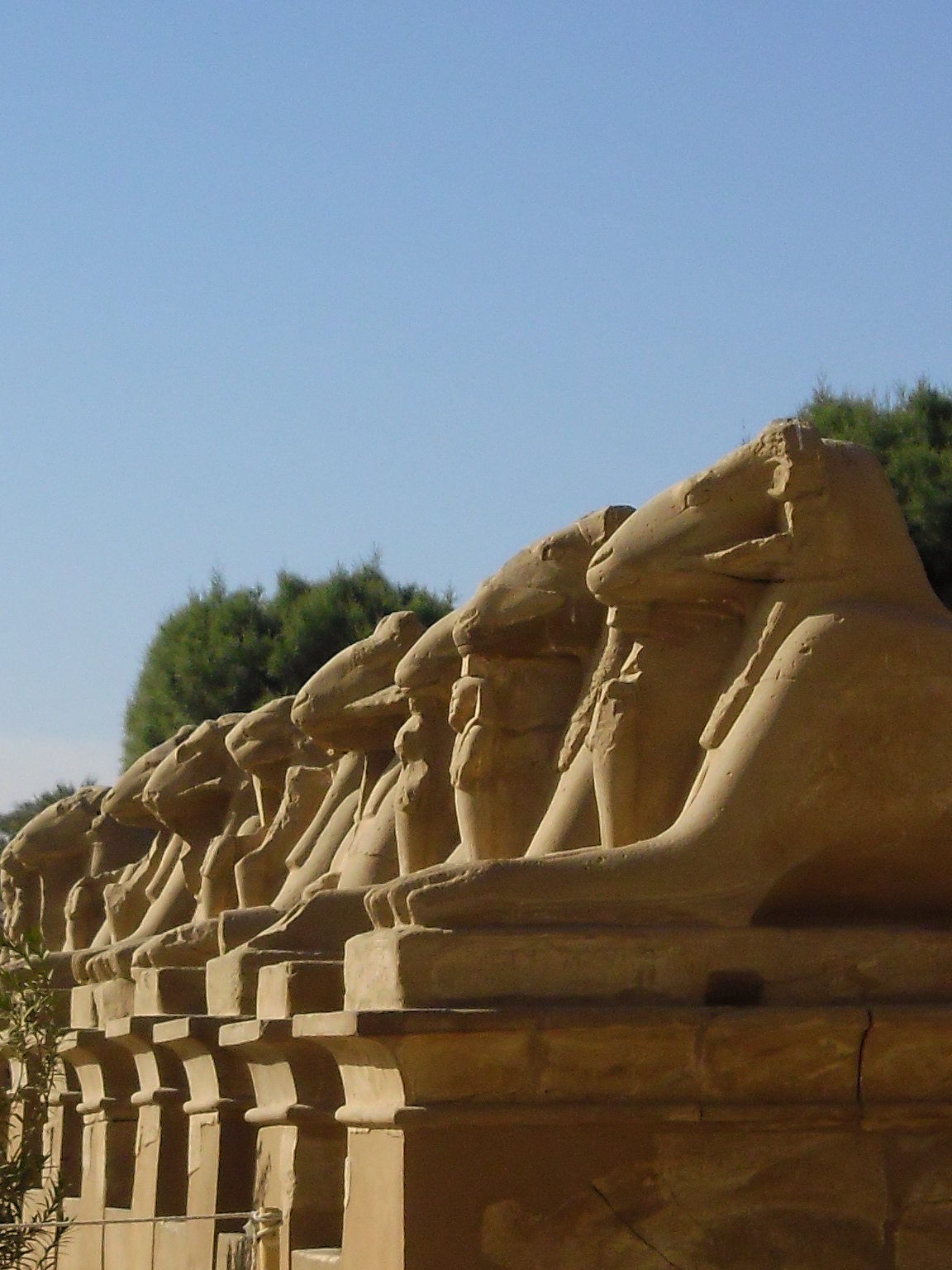
Amun began as a minor Theban deity, one of eight primordial gods in the Pyramid Texts, his name meaning “the hidden one.” That obscurity became an advantage: when the rulers of Thebes drove out the Hyksos and founded the New Kingdom around 1570 BCE, they credited their victory to him and made him the god of empire. Linked to the sun god Ra as Amun-Ra, he became creator of the universe and King of the Gods. His house at Karnak grew into the largest religious structure ever built — 250 acres of stone raised over two millennia, a Hypostyle Hall of 134 columns. The priesthood that served him accumulated land, gold and grain until, by the reign of Amenhotep III, it was nearly as powerful as the pharaoh. Akhenaten tried to erase him around 1350 BCE, closing the temples and promoting the sun-disc Aten; within a generation Tutankhamun reopened them and Amun was restored. When Alexander the Great took Egypt in 331 BCE, he marched to the oracle of Amun at Siwa to be named the god’s son, and put the god’s ram horns on his coins.
What ended Amun was not a rival god but a change in the empire’s religion. As Rome turned Christian, the Theodosian decrees of 389–391 CE ordered the pagan temples closed across the empire; in Egypt the priesthoods lost their patronage and fell silent, and Christian mobs converted or wrecked the sanctuaries. A few held on at the southern edge — the temple of Isis at Philae kept the old gods until its closure under Justinian around 537 — and then there was no one left to perform the rites. Karnak still stands, walked through by tourists who photograph the columns and leave. The god who outranked pharaohs, whose oracle named the conqueror of the known world, receives no worship from any of them.
Worth remembering
- His temple at Karnak is the largest religious building in the world — 250 acres of pylons, obelisks and chapels added over two thousand years, with a Hypostyle Hall of 134 columns each 72 feet tall.
- In 331 BCE Alexander the Great crossed the desert to the oracle of Amun at Siwa, where the priest hailed him as son of the god; he took the title and stamped the ram's horns of Amun on his coins. The priesthood that spoke for Amun had grown so rich that by Amenhotep III's reign it rivalled the throne itself.
Gallery
Sources
- Amun first appears in the Pyramid Texts as a local god of Thebes; from c. 1570 BCE he was elevated to creator and 'King of the Gods' as Amun-Ra, his main temple at Karnak became the largest religious structure ever built, and by Amenhotep III's reign his priests owned more land and held more wealth than almost anyone but the pharaoh. World History Encyclopedia
- Karnak is the Temple of Amun at Thebes and remains the largest religious building in the world; its Hypostyle Hall is supported by 134 columns 72 feet (22 m) tall. World History Encyclopedia
- In 331 BCE at the oracle of Amun at the Siwa Oasis, Alexander the Great was proclaimed son of the god (as Zeus-Ammon), adopting Amun's authority to legitimise his rule; earlier, Akhenaten had closed the temples and forbidden the traditional gods, after which Tutankhamun reinstated the old religion and restored Amun's cult. World History Encyclopedia
A graveyard tradition: leave a stone to show you came, and remembered.