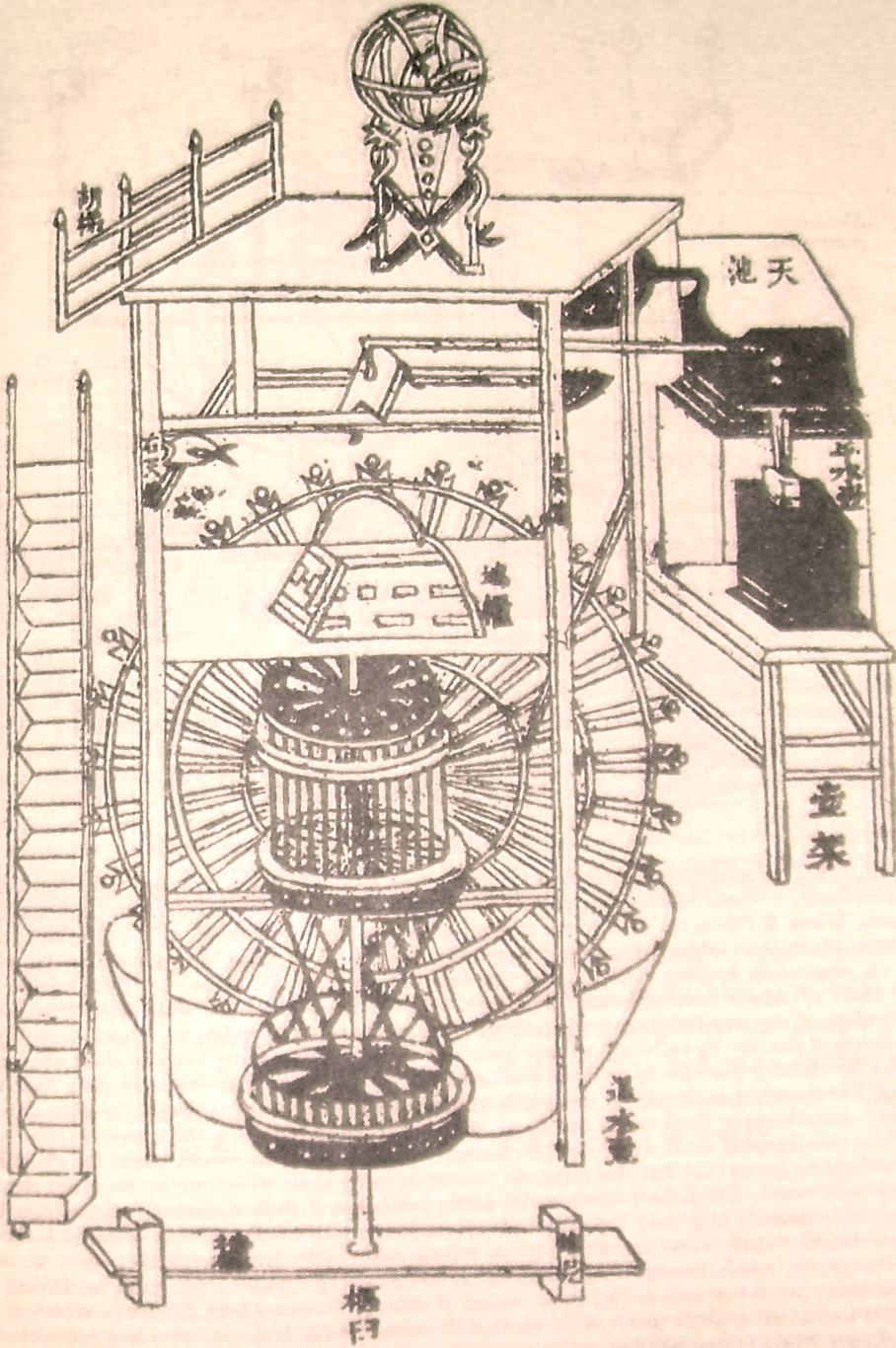
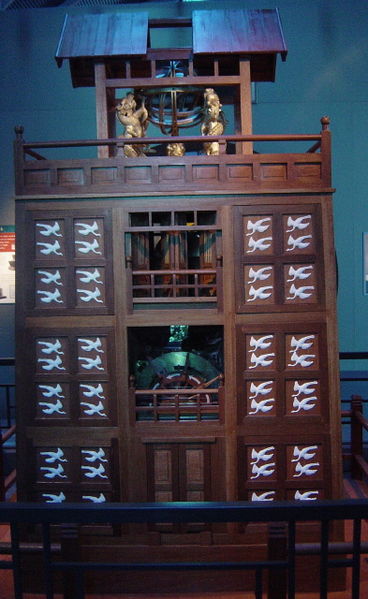
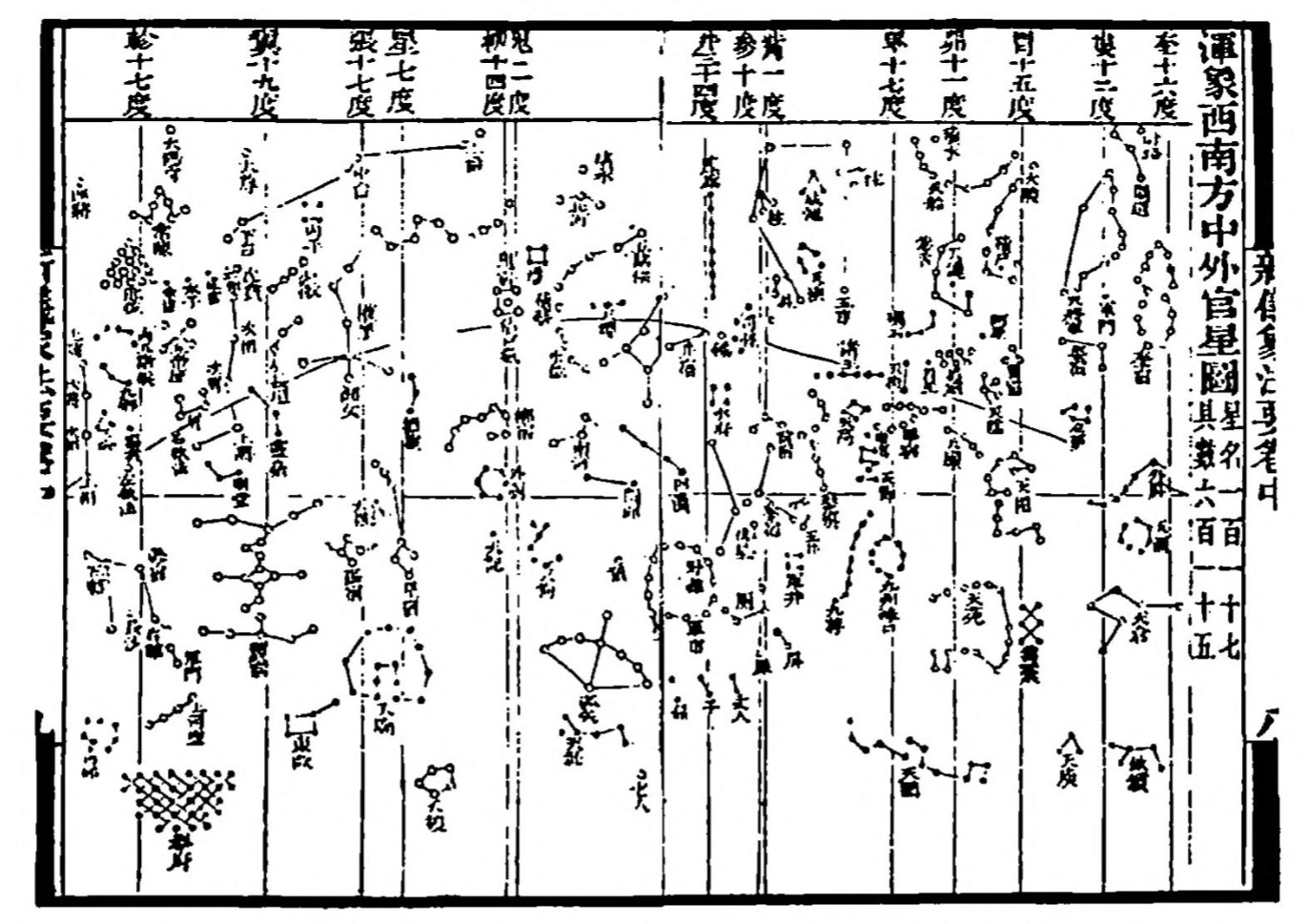
In 1088 the Song statesman Su Song completed, in the capital at Kaifeng, a machine that should not have been possible for another six hundred years. His clock tower stood nearly twelve metres high and ran on water: a wheel of thirty-six scoops that filled, tipped and advanced one step at a time, regulated by a mechanism that did exactly what a mechanical clock’s escapement does — meter out power in equal beats. Above it turned an armillary sphere and a celestial globe; below, a parade of small figures came out on time to mark the hours. Su Song wrote the whole thing down in a treatise, the Xin Yi Xiang Fa Yao, with diagrams, so it could be rebuilt.
It could not be. In 1127 the Jurchen Jin took Kaifeng and carried the tower north to their own capital, where its complexity defeated them; it stood unbuilt and then was lost. Su Song’s son Su Xie was ordered to make another, but found that crucial parts of his father’s method had dropped out of the record, and the work stalled. Chinese clock-making of this kind simply stopped, the escapement forgotten in the land that invented it, until Europe arrived at the same idea on its own centuries later. The greatest clock of the medieval world died twice — once when an army hauled it away, and again when the knowledge of how to make it slipped out of a book.
Worth remembering
- Its core was a great water-wheel with thirty-six scoops that filled and tipped one at a time, releasing the wheel a notch each time — a water-driven escapement that Joseph Needham identified as a direct ancestor of the mechanical clock, six centuries before such a device appeared in Europe.
- On its three levels an armillary sphere tracked the heavens, a celestial globe turned, and some 133 little jack figures emerged on schedule to ring bells, strike drums and hold up tablets announcing the hours — an astronomical computer and a clock in one twelve-metre tower.
Gallery
Sources
- The clock tower was dismantled by the Jurchen in 1127 and taken to their capital but could not be reassembled; Su Song's son Su Xie found that key sections had been removed from the treatise and could not rebuild it, so the construction technology was lost for a long time. Hong Kong Space Museum
- Su Song's water-balance escapement is preserved as a scale model in the Science Museum, London; the mechanism predates the comparable European escapement by roughly six centuries. Science Museum Group, London
- When the Tatars ended the Northern Song the clock was carried off; afterwards Chinese clock-building expertise disappeared, and European mechanical clocks emerged independently some two centuries later. Engines of Our Ingenuity, University of Houston
A graveyard tradition: leave a stone to show you came, and remembered.