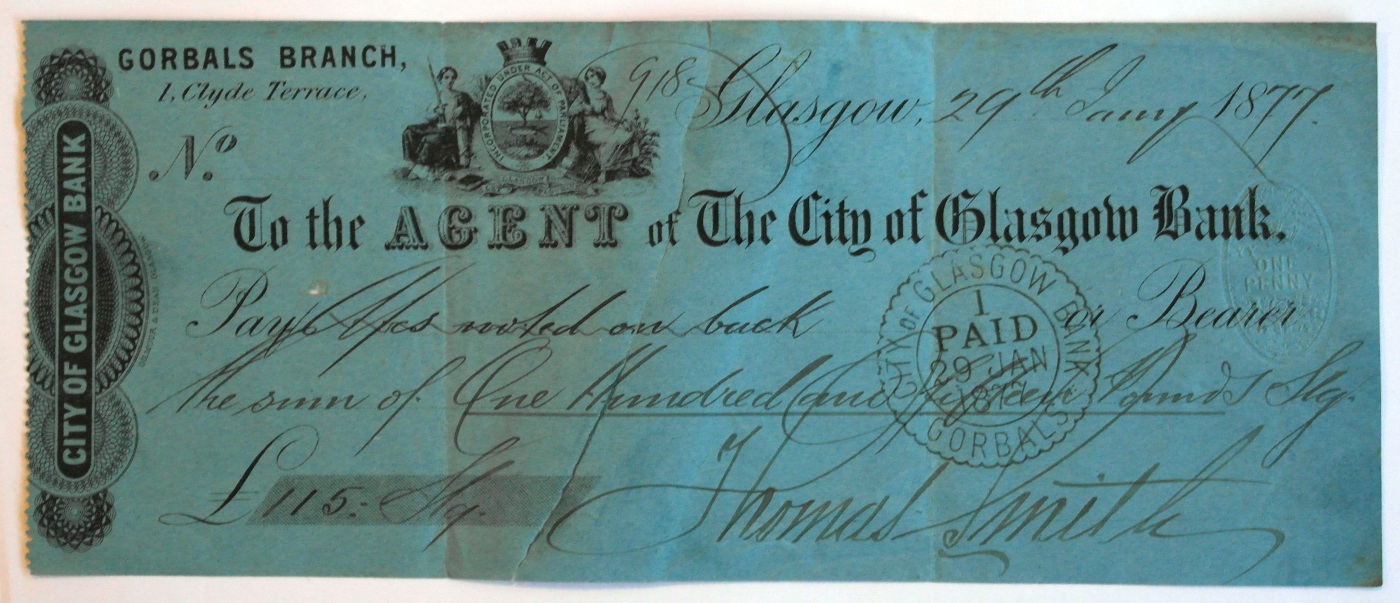
The City of Glasgow Bank had been hiding losses for at least a decade — bad loans to American railroad and land speculations, papered over by overstated gold reserves and fabricated balance sheets, with the directors secretly buying the bank’s own shares to keep the price up. By 1878 the gap between what it claimed to own and what it actually owed had passed £6 million. None of its annual audits had caught any of it.
When the bank announced its closure on 2 October 1878, the liquidators found the full scale of the fraud. The catastrophe for ordinary investors lay in the bank’s structure: it operated under unlimited liability, so each share carried calls of roughly £500 above its face value — and most of the 1,200 shareholders were bankrupted overnight, all but 254 of them. Seven directors and the manager were convicted at Edinburgh’s High Court in 1879, though their sentences ran only eight to eighteen months. The disaster shocked Parliament into passing the Companies Act 1879, which let banks adopt limited liability — so that a bank’s failure would never again destroy its owners so completely.
Worth remembering
- It concealed its insolvency for years — overstating its gold reserves, fabricating its published balance sheets, and secretly buying back its own shares to prop up the price — across multiple annual audits that caught none of it.
- When it failed, a national relief fund for the ruined shareholders raised £379,670 by 1882, a sum that was substantial yet only a fraction of what the wiped-out families had lost.
Gallery
Sources
- Founded in 1839, the City of Glasgow Bank collapsed on 2 October 1878 with net liabilities over £6 million; of its 1,200 shareholders all but 254 were ruined under unlimited liability, and the directors were sentenced to 8–18 months Wikipedia
- The bank concealed its insolvency with falsified gold holdings, fabricated balance sheets and secret share buybacks; its failure prompted the Companies Act 1879 allowing banks to adopt limited liability The Glasgow Story (Glasgow City Council / University of Glasgow)
A graveyard tradition: leave a stone to show you came, and remembered.