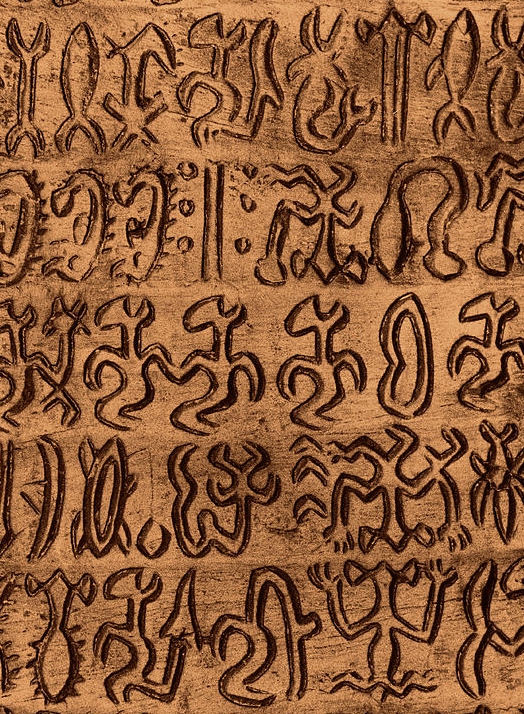
Rongorongo is a system of glyphs incised into wood — fish, birds, plants, and human figures in tight rows — found nowhere in the Pacific except Easter Island. Whether the Rapa Nui invented it on their own (which would make it one of a handful of writing systems devised independently anywhere on Earth) or developed it after seeing Spanish documents at a 1770 annexation ceremony is still argued; a 2024 radiocarbon study dated one tablet, the Échancrée, to the decade around 1500 (1493–1509), which would put the script well before sustained European contact. What is not argued is that by the 1860s the island was full of inscribed tablets, kept in houses and recited at ceremonies by a trained class of readers, the tangata rongorongo.
The readers died in a single decade. Peruvian slave ships raided in 1862–63, carrying off something like 1,400 to 2,000 islanders — including the chiefs and the scribes — to dig guano. Diplomatic pressure forced the return of a hundred-odd survivors, who brought smallpox home with them. The population collapsed from several thousand to around 110 by 1877. When the missionary Eugène Eyraud reached the island in 1864 he found tablets in nearly every dwelling, and no one who could read them. One islander later explained simply that the people who knew the characters had all died, because the Peruvians had killed the wise men.
Since then more than twenty people have announced decipherments. None has held up: the best-known, Steven Fischer’s reading of one tablet as a creation chant, was shown by other scholars to be a pattern in the script’s structure rather than its meaning. The 2024 dating study, for all its precision about the wood, says plainly that the writing “remains undeciphered.” The objects are legible as objects — you can see every stroke — but the language behind them went into the ground with the last men who could speak it to the wood.
Worth remembering
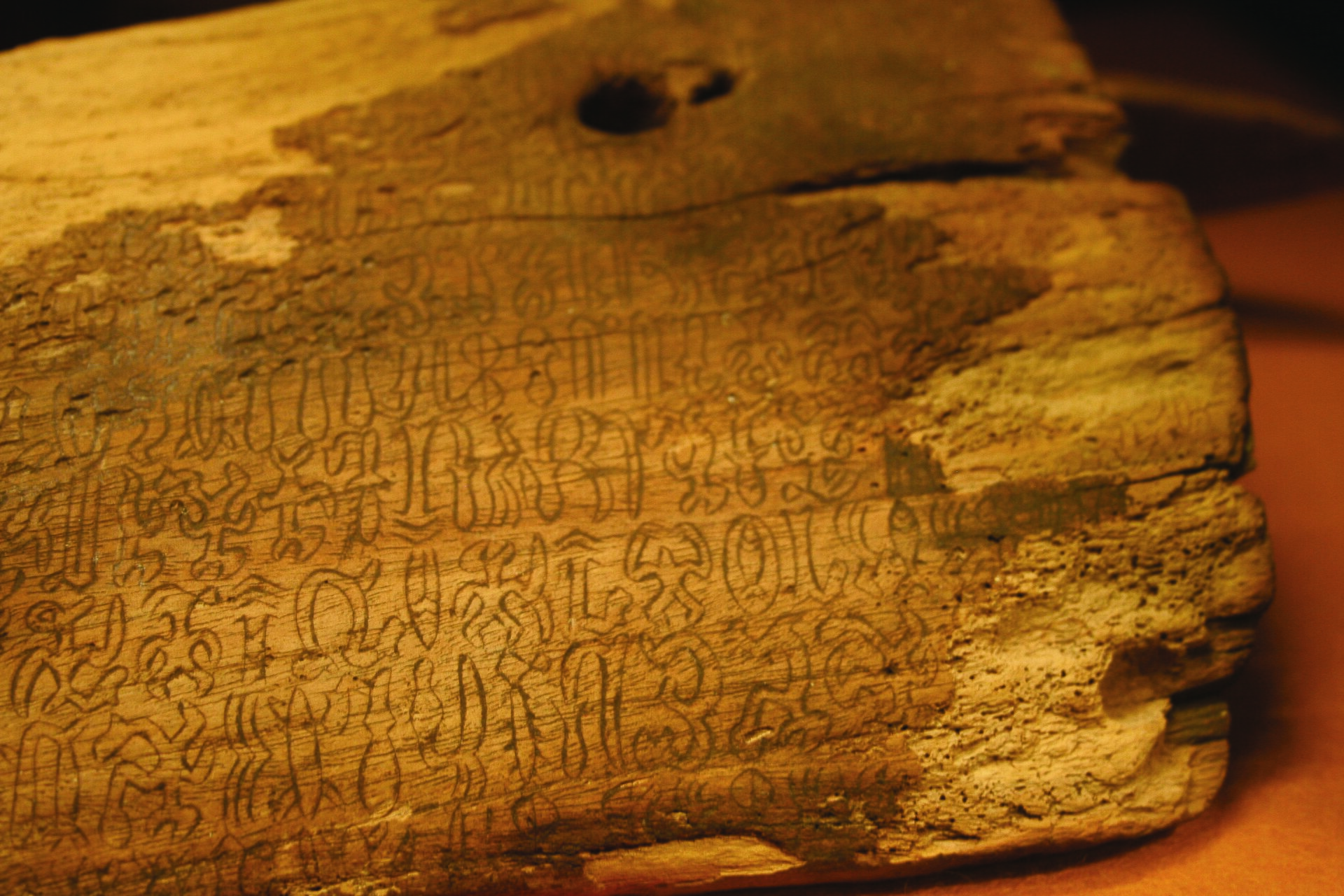
- Rongorongo is written in reverse boustrophedon: each line runs left to right, but to read the next line you turn the tablet 180°, so alternate rows appear upside-down — the reader physically rotated the object as a kind of built-in page-turn.
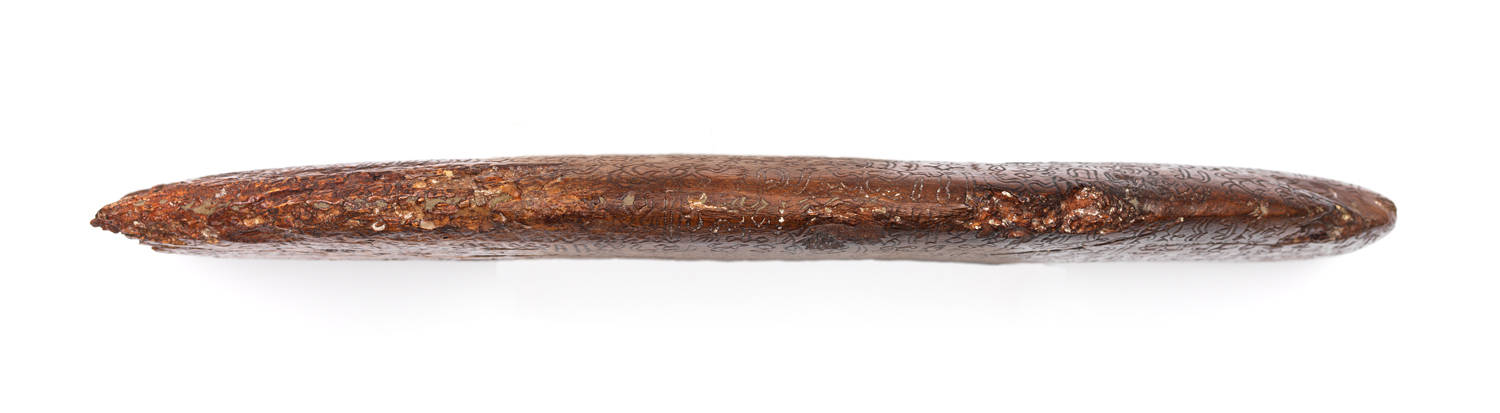
- About 26 genuine inscribed objects survive — wooden tablets, a chief's staff, two reimiro chest ornaments — and not one remains on Rapa Nui; they are scattered across Rome, Berlin, Paris, Santiago, St Petersburg, Washington, and Honolulu.
Gallery
Sources
- A 2024 radiocarbon study of four tablets in Rome dated one (the Échancrée) to 1493–1509, predating sustained European contact; the paper states the script itself remains undeciphered Scientific Reports (Ferrara et al., 2024)
- The Peruvian slave raids of 1862–63 carried off much of the population including the chiefs and scribes; the population fell from several thousand to about 110 by 1877; tablets were found in 1864 but no one alive could read them Cabinet Magazine
A graveyard tradition: leave a stone to show you came, and remembered.