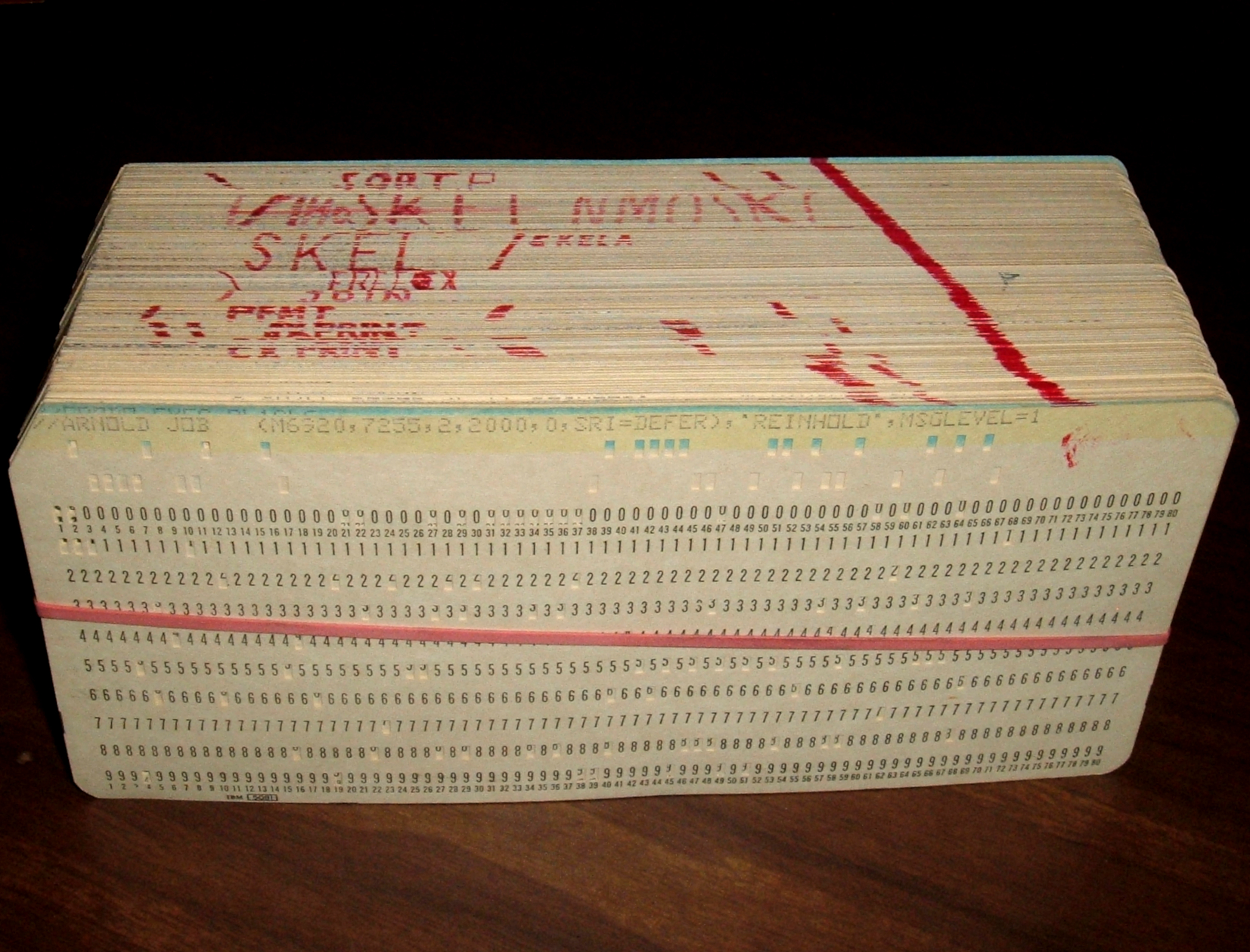
A stiff paper rectangle that stored a civilization's data in holes — Herman Hollerith's tool for the 1890 US Census, then IBM's 80-column standard — and warned its handlers not to fold, spindle, or mutilate it.
Born
1725 CE
Died
1980 CE
Lived
255 years
Dead for
46 yrs
At its peak
Billions of cards produced annually by IBM in the mid-20th century
Cause of death
Replaced
Replaced by
Magnetic tape, disk storage, and interactive terminals
The Obituary
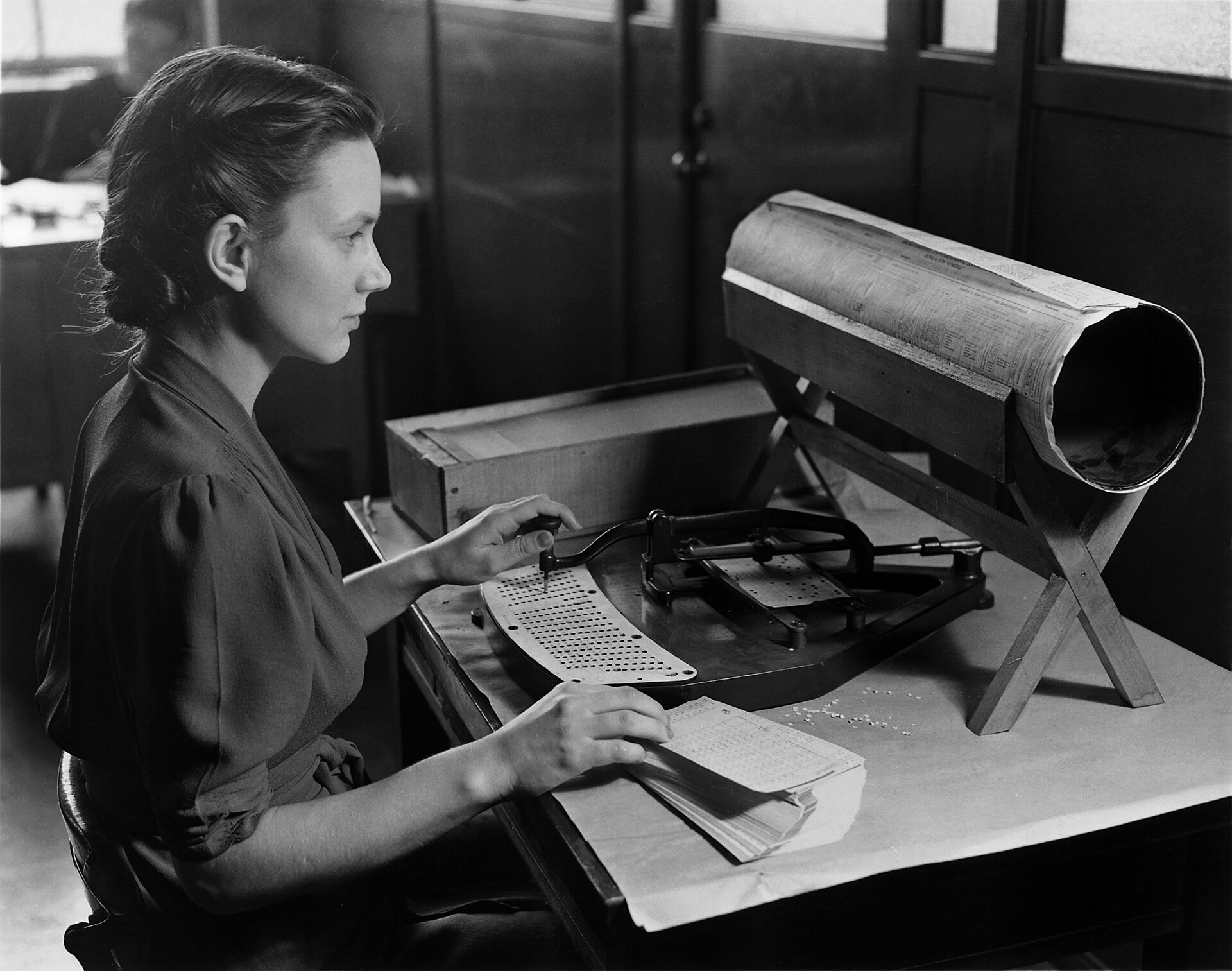
The punched card began as a way to control looms in the 1700s and grew into the backbone of mechanized data. Herman Hollerith adapted the idea for the 1890 US Census, encoding each person as holes in a card and reading them electrically, turning a count that once took years into one of months. His firm became part of IBM, whose 80-column card ruled payrolls, censuses, and early computers for decades. To program or pay or be counted was to feed cards into a machine. Magnetic tape, disks, and screen terminals made the holes unnecessary, and by the 1980s the card had mostly vanished.
Worth remembering
Herman Hollerith's punched-card tabulator cut the 1890 US Census count from years to months.
The IBM 80-column card defined the 'do not fold, spindle, or mutilate' era of bureaucracy.
Gallery
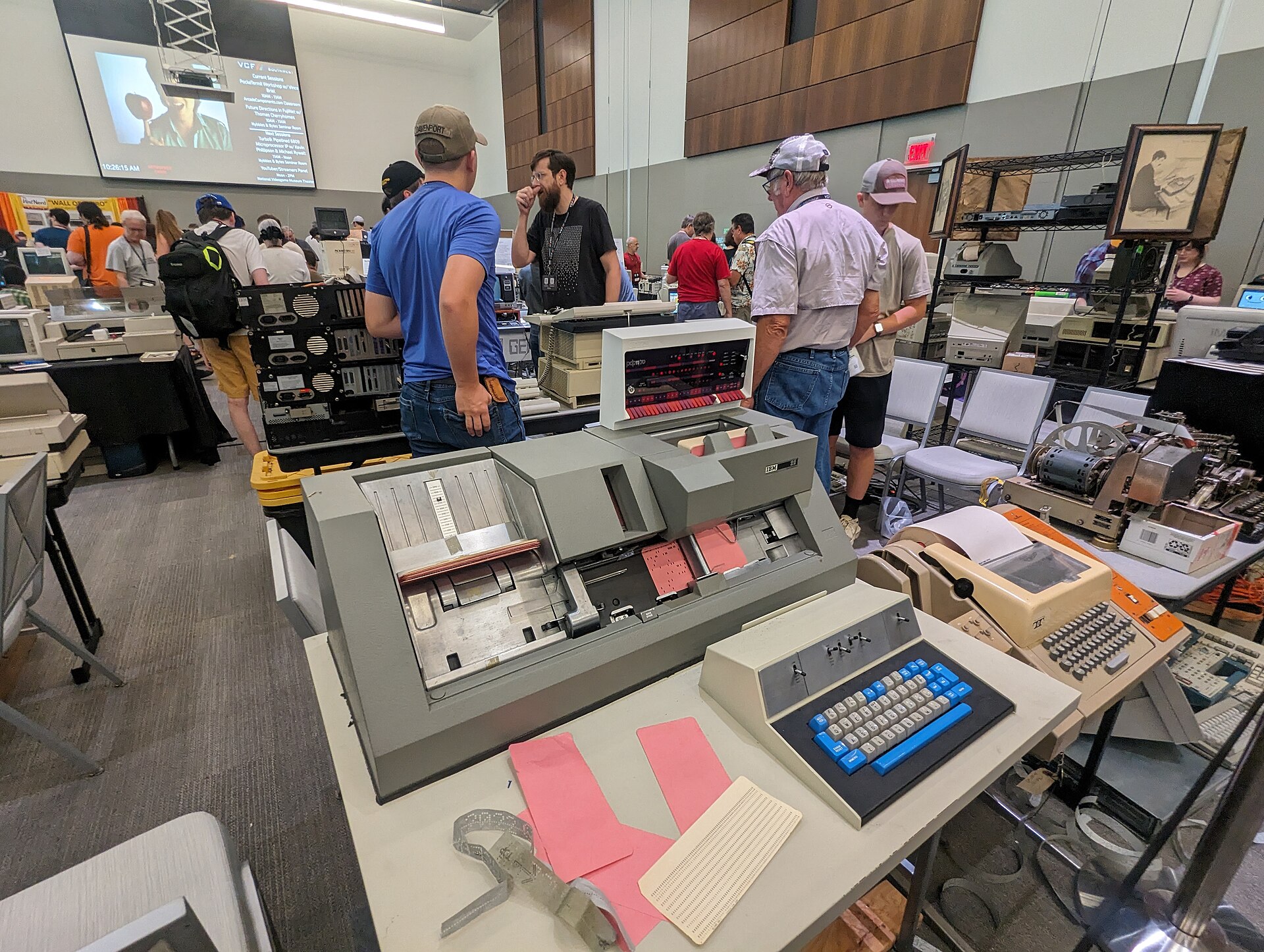
IBM 029 keypunch machine used to create punched cardsPatrick Finnegan · CC BY 2.0A woman operating a Hollerith pantograph card punch for the 1940 US census, circa 1940Public domain
Sources
Punched cards used from looms (c.1725) to Hollerith's 1890 census tabulator Wikipedia
Hollerith's tabulating company became part of IBM Britannica
Hollerith's punched-card tabulating system was used in the 1890 US Census; his firm later became part of IBM, whose 80-column card became the standard Computer History Museum
A graveyard tradition: leave a stone to show you came, and remembered.
Buried nearby — by shared fate or a neighbouring lifespan.