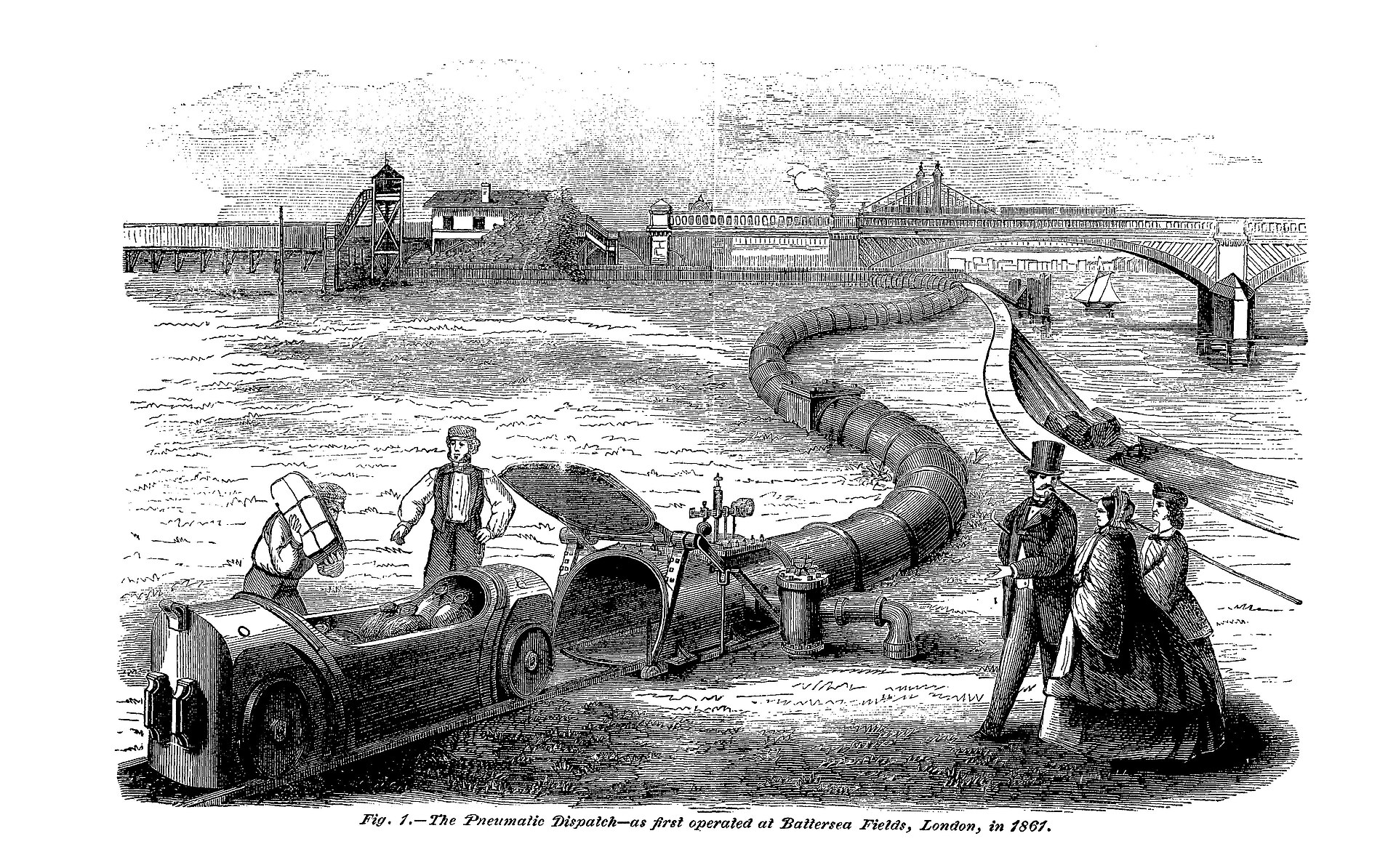
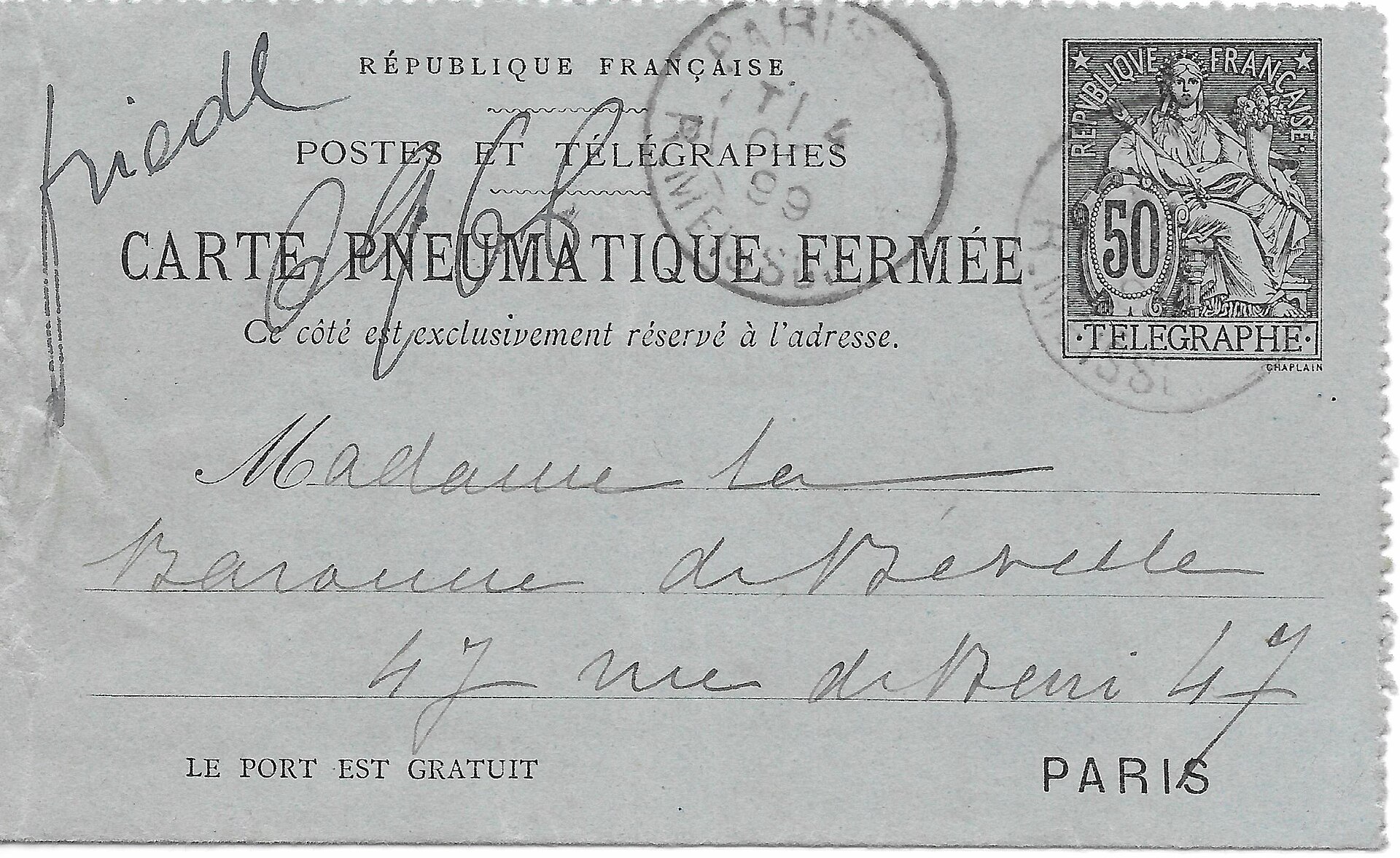
For more than a century, several of the world’s great cities sent their urgent mail not by hand but by air pressure — brass-and-felt capsules fired through a hidden network of underground tubes, hissing beneath the streets at the speed of a fast bicycle. The English telegraph engineer Josiah Latimer Clark patented pneumatic dispatch in 1854 and built the first London line, and within decades New York ran 27 miles of tube carrying over half the city’s mail (1897–1953). Paris ran the most famous of these, the réseau pneumatique: from 1866 it grew to 427 kilometres of pipe linking 130 post offices, and a folded blue pneu became a recognised way for Parisians to send a same-day message across the city.
It was a beautiful, physical solution to a problem the telephone solved without moving anything at all. As phones, then faxes, then digital messaging spread, the tubes carried less and less, until the cost of maintaining hundreds of kilometres of Victorian-era plumbing made no sense. The Paris network shut down at 5 p.m. on 30 March 1984 — having outlived the Berlin and New York systems, and remaining, to this day, the most charming dead infrastructure a city ever buried.
Worth remembering
- Capsules shot through the Paris tubes at up to 47 km/h, carrying a 'pneu' across the city in under two hours — guaranteed same-day, decades before email.
- At New York's 1897 inauguration of its tube network, operators sent a live black cat whooshing through the pipes as a stunt.
The people
-
Josiah Latimer Clark — Pneumatic-dispatch pioneer, 1822–1898
English telegraph engineer who patented pneumatic dispatch in 1854 and built the first London line.
Gallery
Watch
Further reading
Sources
- The Paris pneumatic post ran 1866–1984; peaked at 427 km of tubes in 1934; closed 30 March 1984 Wikipedia
- Urban pneumatic tube postal networks and their decline Wikipedia
- New York City's pneumatic tube mail network ran from 1897 to 1953, moving mail through 27 miles of underground tubes that at peak carried over half the city's mail. Untapped Cities
A graveyard tradition: leave a stone to show you came, and remembered.