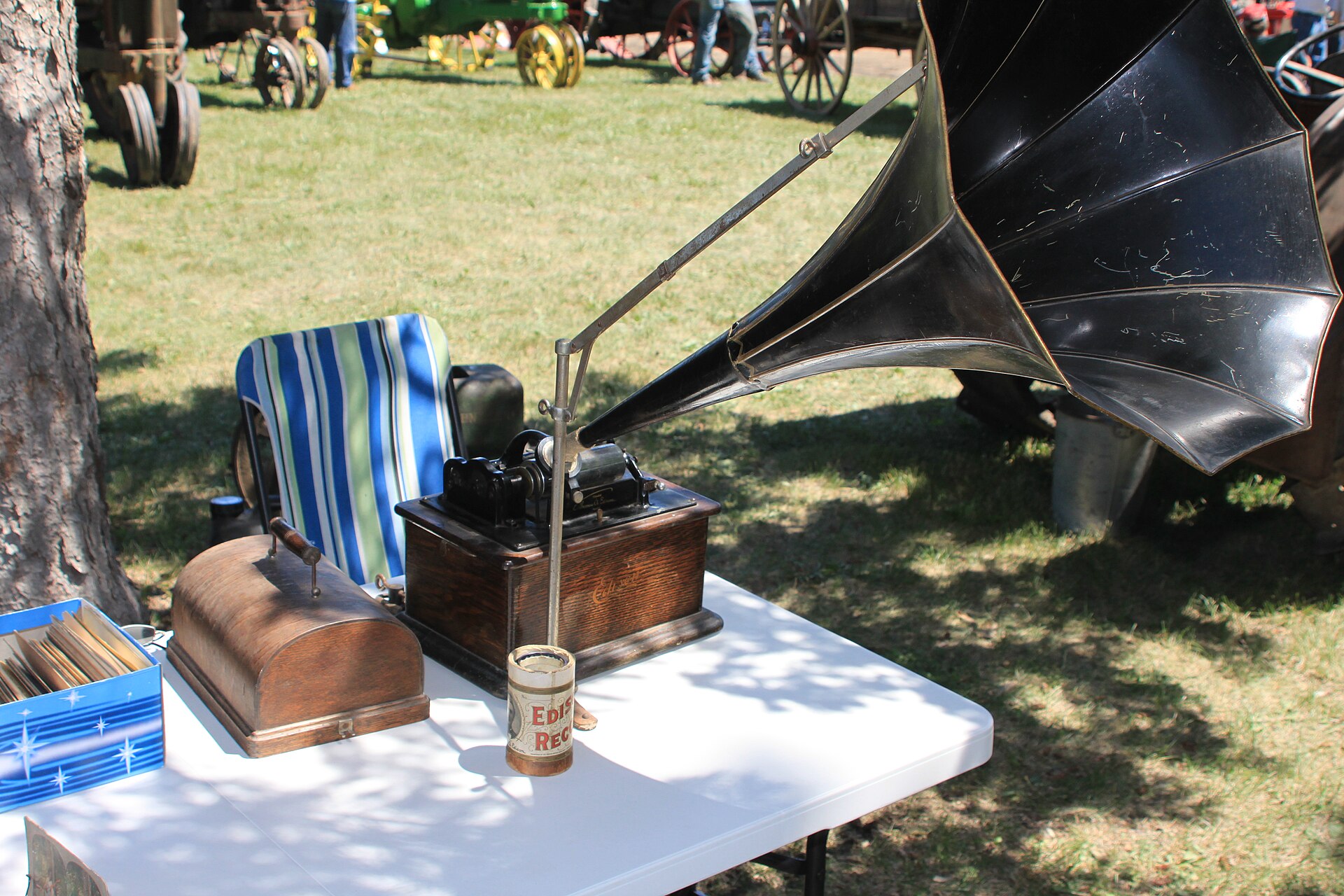
Phonograph cylinders were the world’s first commercial recorded-sound medium, marketed from 1889 after Thomas Edison’s 1877 phonograph invention, before Emil Berliner’s flat disc record displaced them in the 1910s. The format was the only game in town for recorded music through the 1890s. Cylinders were hollow wax tubes with audio grooves cut into their outer surface; you loaded one onto a mandrel and the stylus tracked the spiral groove as the cylinder rotated. Edison, Columbia, and a handful of smaller labels sold millions across the United States and Europe, with prerecorded content ranging from brass band marches to vaudeville monologues.
Emil Berliner’s flat disc record proved easier to manufacture, store, ship, and brand. Columbia exited cylinders in 1912; by the mid-1910s, disc records had taken over retail. Edison held on longer than anyone — introducing the four-minute Amberol, then the celluloid Blue Amberol, fighting for market relevance — but finally shut the entire operation in November 1929. The cylinder’s run from dominant medium to extinct format took roughly 40 years. It established the basic business model of recorded music that disc formats carried for another century.
Worth remembering
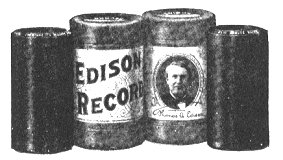
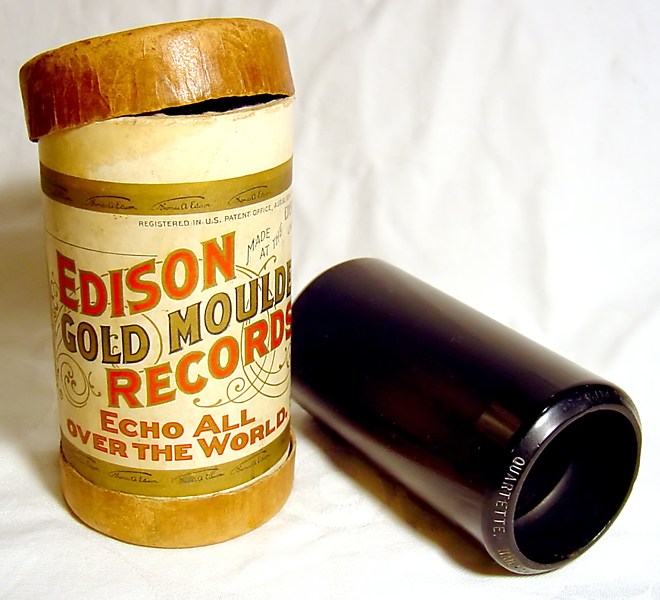
- Edison's 1902 Gold Moulded Records were cast from a single master mould, enabling mass production of thousands of identical cylinders — before that, performers often recorded the same song dozens of times to fill individual cylinder orders.
- The four-minute Blue Amberol cylinder introduced in 1912 was made of celluloid rather than fragile wax, offering a brighter sound and much better durability — but by then, the disc had already won the commercial war.
Gallery
Watch
Sources
- Commercial prerecorded wax cylinders marketed from 1889; Edison ceased manufacturing in November 1929; cylinders dominated circa 1896–1916 Wikipedia
- In the 1910s, the competing disc record system triumphed in the marketplace; Columbia Records dropped cylinders in 1912 Wikipedia
- Emil Berliner's flat disc design introduced in 1887 eventually superseded cylinders; the 78-RPM record had become standard by 1915 Encyclopaedia Britannica
A graveyard tradition: leave a stone to show you came, and remembered.