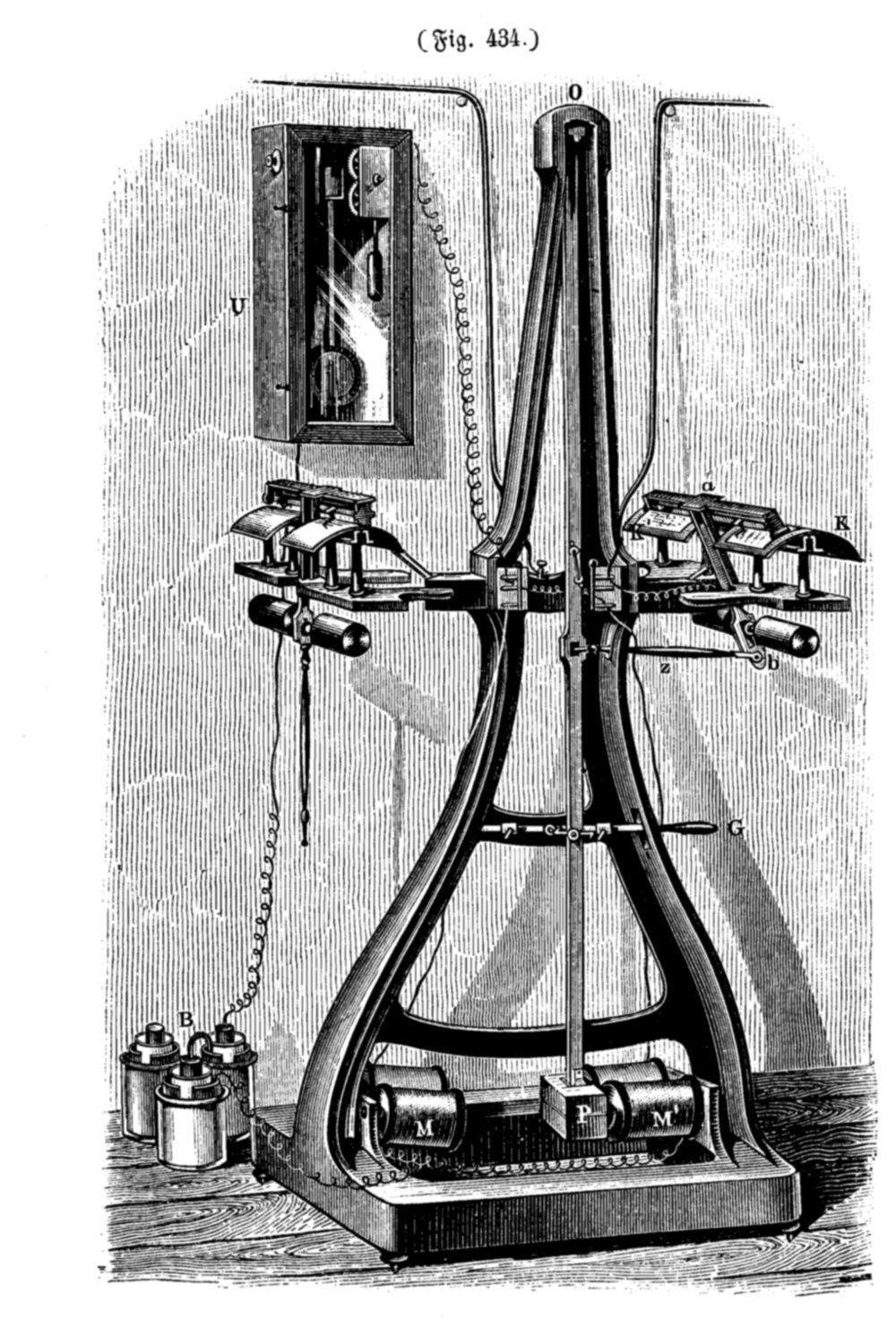
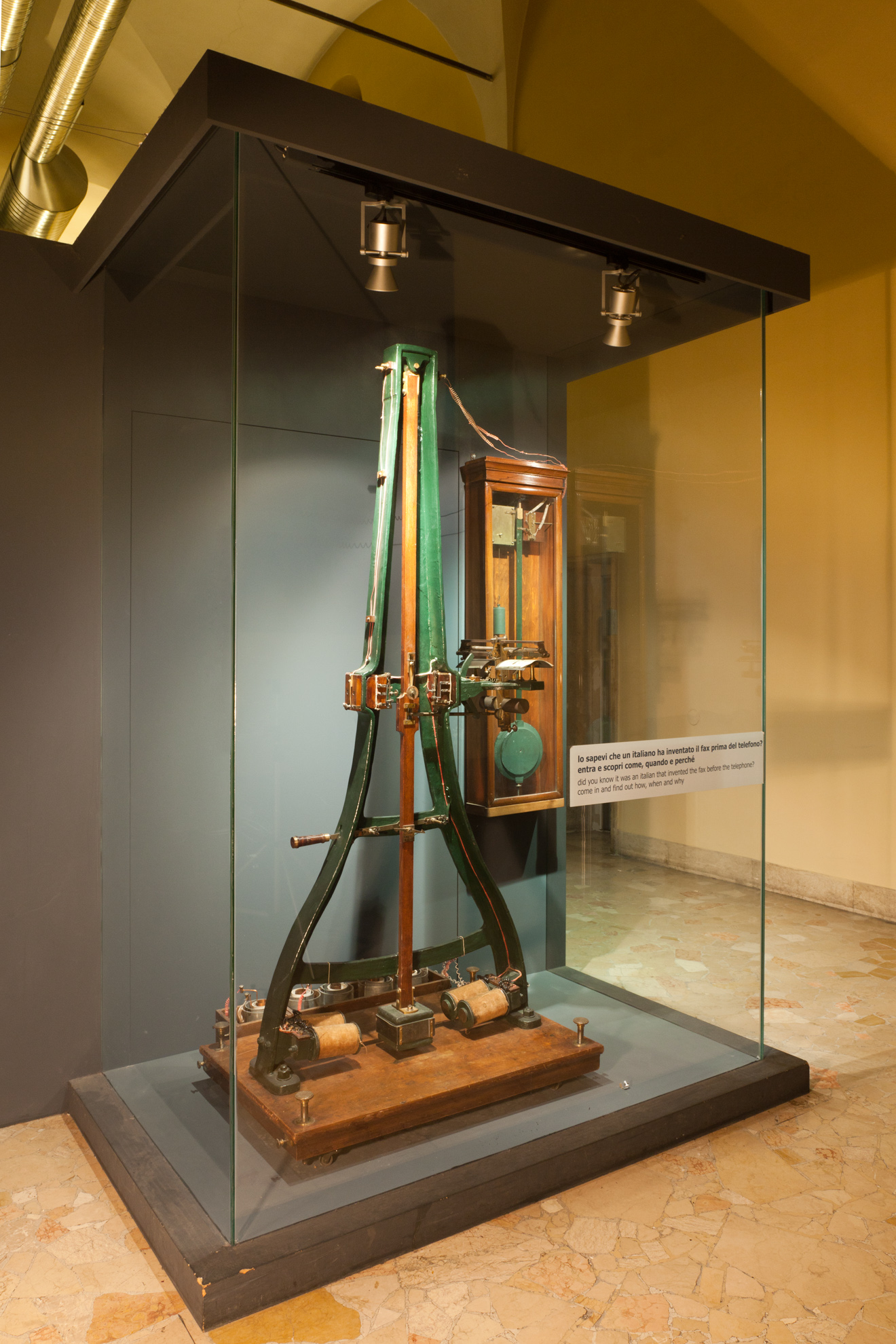
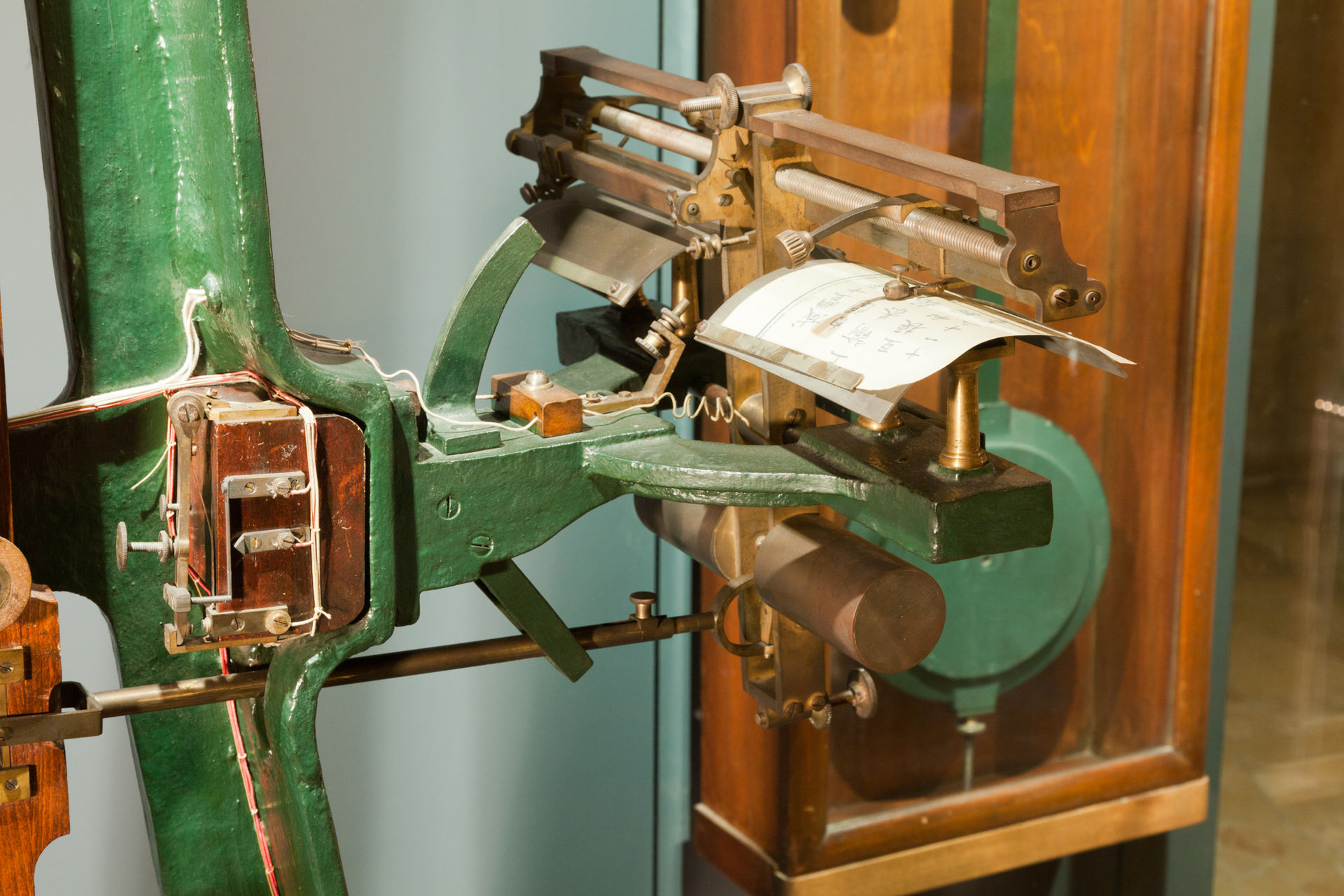
The pantelegraph is the museum’s clearest case of a technology that arrived too early and died for it. Built by the Italian priest and physicist Giovanni Caselli and backed by Napoleon III, it was, in plain terms, a working fax machine — in 1865. The sender wrote a message or drew an image on a sheet of tin foil using an electrically insulating ink. A stylus mounted on a large swinging pendulum scanned across the foil line by line; where the bare metal showed, current flowed, and where the ink lay, it did not. At the receiving station an identical pendulum, held in exact synchrony by a precision clock, dragged a stylus across paper soaked in a chemical that darkened under current, reproducing the original marks stroke for stroke. It ran as a real commercial service on the French telegraph network between Paris and Lyon, later Marseille, and carried nearly five thousand transmissions in its first year — many of them banks verifying signatures, the very use that would sell fax machines a century on.
It did not last. The network never spread beyond a few French lines, the apparatus was complex and costly, and demand was thin. When the Franco-Prussian War broke over France in 1870 and the state telegraph system was thrown into chaos, the pantelegraph service was shut down, and it was never restarted. The remarkable thing is the gap that followed: the fax was not improved or replaced so much as forgotten, and the technology of sending images down a wire had to be invented again from scratch in the early 1900s by Arthur Korn and Édouard Belin, working from different principles with no line back to Caselli. His machine was not a step on the road to the fax; it was a dead end that did the same job first, sixty years before the world was ready to use it.
Worth remembering
- The sender wrote on a sheet of tin foil in insulating ink; a stylus on a swinging two-metre pendulum scanned the foil line by line, and an identical pendulum at the far end, kept in perfect step by a regulating clock, redrew the marks on chemically treated paper — a fax, line-scanned, in 1865.
- Its main customer was banking: it let a bank in Lyon check a signature against the original held in Paris in minutes, the same verification need that would sell fax machines a century later.
Gallery
Sources
- Caselli's pantelegraph ran a commercial service from 1865, transmitting nearly 5,000 messages in its first year, and was discontinued in 1870 after France's defeat in the Franco-Prussian War IT History Society
- The pantelegraph transmitted handwriting and images over telegraph lines using synchronised pendulums; it was put into service Paris–Lyon (1865) and Paris–Marseille (1867) before being abandoned, with the modern fax developed independently decades later Scientific Instrument Society
A graveyard tradition: leave a stone to show you came, and remembered.