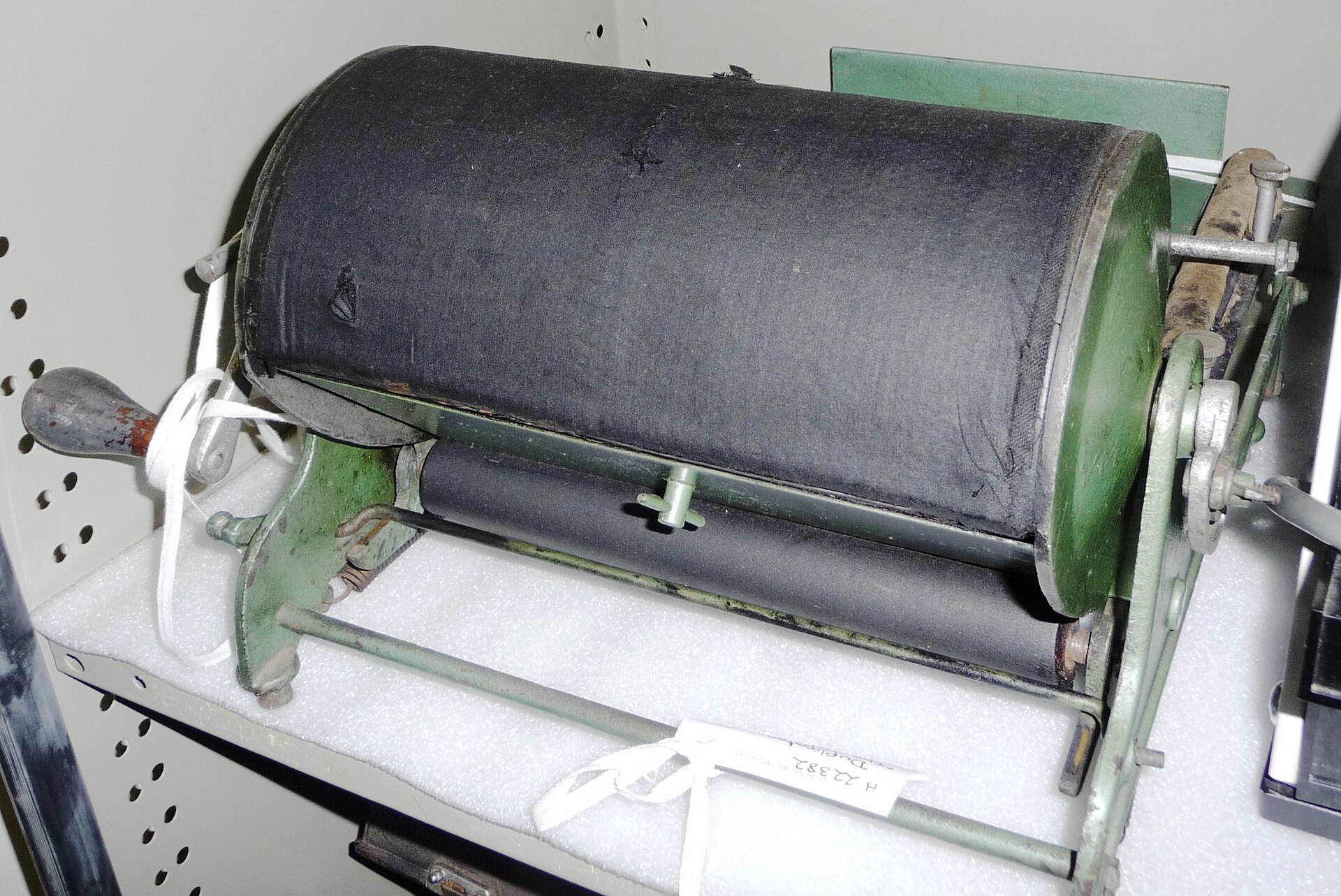
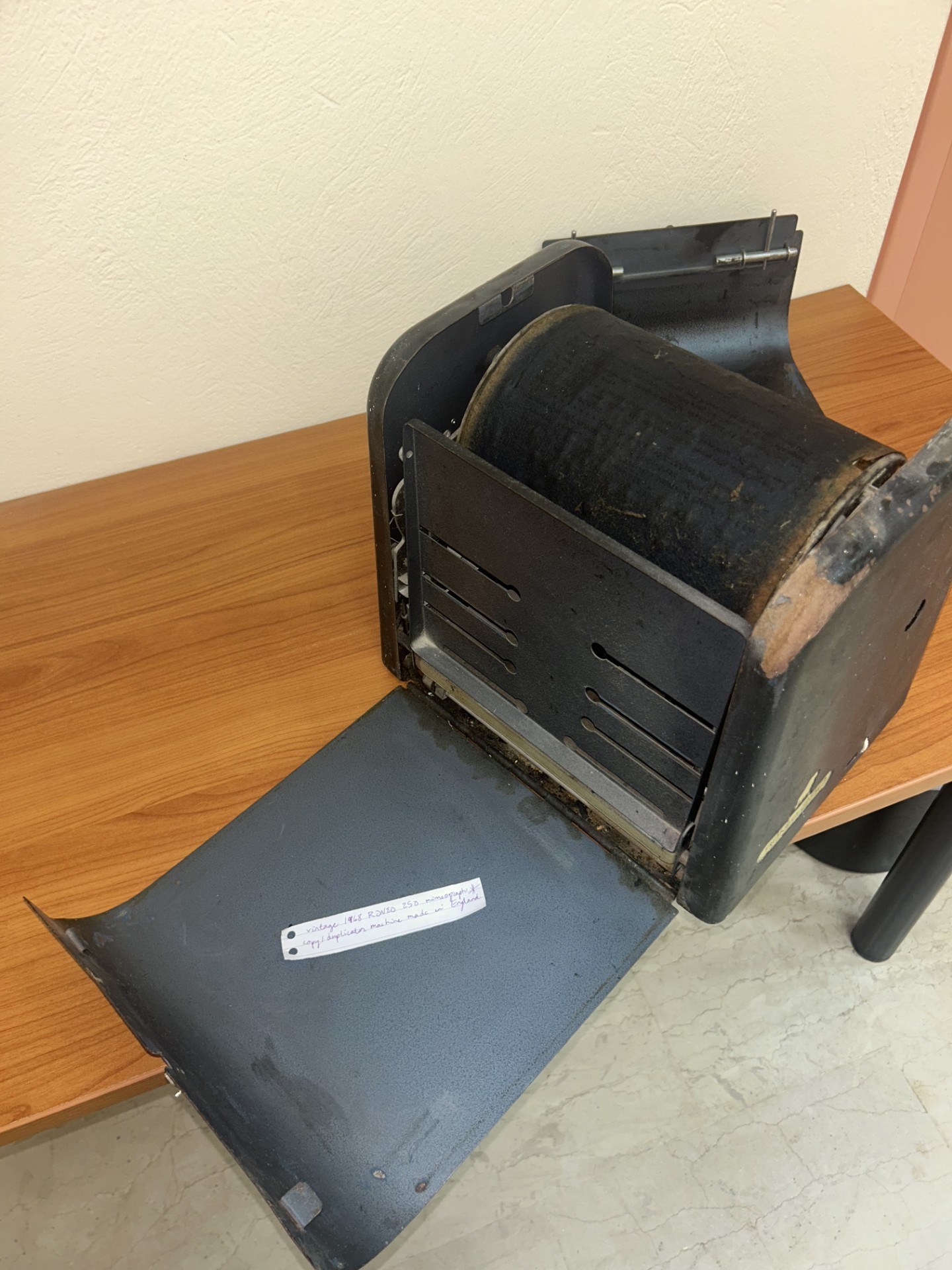
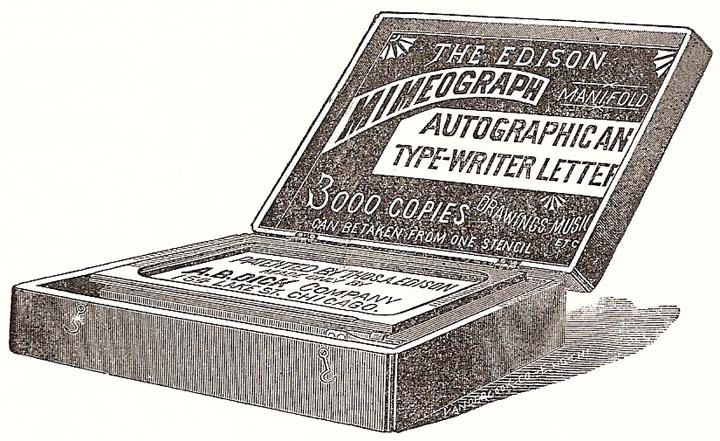
The mimeograph was a stencil-based duplicating machine: a sheet of coated fibre paper was typed or drawn on to cut away the coating, creating a stencil mounted on a rotating drum. Ink was forced through the openings onto each sheet of paper passing underneath. Albert Blake Dick licensed Edison’s electric pen technology in 1887 and built the first commercial mimeograph; by the early 20th century the machines were in schools, government offices, newsrooms, and religious organisations across the United States and Europe. A single stencil could produce up to 5,000 readable copies — far more than was practical with carbon paper and far cheaper than professional typesetting.
The photocopier did not kill mimeograph quickly. Xerox introduced the first plain-paper copier in 1959, but the machines were expensive and the transition took two decades. Through the 1970s mimeographs were still active in schools and small organisations that could not justify the cost of a photocopier lease. By the early 1980s, falling copier prices had closed the gap, and the last institutional mimeographs were retired. The spirit duplicator — a related technology using methanol-dissolved dye that produced those characteristic light-purple copies — died at roughly the same time and for the same reason.
Worth remembering
- The distinctive smell of a freshly mimeographed sheet — a combination of isopropyl alcohol and waxy stencil ink — was familiar to every student in the mid-20th century, and references to it appear consistently in memoirs as a sensory marker of school life.
- Mimeograph machines were essential to the samizdat underground press under Soviet censorship and to American activist publishing from labour unions to science fiction fan clubs, because the stencil could be prepared by anyone with a typewriter.
Gallery
Sources
- Albert Blake Dick licensed Edison patents in 1887; mimeograph could produce up to 5,000 copies from a single stencil; photocopying gradually displaced mimeographs beginning in the late 1960s Wikipedia
- The mimeograph became largely obsolete with the development of xerography and other photocopiers Encyclopaedia Britannica
- Photocopying gradually displaced mimeographs, spirit duplicators, and hectographs; easier-to-use photocopying has replaced mimeography almost entirely in developed countries Wikipedia
A graveyard tradition: leave a stone to show you came, and remembered.