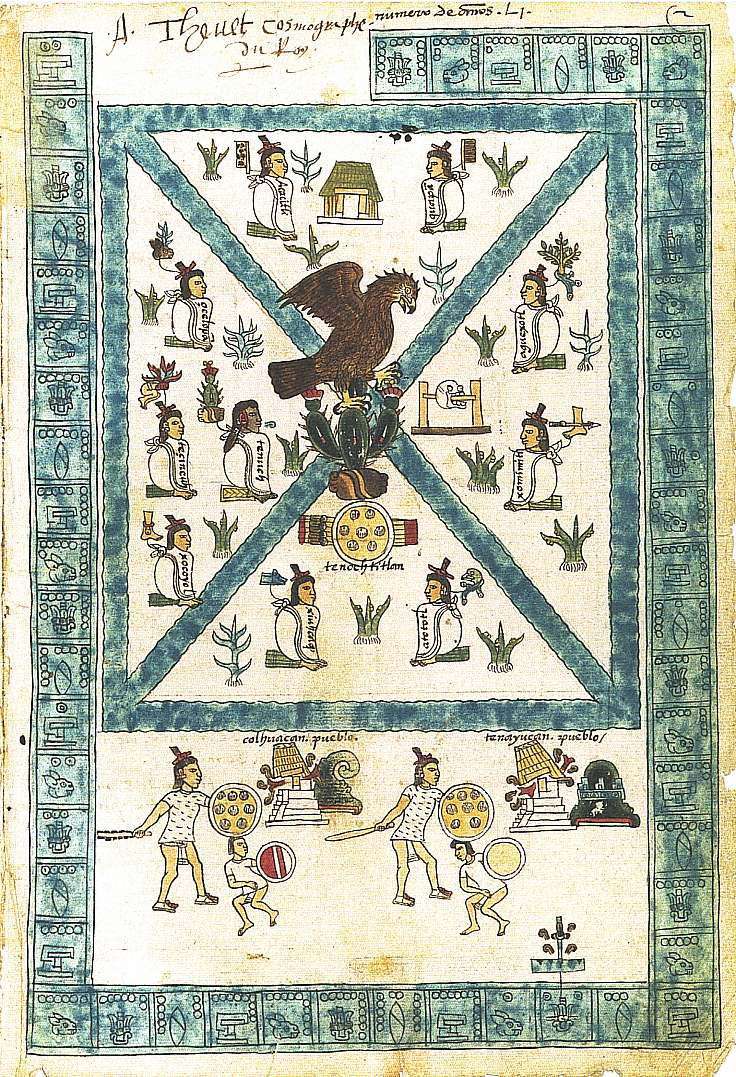
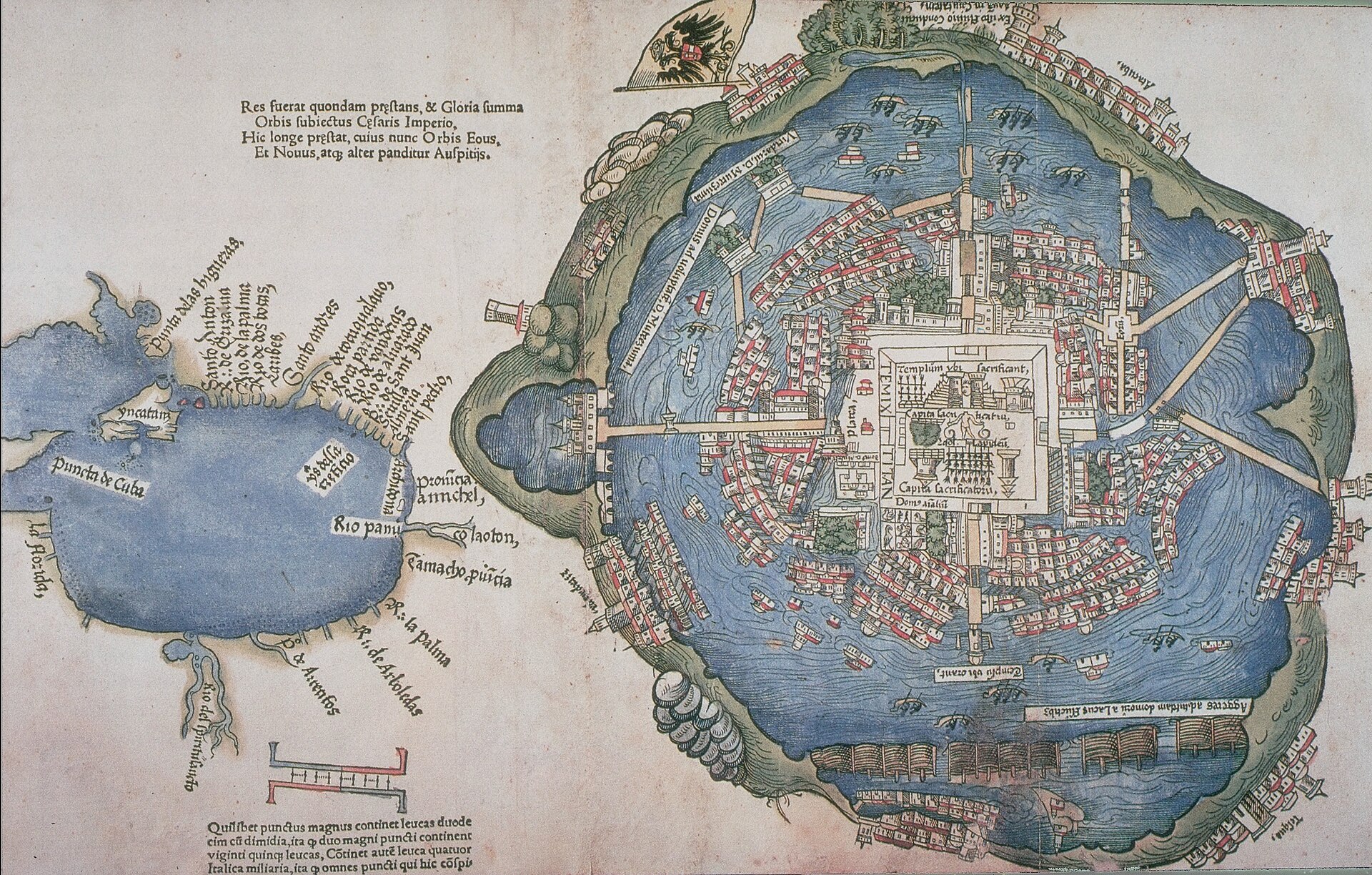
When the Spanish first saw Tenochtitlan in 1519, they could not quite believe it: a city of perhaps 200,000 people built on an island in a lake, laced with canals and causeways, larger than Paris or Venice or any city the conquistadors had ever known. It was the capital of the Aztec Empire, a coalition of three city-states that had dominated central Mexico for not quite a century.
It fell in two years, and the swords were the least of it. Hernán Cortés commanded only a few hundred Spaniards; what made the conquest possible was the tens of thousands of indigenous warriors — above all the Tlaxcalans — who hated Mexica domination and joined the invaders. And ahead of the armies came smallpox, a disease the Americas had never met, which tore through the defenders of Tenochtitlan during the final siege. The city fell on 13 August 1521, was razed, and had Mexico City built on top of it. An empire was buried under its own replacement.
Worth remembering
- Tenochtitlan was fed by chinampas — 'floating gardens' of reclaimed lake-bed so productive they sustained one of the densest cities on Earth.
- The Mexica required near-universal schooling for children, girls and boys alike — unusual anywhere in the 15th-century world.
The people
-
Moctezuma II — Ninth emperor, c. 1466–1520
Received Cortés in 1519 and died in Spanish custody the following year, under disputed circumstances.
-
Cuauhtémoc — Last emperor, c. 1495–1525
Led the final defence of Tenochtitlan; captured at its fall in 1521 and executed by Cortés four years later.
-
Hernán Cortés — Conquistador, 1485–1547
Commanded a few hundred Spaniards and tens of thousands of indigenous allies against the Mexica.
Gallery
Watch
Further reading
Sources
- Aztec Empire (1428–1521); fell to Cortés with indigenous allies and a smallpox epidemic Wikipedia
- Tenochtitlan, an island capital of ~200,000, larger than contemporary European cities Wikipedia
- The Aztec (Mexica) civilization formed the Triple Alliance of Tenochtitlan, Texcoco, and Tlacopan in 1428; over time Tenochtitlan's ruler became the supreme huey tlatoque of the alliance World History Encyclopedia
- Tenochtitlan fell on 13 August 1521 after a 75-day siege; the city was then razed and Mexico City built on its ruins, erasing the physical remains of the Aztec capital World History Encyclopedia
A graveyard tradition: leave a stone to show you came, and remembered.