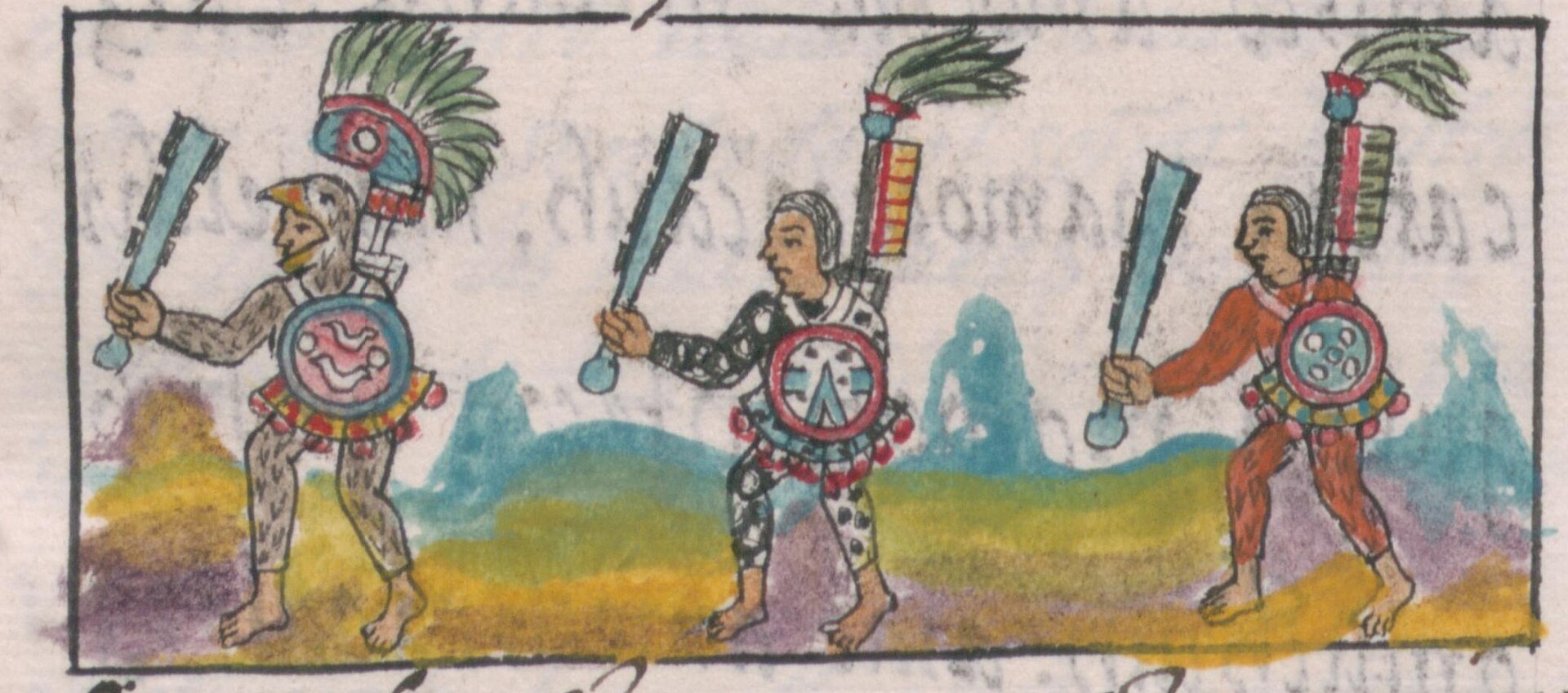
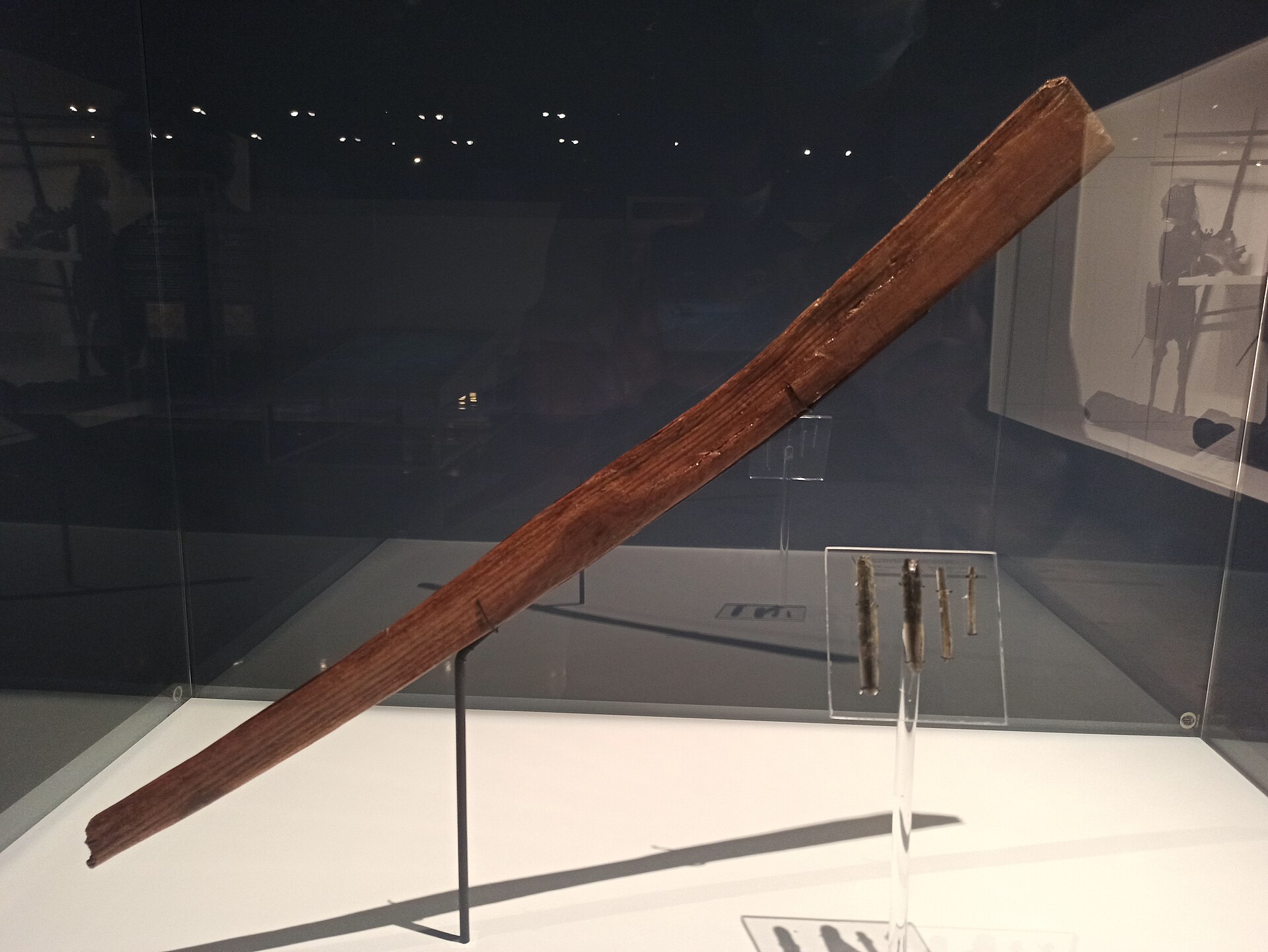
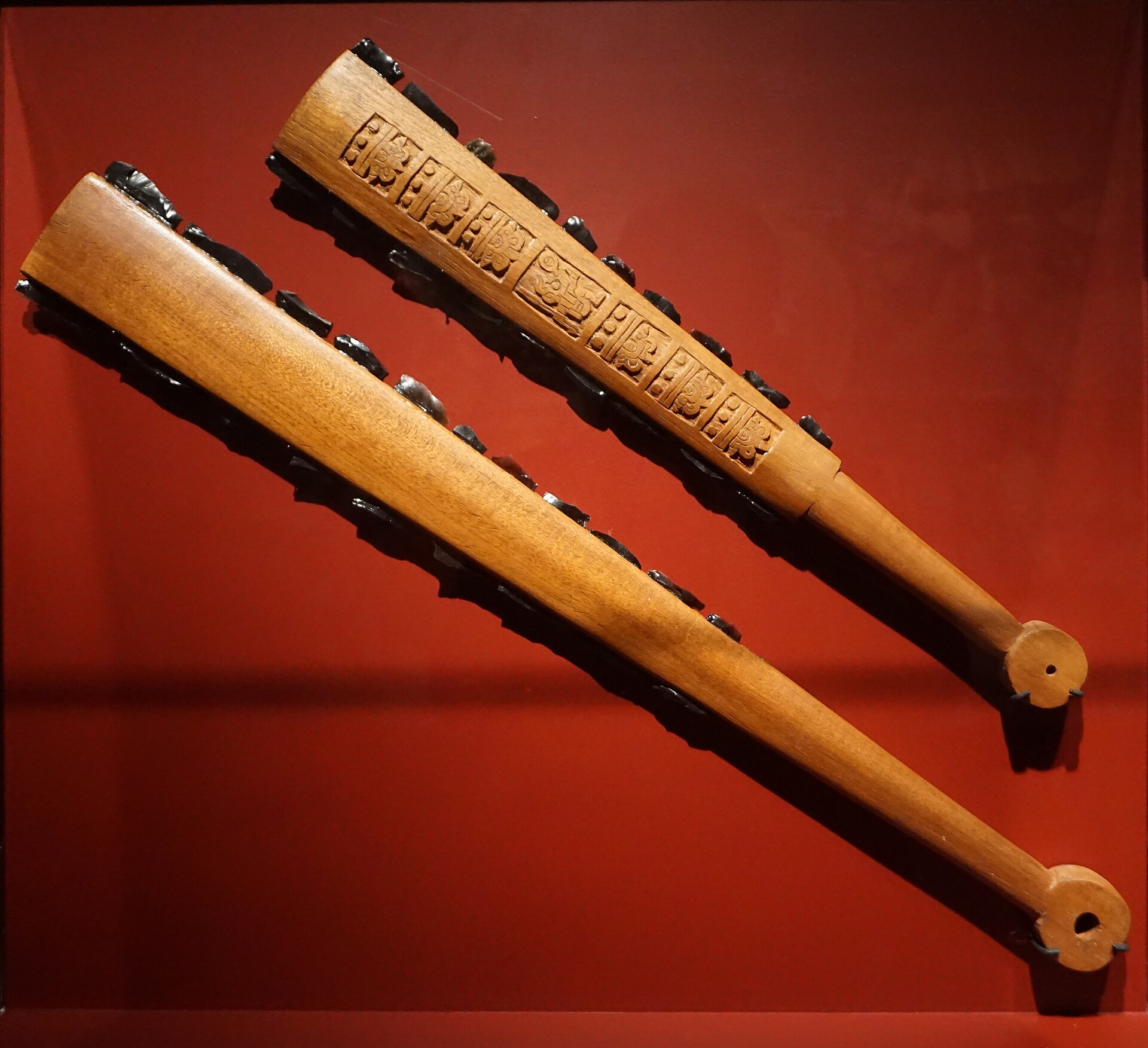
The macuahuitl was the sword of the Aztec world: a flat wooden shaft, sometimes as long as a man, set along both edges with blades of knapped obsidian. Volcanic glass takes an edge finer than surgical steel — under a microscope a fresh obsidian blade is smoother and sharper than any metal the sixteenth century could forge — and a warrior who knew how to use one could open terrible wounds. Spanish conquistadors wrote home in alarm about it; Bernal Díaz and others claimed they had seen a macuahuitl nearly take the head off a horse. The weapon was also shaped by belief: Aztec warfare prized captives for sacrifice, so the macuahuitl was built to disable and seize rather than simply to kill.
That same logic helped doom it. Against Spanish steel swords, plate armour and firearms in 1519–1521, a glass-edged club that shattered on a hard parry and was meant to wound-not-kill was outmatched, and after the fall of Tenochtitlan in 1521 it stopped being made at all. Its death is unusually complete. Not only did the craft of making it end with the world that needed it — even the objects vanished. A genuine macuahuitl survived for centuries in the royal armoury in Madrid — the Real Armería — until a fire there in 1884 destroyed it. No authentic original is known to exist anywhere on earth. What is left is a handful of drawings in colonial codices such as the Florentine Codex and the descriptions of the men who fought against it: a weapon remembered only by its enemies.
Worth remembering
- Spanish accounts claimed a skilled warrior could take a horse's head off with one stroke; modern experiments suggest the blow would cut deep and crack bone but not fully decapitate — the chroniclers exaggerated a weapon that genuinely terrified them.
- Its design carried Aztec war theology: the aim was to capture enemies alive for sacrifice, so the flat body could stun while the obsidian edges — sharper under a microscope than any steel of the age, but quick to shatter — opened incapacitating wounds. Against plate armour and steel, that logic of capture-not-kill became fatal.
Gallery
Sources
- The macuahuitl ceased to be made after the Spanish conquest; one specimen survived in the Real Armería in Madrid until it was destroyed in a fire in 1884, leaving no authentic original (Ross Hassig, Aztec Warfare, 1988). Fire and Steel (citing Ross Hassig, Aztec Warfare, University of Oklahoma Press, 1988)
- Spanish chroniclers including Bernal Díaz del Castillo reported the macuahuitl could nearly behead a horse in one blow; obsidian fractures to an edge far sharper than steel but is brittle and shatters on hard impact. Ancient Origins
- No original macuahuitl survives today; the weapon is known only from re-creations based on 16th-century illustrations such as the Florentine Codex and from Spanish chronicles. The Vintage News
A graveyard tradition: leave a stone to show you came, and remembered.