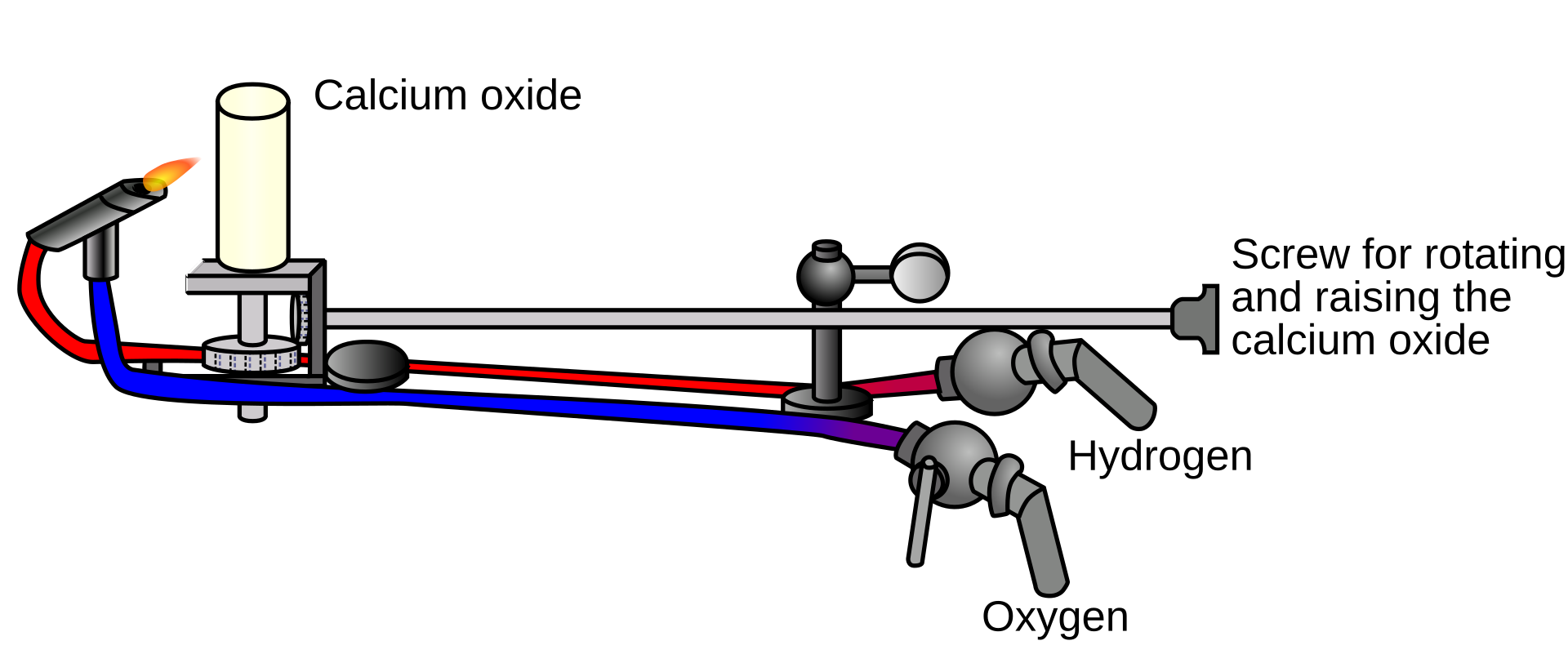
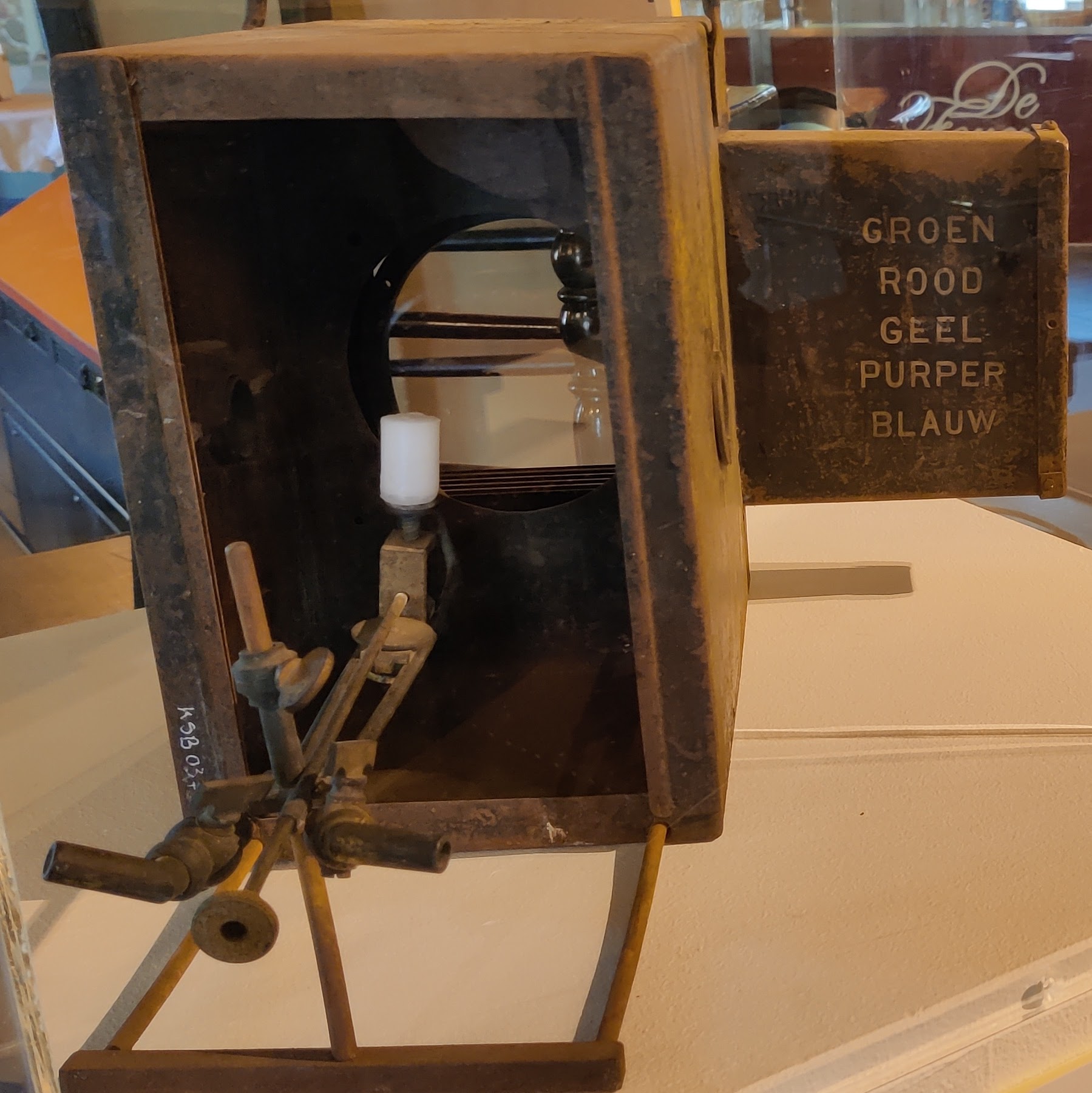
Limelight was a piece of chemistry pressed into service as showbusiness. If you heat a block of quicklime — calcium oxide — hot enough, it glows with an intense white light without actually melting, and the way to get it that hot was a blowpipe flame of oxygen and hydrogen burning together. Demonstrated in the 1820s by Goldsworthy Gurney and Thomas Drummond — hence its other name, the Drummond light — and taken up by theatres from the 1830s, first at Covent Garden in 1837, the resulting light was far brighter and whiter than any gas jet, and crucially it could be focused through a lens into a controllable beam. That made it the first real theatrical spotlight. An operator could keep the beam locked on a singer or actor as they crossed an otherwise dark stage, lighting the star and nothing else — and the desire to be in that beam, on stage and off, is exactly where the phrase “in the limelight” comes from.
It was also dangerous and demanding. Each light needed an operator tending cylinders of pressurised gas and a slowly burning lump of lime, and theatre fires of the era were repeatedly traced to stage lighting. So when reliable electricity arrived, limelight had little defence: the electric arc lamp began replacing it in the 1890s, and incandescent spotlights finished the job in the years after, offering the same brilliance with no open flame and far less labour. By the early twentieth century limelight was gone from the theatre, surviving only as an idiom — a Victorian chemistry trick that lit the stars of the stage for two generations and then went dark.
Worth remembering
- The light came from candoluminescence: a cylinder of quicklime — calcium oxide — heated by a blowpipe flame of mixed oxygen and hydrogen glowed an intense white without melting, far brighter than any gas jet, and could be aimed through a lens as a spotlight.
- An operator kept the beam on the principal performer as they moved, which is why the most coveted spot on a Victorian stage — and, by extension, public attention itself — became known as 'the limelight.' The same brilliant beam was also used for surveying and to throw magic-lantern images on a hall-sized screen.
Gallery
Sources
- Limelight was first used for stage illumination at Covent Garden in 1837 and was widely used in theatres in the 1860s and 1870s; the electric arc spotlight replaced it late in the 19th century Encyclopaedia Britannica
- Limelight heated a cylinder of quicklime in an oxyhydrogen flame to produce an intense white light used as a theatrical spotlight; it was replaced by electric lighting late in the 19th century partly due to its fire risk Oxford Open Learning
A graveyard tradition: leave a stone to show you came, and remembered.