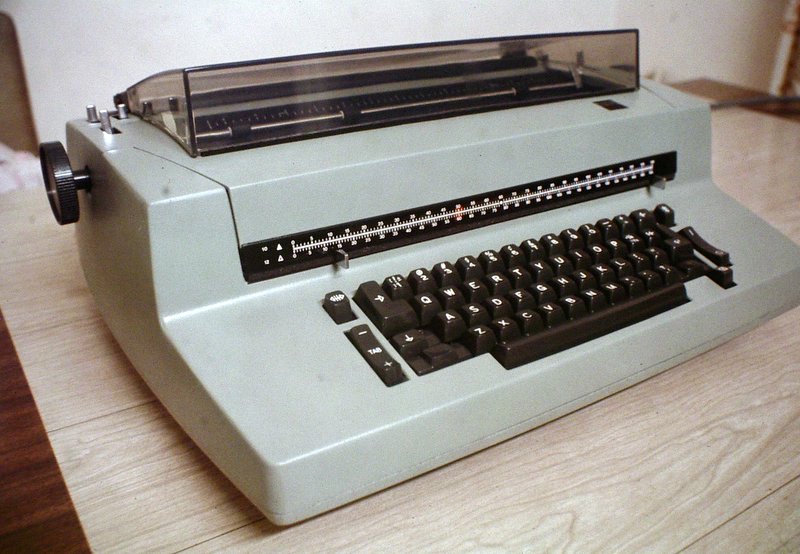
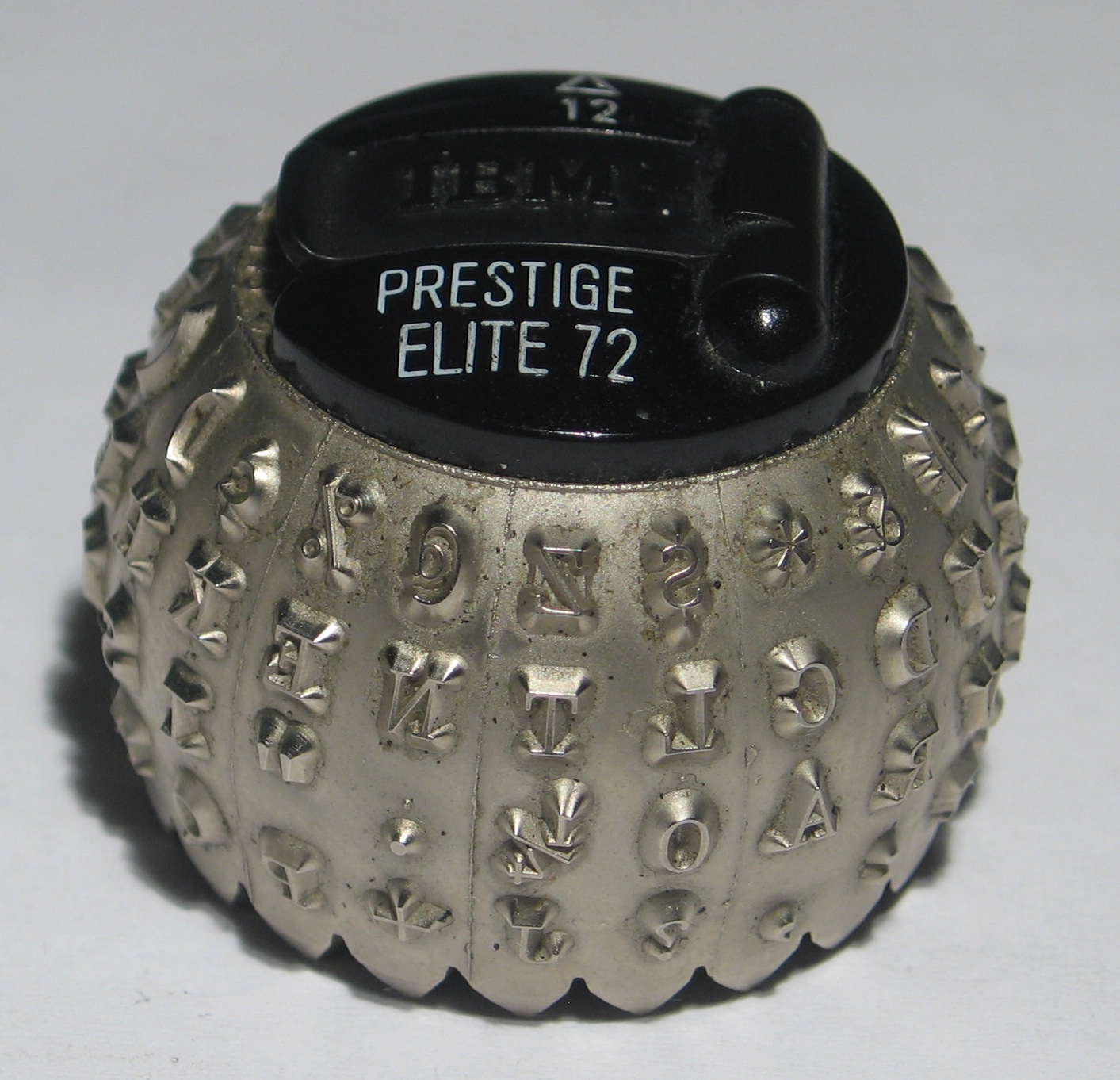
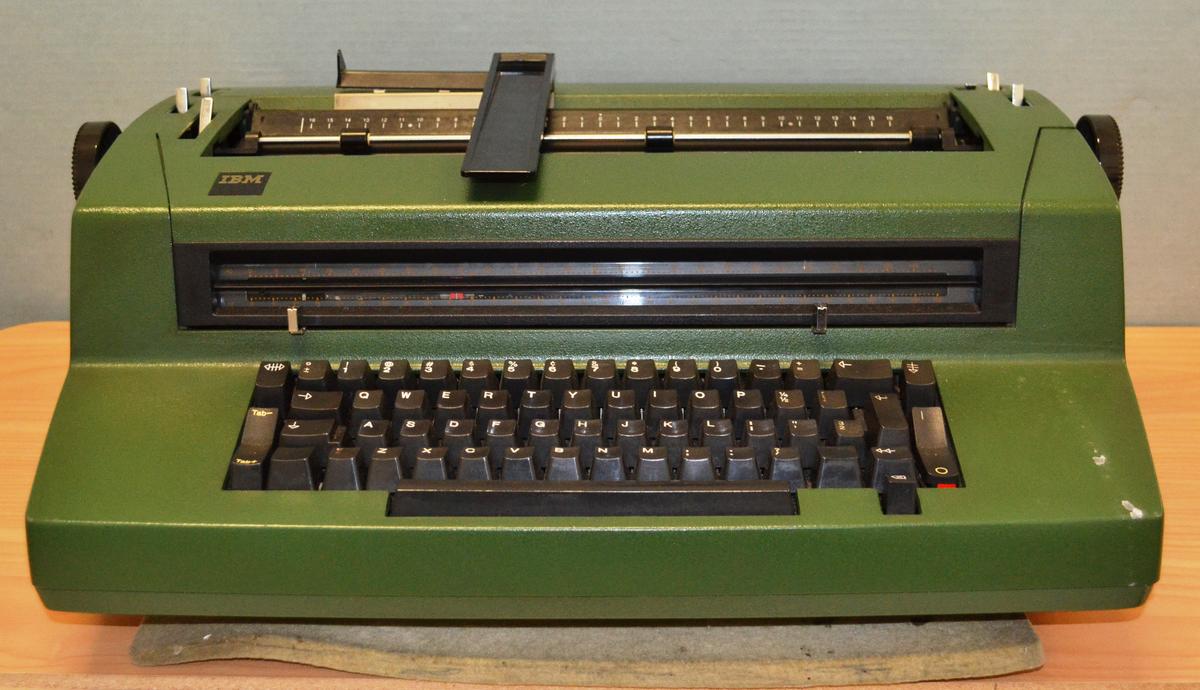
The Selectric didn’t just replace typebars, it deleted the entire mechanism that made typebars necessary. Every typewriter since 1874 had swung a separate metal arm for each letter, which meant fast, uneven typing could jam two arms together mid-strike. IBM’s answer, launched 31 July 1961 after seven years of engineering under Horace “Bud” Beattie’s team, was a single chrome-plated sphere etched with every character, the “golf ball,” that spun and tilted to the right position and struck the page in one motion — nothing to jam, no basket to widen. It also meant the typeface itself was interchangeable: swap the ball, in about five seconds, and the same machine typed in a different font, or in Greek, or in Cyrillic. IBM had 80,000 orders before customers had touched one; by 1978 it owned 94% of the US electric-typewriter market, and by its 25th anniversary in 1986 it had sold more than 13 million units. For two decades the Selectric wasn’t the good typewriter in the office — it was the office typewriter, the default noise behind every secretary and every draft.
Its own company ended it. IBM replaced the Selectric line in 1984 with the Wheelwriter, a daisy-wheel machine with electronic memory that blurred into the word processors already arriving on the same desks, and in 1991 IBM gave up on typewriters altogether, spinning the whole business off to the newly formed Lexmark. What actually killed the Selectric wasn’t a better ball — it was the personal computer, which offered infinite correction, storage, and reformatting that no spinning sphere could match. A machine that had captured 94% of a market in a decade needed a little over a decade more for that market to stop existing as computers and their printers moved in. Dominance is not eternal; sometimes it just means you haven’t met the next mechanism yet.
Worth remembering
- The typeball's design team, led by engineer Horace 'Bud' Beattie, spent roughly seven years solving the mechanics before the first Selectric shipped in 1961.
- By the end of 1961 IBM already had 80,000 orders for a machine typists hadn't yet used, on the promise that a ball could tilt and spin faster than a typist's fingers could jam it.
Gallery
Further reading
Sources
- IBM introduced the Selectric on 31 July 1961; instead of typebars it used a chrome-plated plastic 'element' (the 'typeball' or 'golf ball') that rotated and tilted to strike each character, eliminating the jamming baskets of typebars caused Wikipedia
- The three Selectric models eventually captured 75 percent of the US market for electric typewriters used in business, and by the machine's 25th anniversary in 1986 more than 13 million had been made and sold Wikipedia
- By 1978 IBM held 94% of the market for electric typewriters on the strength of the Selectric; changing the typeface took about five seconds by swapping the ball Batchelor Business Machines
- IBM replaced the Selectric line with the IBM Wheelwriter, a daisy-wheel electronic typewriter with memory and word-processing features, in 1984 Wikipedia
- IBM spun off its entire typewriter business, including the Wheelwriter line, to the newly formed Lexmark International in 1991 Wikipedia
A graveyard tradition: leave a stone to show you came, and remembered.