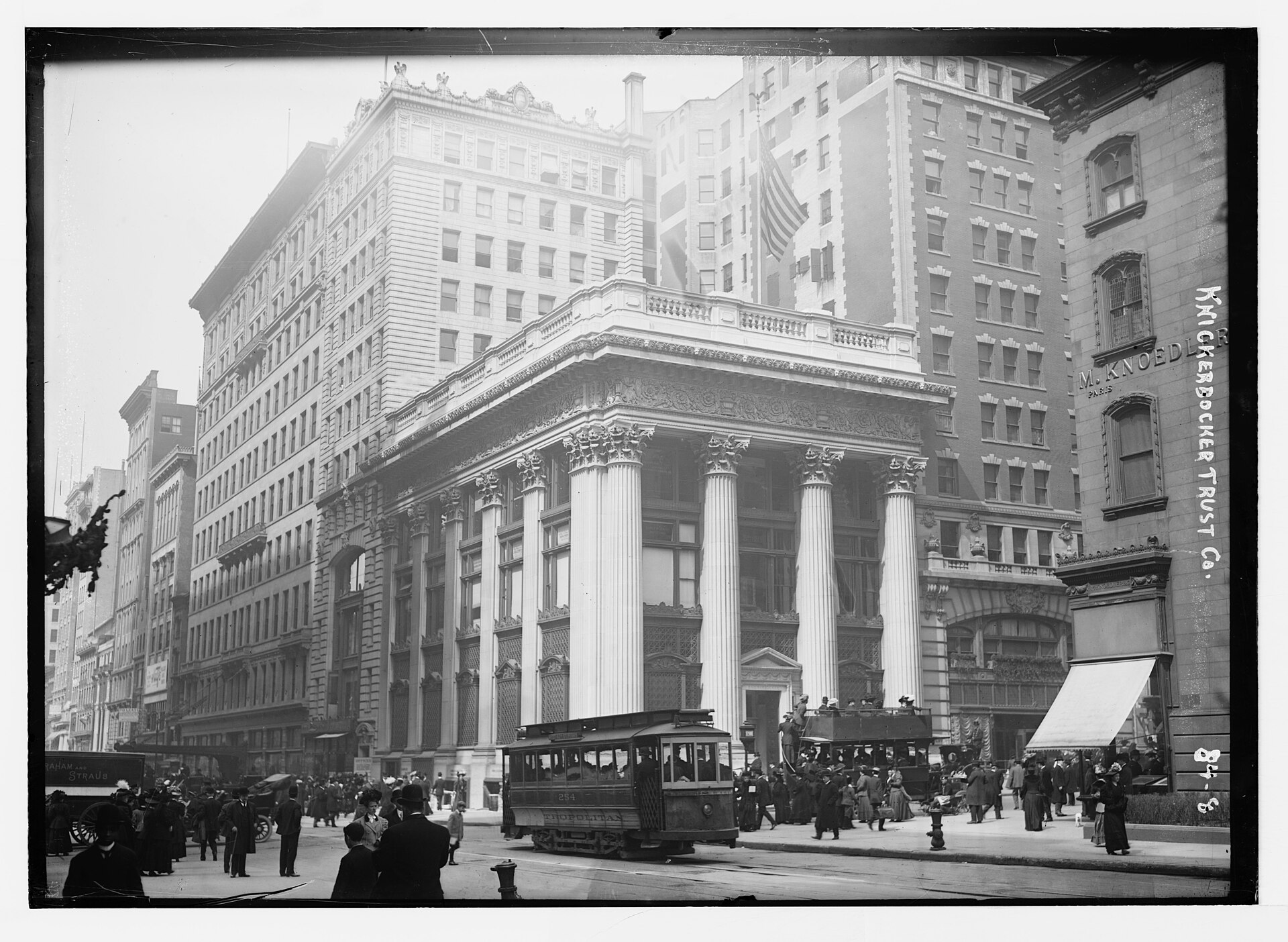
The Knickerbocker Trust Company, founded in 1884 and housed in a marble building at 34th Street and Fifth Avenue, was by 1907 one of New York’s largest and most fashionable financial institutions. Trust companies of the era sat outside the clearing-house system that gave national banks mutual protection, which left them exposed to exactly the kind of confidence shock that arrived that October.
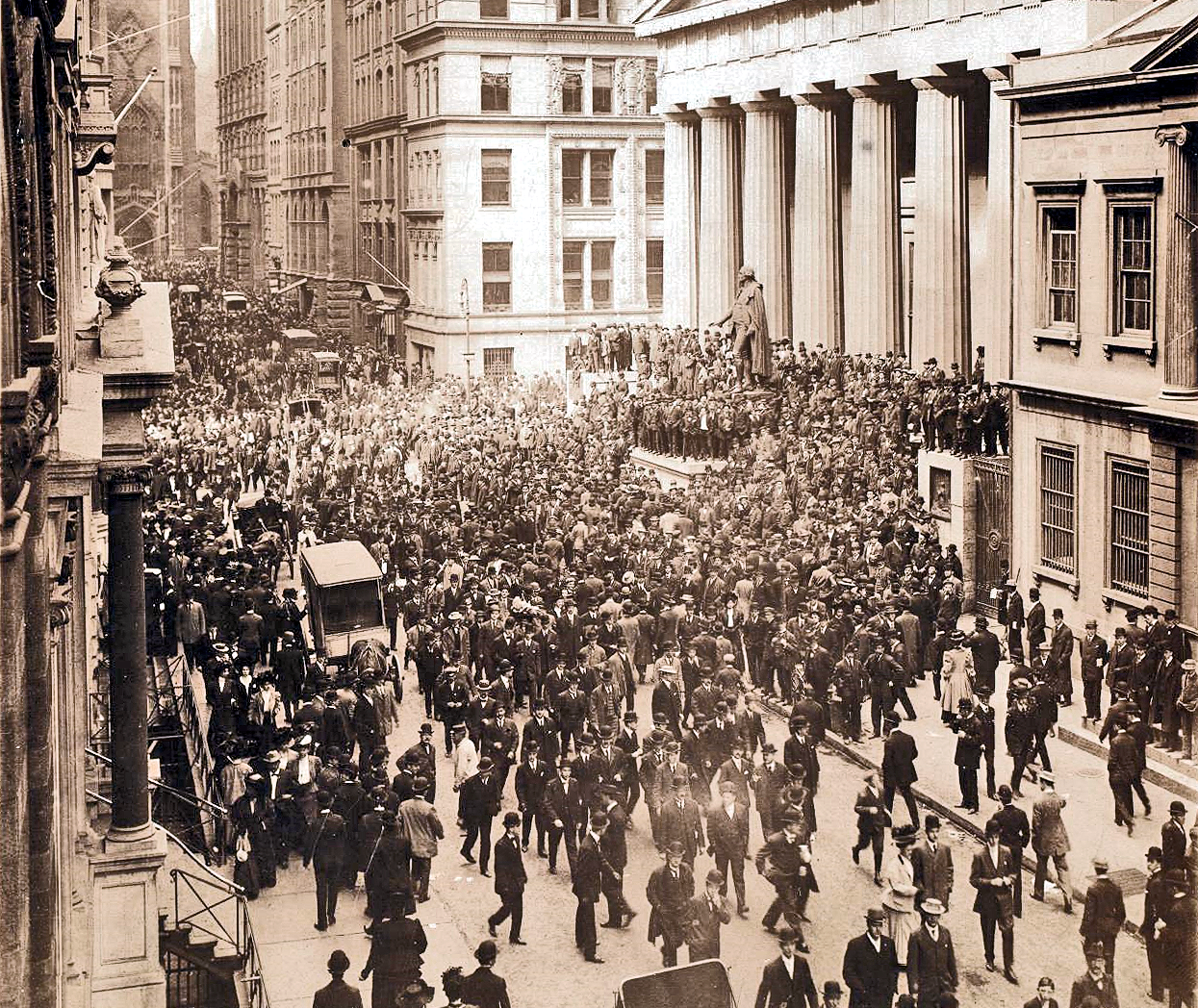
President Charles T. Barney had invested alongside the speculators whose attempt to corner the copper market collapsed in mid-October 1907. On 21 October the board forced him out. The next morning crowds formed outside the doors, and within three hours depositors withdrew about $8 million before the bank suspended operations on 22 October. The run spread at once to other trusts. J. P. Morgan personally organised the rescue of the survivors, but Congress drew the structural lesson: the country needed a lender of last resort. The Federal Reserve System was created in 1913 as a direct consequence.
Worth remembering
- At its peak the Knickerbocker was New York's third-largest trust company, holding about $38 million in deposits from a clientele of prominent financiers.
- President Charles T. Barney, who had tied himself to the failed scheme to corner the United Copper market, died by suicide on 14 November 1907, three weeks after the bank he ran collapsed.
Gallery
Sources
- The Knickerbocker Trust suspended operations on 22 October 1907 after its president's ties to a failed copper-corner scheme triggered a run; about $8 million was withdrawn in under three hours. Wikipedia
- The Knickerbocker's collapse triggered the Panic of 1907, and the crisis led Congress to create the Federal Reserve System in 1913. Federal Reserve History
- The run on the Knickerbocker on 22 October 1907 spread to other trust companies; the panic prompted the 1908 Aldrich-Vreeland Act and ultimately the 1913 Federal Reserve Act. Wikipedia
A graveyard tradition: leave a stone to show you came, and remembered.