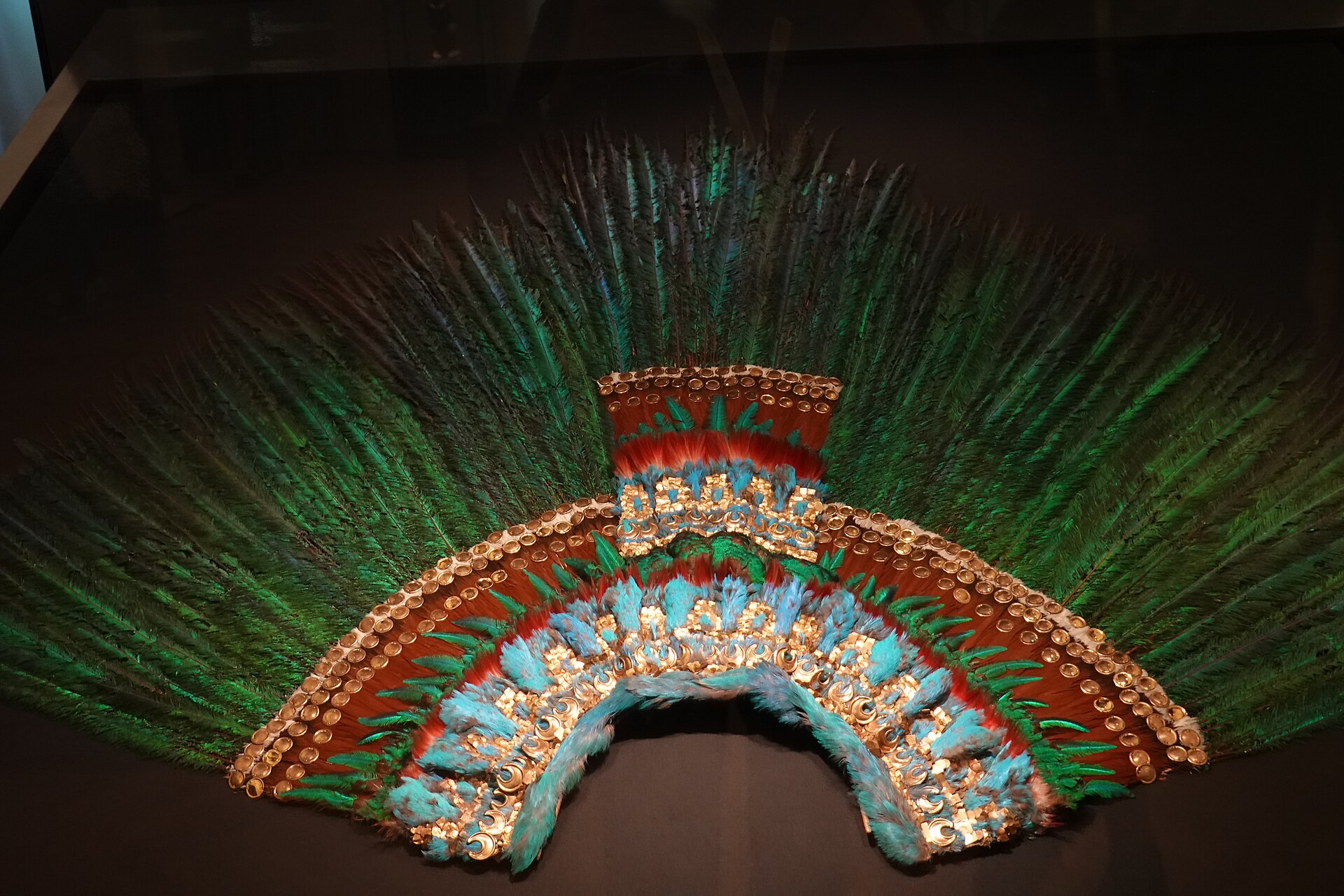
Feather-working was an old Mesoamerican art, but under the Mexica it became a court industry. The amanteca — the feather-workers — lived in their own quarter of Tenochtitlan, were exempt from tribute and labour drafts, and trained their sons in a craft that turned the iridescent plumes of the resplendent quetzal, the lovely cotinga, the hummingbird, and the roseate spoonbill into mosaics that shifted colour as the wearer moved. Feathers arrived as imperial tribute from the tropical lowlands, ranked alongside jade and gold. The work went into shields, fans, cloaks, and the towering headdresses of priests and lords.
The craft depended on three things the conquest destroyed at once: the guild that held the knowledge, the court that paid for the work, and the long-distance tribute system that supplied the birds. After 1521 the Franciscans briefly redirected the amanteca to Christian images — the 1539 “Mass of Saint Gregory,” sent to Pope Paul III, is the oldest colonial piece to survive — but the patronage was gone, the masters were dying, and European oil painting was taking over the religious-image market. By the mid-17th century the trained masters were dead with no one to inherit the technique.
What makes it a lost art rather than a faded fashion is that the method itself cannot be recovered. The glue was boiled from orchid bulbs; the palette required tropical birds that are now endangered or barred from trade under CITES. Twentieth-century revivalists in Michoacán substituted wax for the orchid adhesive and dyed chicken feathers for quetzal, and the result is a derivative craft, not the thing the amanteca made. Fewer than a dozen genuine pre-conquest pieces are known, scattered through museums in Vienna, New York, and a couple in Mexico itself — and no modern hand has matched them.
Worth remembering
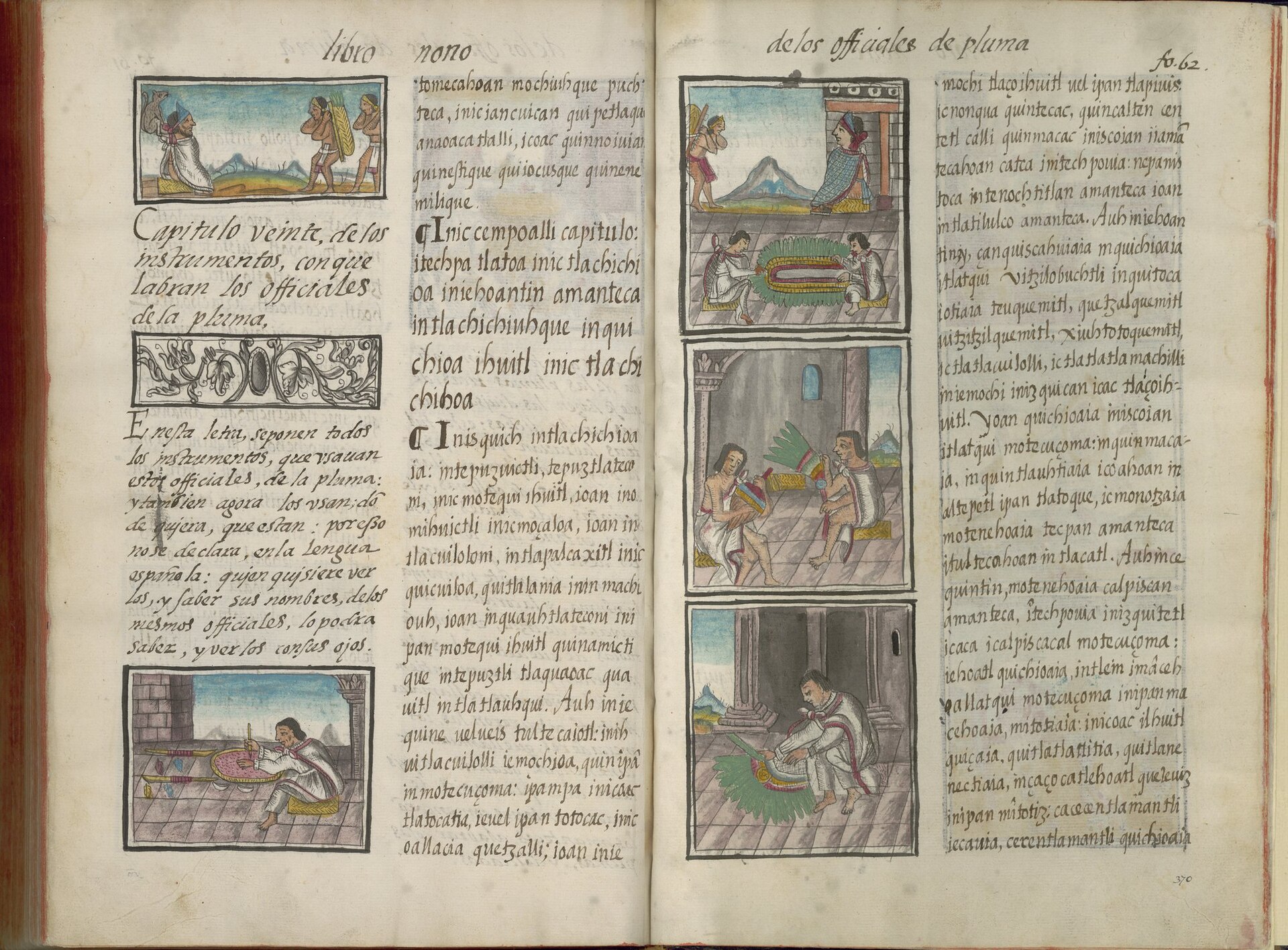
- The amanteca were a hereditary guild, exempt from tribute and corvée labour — a rare standing in Mexica society — and lived in their own district, Amantla, within Tenochtitlan; Sahagún's Florentine Codex devotes a whole chapter to their two methods, including a glue boiled from orchid bulbs (tzacutica) and feathers laid in tiers from common to precious.
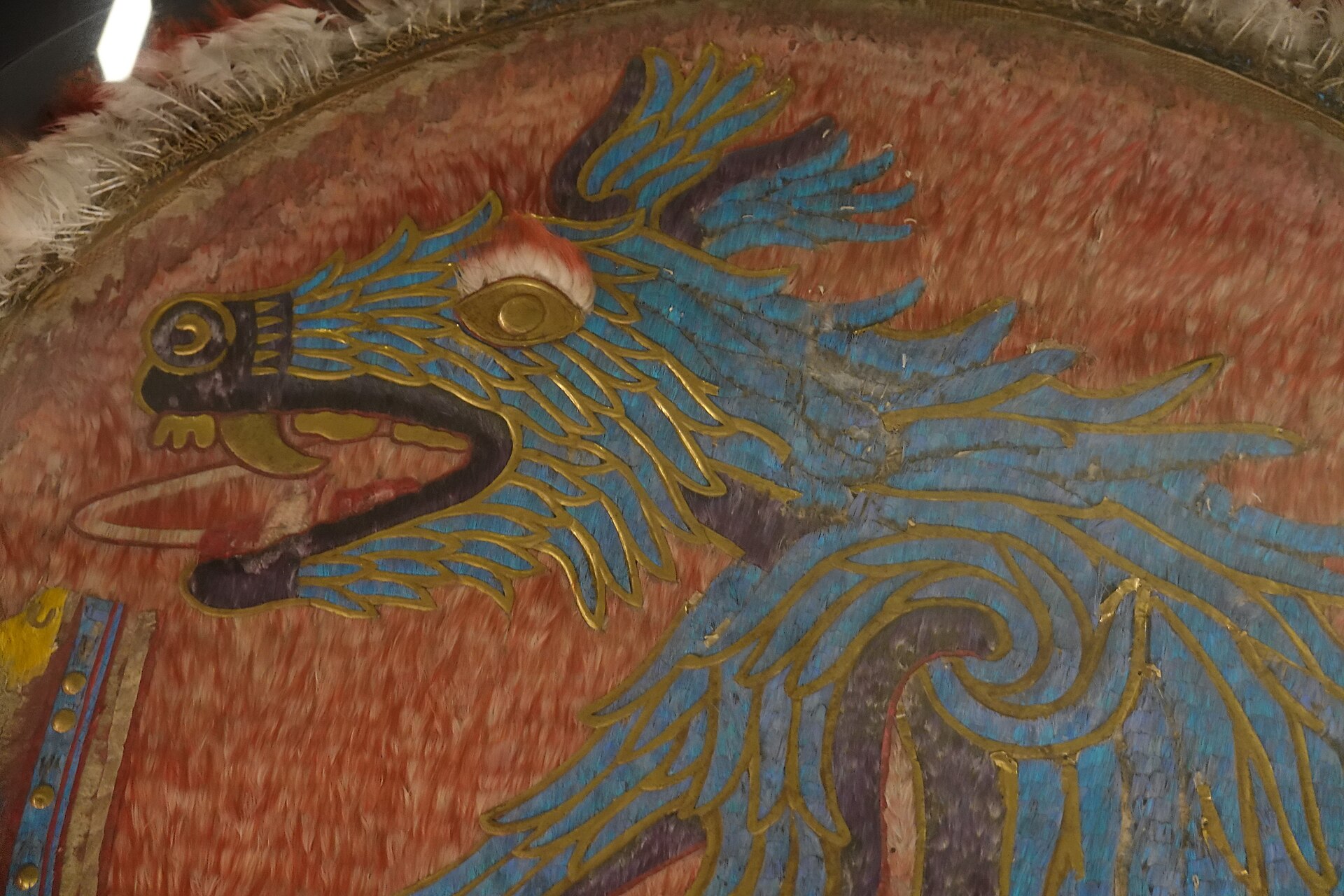
- Fewer than a dozen pre-conquest pieces survive worldwide. The most famous, a 116 cm headdress of more than 450 quetzal tail feathers attributed to Moctezuma II, sits in the Weltmuseum Wien in Vienna — and Mexico's repeated requests for its return have been refused on the grounds that the fragile mosaic might not survive the journey.
Gallery
Sources
- Mexican featherwork (amantecayotl) declined sharply after the conquest as the old masters died, the feather-supplying birds disappeared, and indigenous handiwork was devalued; the amanteca were a tribute-exempt guild quartered in the Amantla district of Tenochtitlan Wikipedia
- The 1539 'Mass of Saint Gregory', the oldest surviving colonial featherwork, was sent to Pope Paul III by Diego de Alvarado Huanitzin and is now held at the Musée des Amériques in Auch, France Auch Tourisme (Musée des Amériques)
- Modern revival attempts foundered because the lack of tropical feathers 'proved an insuperable obstacle'; only two pre-conquest featherwork pieces remain in Mexico, and the surviving practitioners use wax and chicken feathers rather than the original orchid-bulb adhesive and quetzal plumes The Eye (Mexico)
A graveyard tradition: leave a stone to show you came, and remembered.