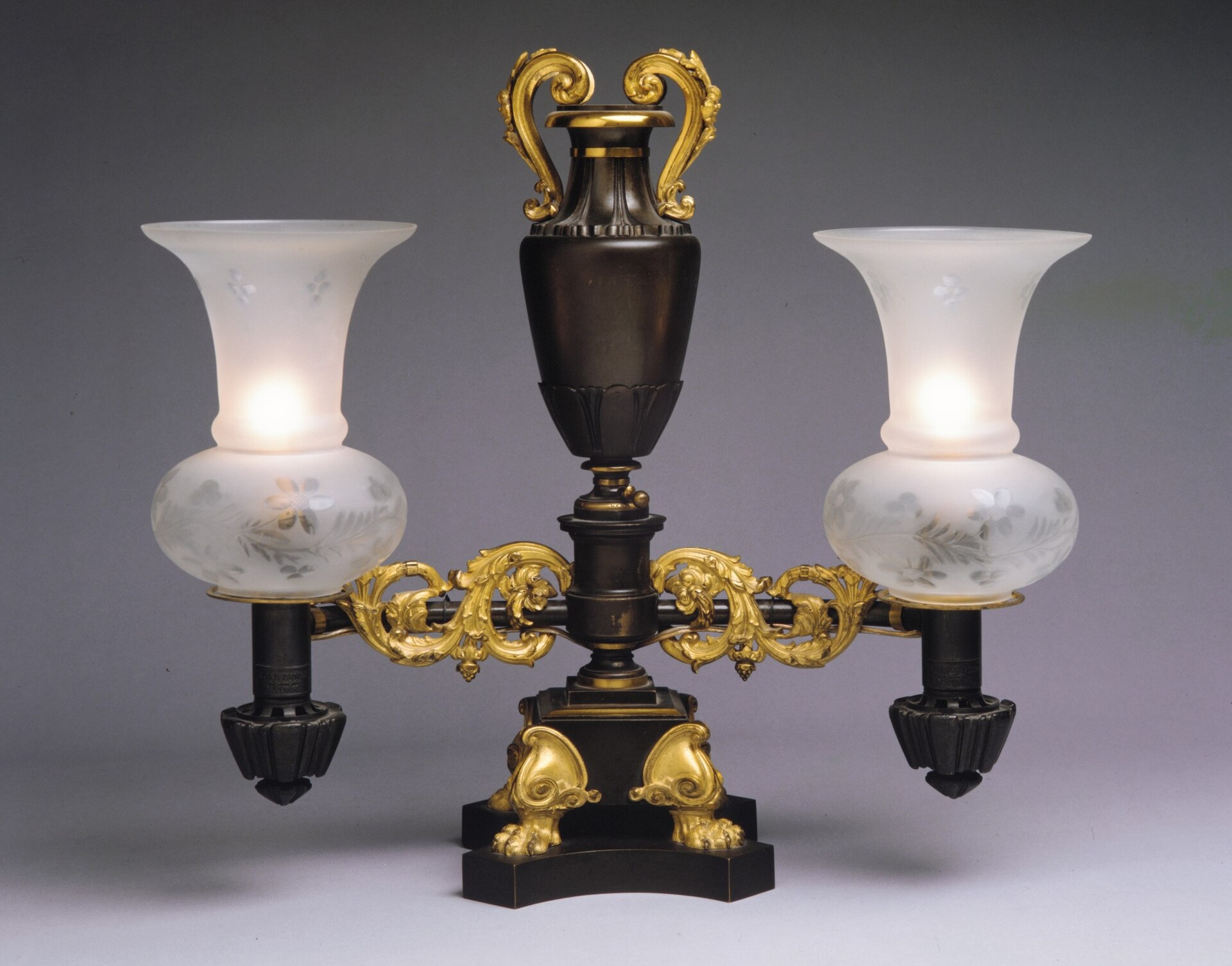
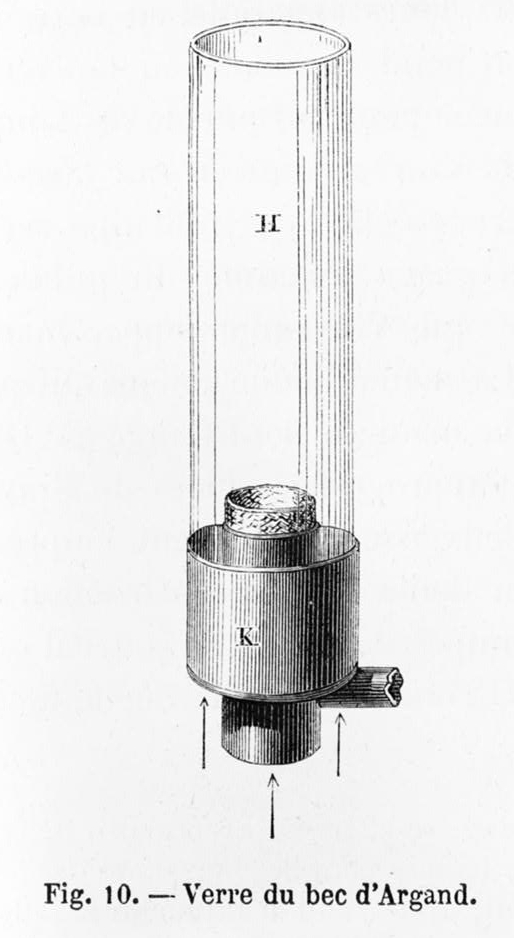
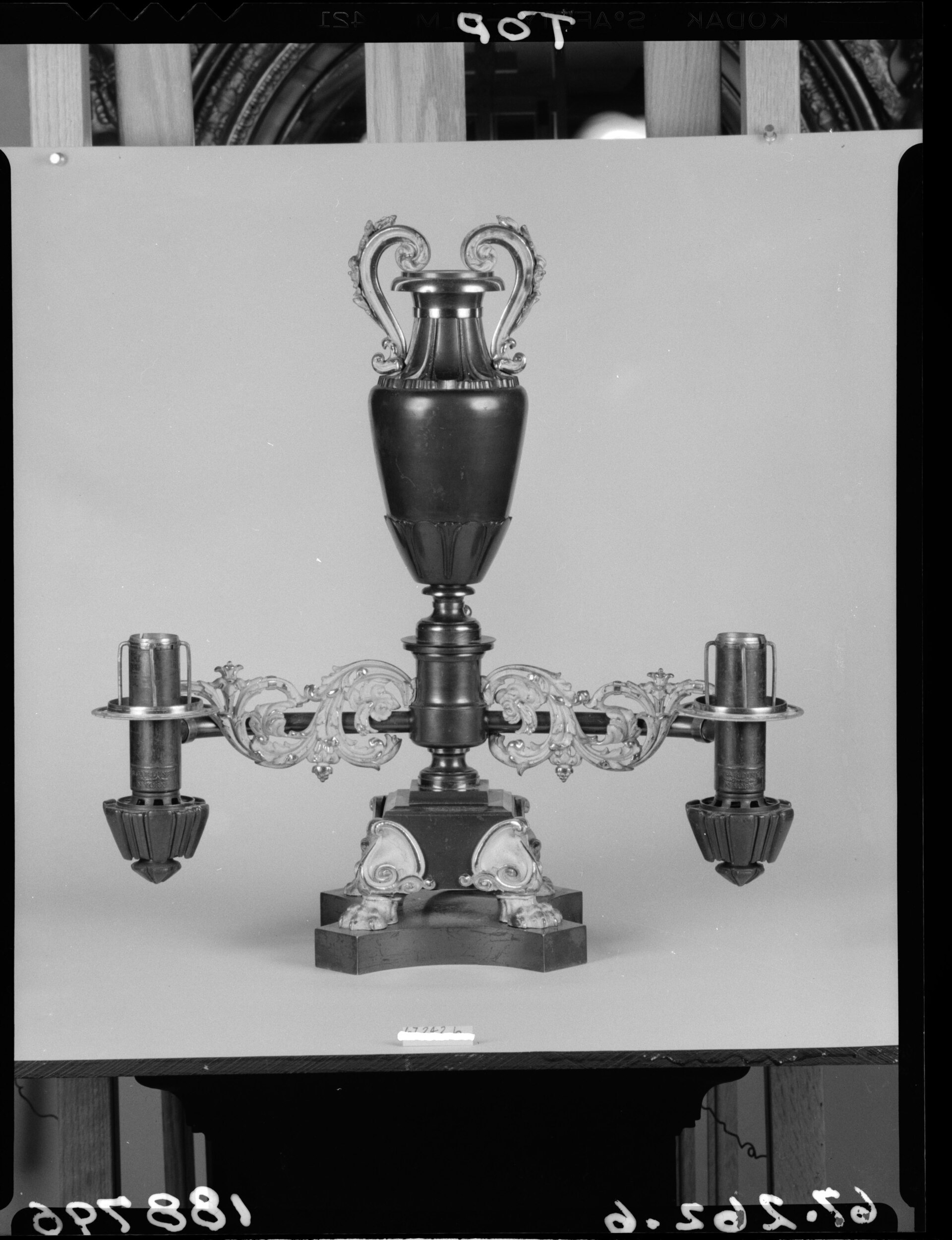
For most of human history, artificial light meant a candle or an open-wicked oil lamp — dim, smoky, and not much brighter than the flame the Romans had. The lamp the Genevan chemist Aimé Argand devised around 1780 broke that ceiling. He made the wick a hollow cylinder, so air could feed the flame from the centre as well as the outside, and topped it with a glass chimney to pull a steady draught up through it. The flame that resulted burned hot and clean and gave six to ten times the light of a candle — by one description the brightest lamp in two thousand years of lighting. It became the lamp of well-off households, of lighthouses (where it sat at the heart of the great Fresnel lenses), and of the first decent street lighting, and it usually ran on whale oil.
That whale-oil connection tied its fate to an industry. The demand for clean-burning spermaceti to feed Argand lamps helped drive the golden age of whaling, sending fleets to the far Pacific in pursuit of sperm whales. Both the lamp and the fleets were undone by the same thing: cheap kerosene refined from petroleum, which arrived in the 1850s, wicked up an ordinary flat wick without a fancy reservoir, cost a fraction of whale oil, and burned whiter. Gas lighting had already taken the cities, and electric light finished the job from the 1880s. The Argand lamp became a museum object, and the whaling economy that had supplied it collapsed almost as fast as it had grown — a rare case where retiring a technology emptied an entire ocean industry along with it.
Worth remembering
- Its insight was air: a hollow, sleeve-shaped wick let air reach the flame from inside as well as out, and a tall glass chimney drew a strong draught through it, so the flame burned hot, bright, and almost smokeless — six to ten times a candle, the brightest domestic light anyone had ever had.
- It usually burned spermaceti, the fine oil from sperm whales' heads, and its success drove the great age of whaling; when kerosene from petroleum undercut the lamp in the 1850s, the whaling fleets that had supplied it collapsed in a single generation.
Gallery
Sources
- Aimé Argand patented his circular-wick lamp in 1784; its hollow wick and glass chimney produced a bright, smokeless flame several times that of a candle, and it was the standard fine lamp until kerosene and gas displaced it Carswell Rush Berlin (American antiques)
- Argand-type lamps were the standard lighthouse source until kerosene and incandescent oil-vapour lamps replaced them in the 1880s–90s; kerosene was cheaper, lower-viscosity, and burned whiter than whale or vegetable oil United States Lighthouse Society
A graveyard tradition: leave a stone to show you came, and remembered.