
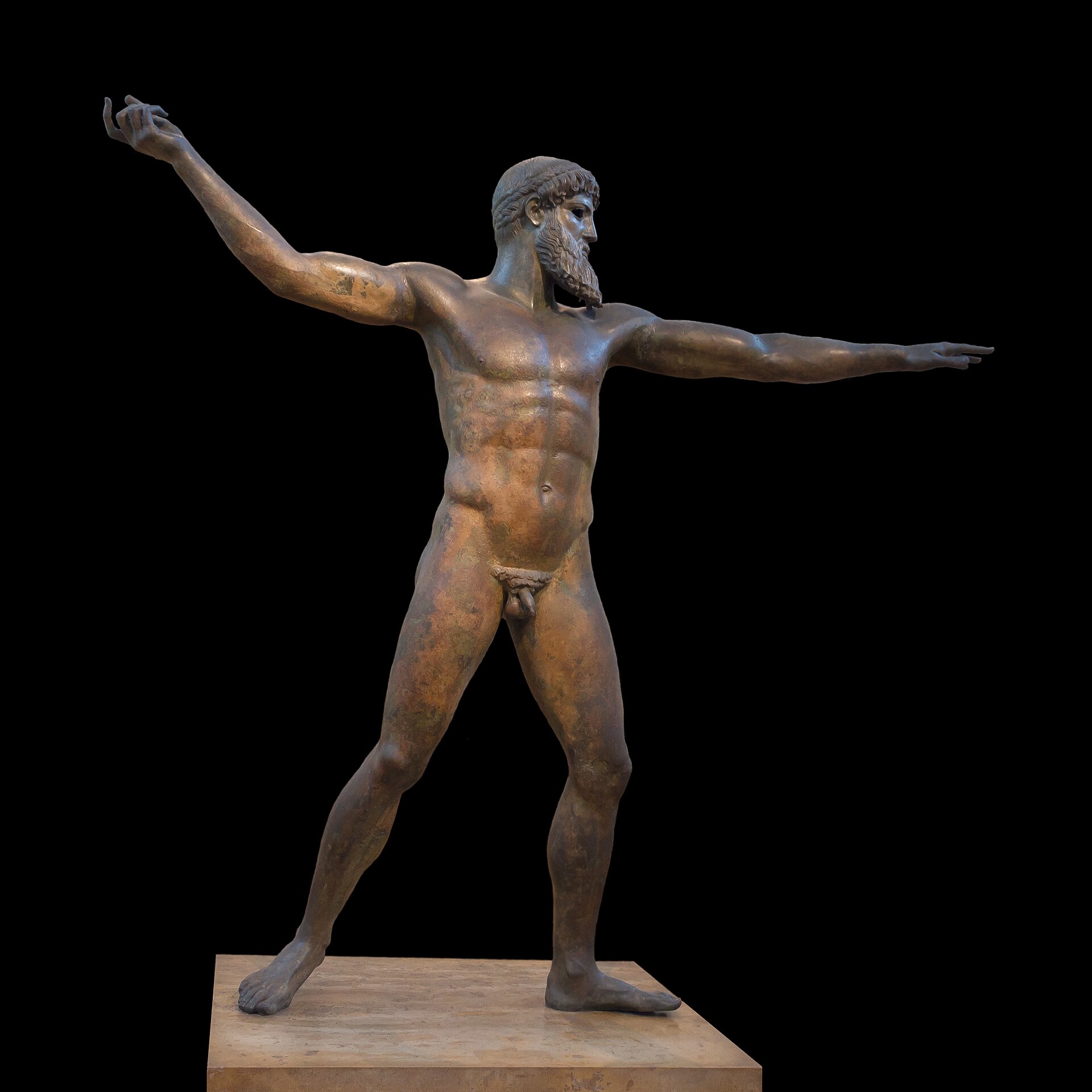
Zeus sat at the head of the most famous pantheon in history. King of the Olympians, wielder of the thunderbolt, father of gods and men, he was the guarantor of oaths, hospitality and kingship across the Greek world and, as Jupiter, across Rome’s. His worship was woven into civic life at the largest scale: the oracle of Dodona spoke for him through a sacred oak; the Olympic Games, held in his honour from 776 BCE, gathered the whole Greek world every four years; and Pheidias’s gold-and-ivory statue of him at Olympia was counted among the Seven Wonders of the Ancient World. For over a thousand years, to be Greek was in part to live under Zeus.
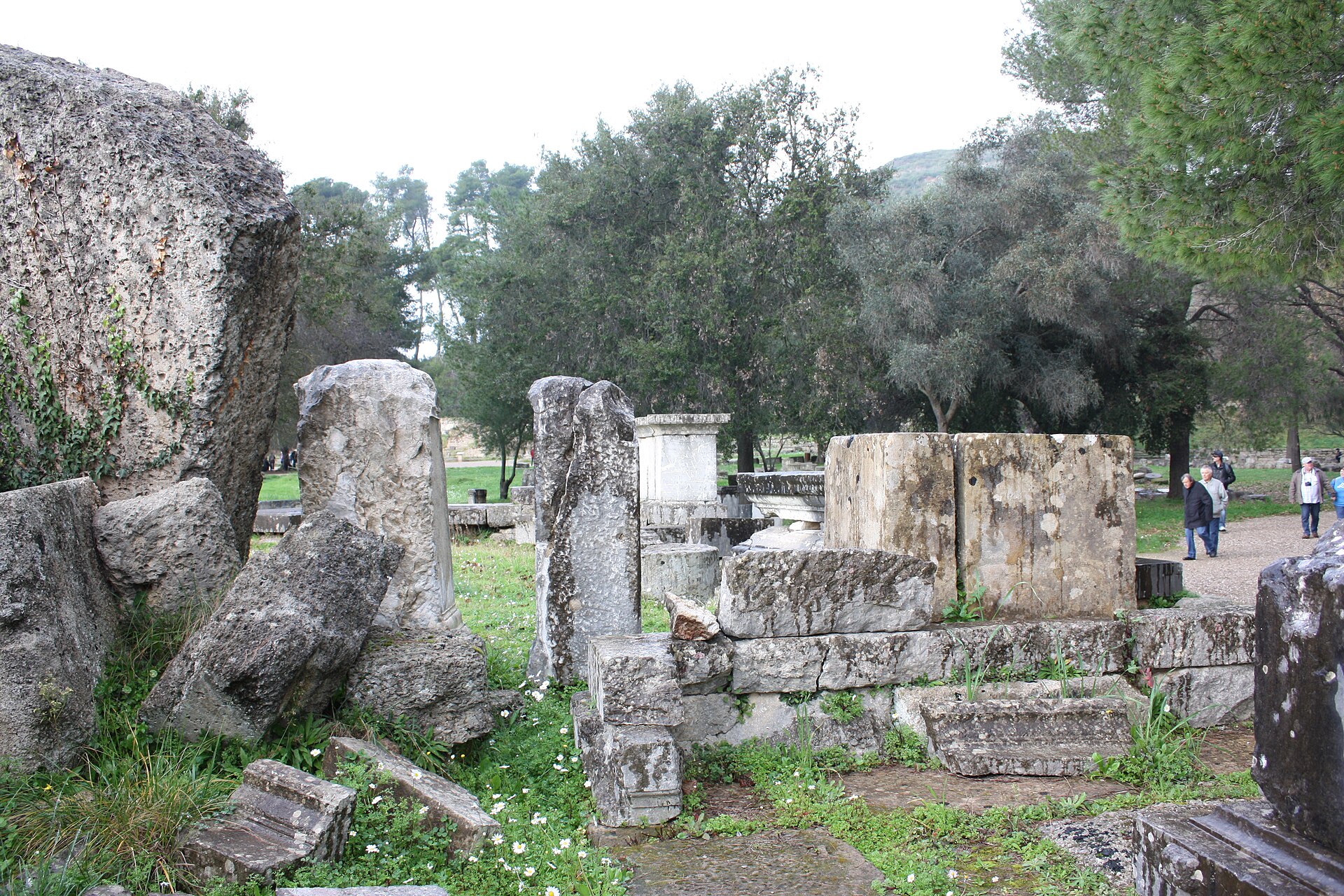
His fall came by imperial decree. Once Christianity became Rome’s official religion, the institutions of the old gods were dismantled from the top: in 393 CE the emperor Theodosius I abolished the Olympic Games and banned pagan sacrifice, cutting out the beating heart of Zeus’s cult, and in 426 his successor ordered the great Temple of Zeus at Olympia burned. The thunder-god of a civilization that gave the West its art, philosophy and politics was switched off in a generation. He is more famous now than almost any deity ever worshipped — and that fame is exactly the measure of his death: a household name, a figure of statues and stories and films, and the recipient of not a single prayer.
Worth remembering
- At every Olympiad a hundred oxen were burned on the Great Altar of Zeus at Olympia; the ash was never cleared, and over centuries the offerings built the altar itself into a mound of grease and bone metres high.
- At Dodona in Epirus, priests read the will of Zeus in the rustling of wind through a sacred oak — the god answering through the oldest tree in Greece, an oracle older than the temples that later eclipsed it.
Gallery
Watch
Sources
- The Olympic Games began in 776 BCE and were held every four years at Olympia, where a hecatomb of a hundred oxen was sacrificed to Zeus. World History Encyclopedia
- Theodosius I banned the Olympic Games in 393 CE, and Theodosius II ordered the Temple of Zeus at Olympia destroyed in 426 CE. Encyclopaedia Romana, University of Chicago
- Zeus, king of the Olympian gods and god of sky and thunder, was worshipped at major sanctuaries including the oracle at Dodona and the games at Olympia. Encyclopaedia Britannica
A graveyard tradition: leave a stone to show you came, and remembered.