The Etruscan sky-king who hurled three kinds of thunderbolt, absorbed so completely into Jupiter that he kept no name of his own.
Born
700 BCE
Died
100 BCE
Lived
600 years
Dead for
2,126 yrs
Cause of death
Assimilation
Replaced by
Roman religion (identified with Jupiter), then Christianity
The Obituary
Tinia, also called Tin, was the chief god of the Etruscan pantheon, lord of the sky and thunder and the Etruscan counterpart of the Greek Zeus and Roman Jupiter, who in Etruscan lore commanded three grades of thunderbolt, some thrown freely and some only with the gods’ consent. He headed the great triad with Uni and Menrva, a grouping Rome adopted as Jupiter, Juno and Minerva. As Rome conquered and absorbed Etruria over the last centuries BCE, Tinia was identified outright with the Roman Jupiter and his distinct worship dissolved. By the first century BCE his name had been assimilated away, surviving only on old tomb walls and bronze mirrors.
Worth remembering
Etruscan lore held that Tinia commanded three kinds of thunderbolt, some he could throw freely and others only with the consent of other gods.
He headed the great Etruscan triad alongside the goddesses Uni and Menrva, a grouping the Romans copied as Jupiter, Juno and Minerva.
Gallery
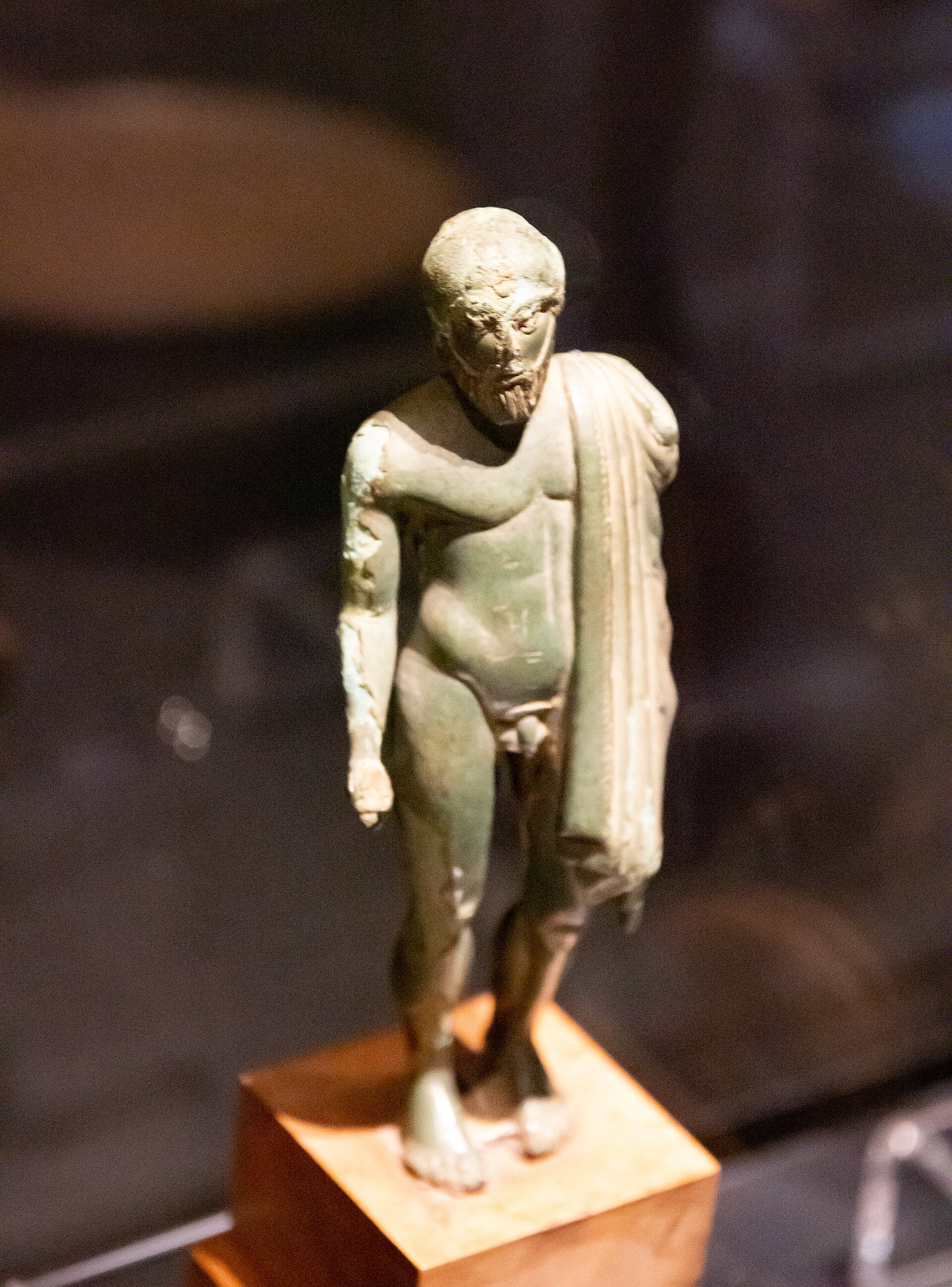
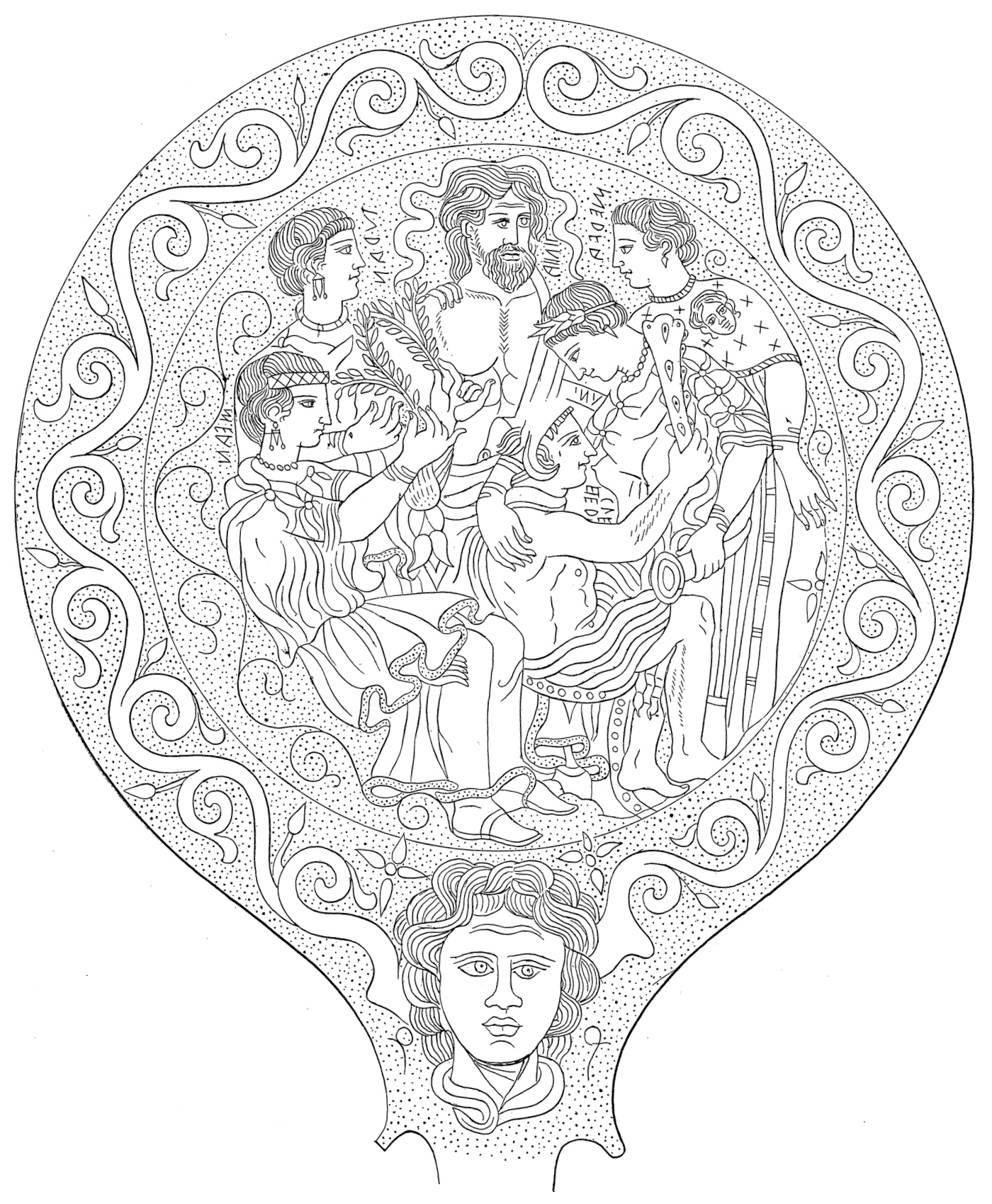
Etruscan bronze statuette of the sky god Tinia, late 5th century BCDorieo · CC BY-SA 4.0Engraved Etruscan bronze mirror depicting Tinia with Uni, Hercle, Menrva, Turan and MeanPublic domain
Sources
Tinia (Tin) was the chief god of the Etruscan pantheon, god of the sky and thunder, equated by the Romans with Jupiter. Wikipedia
Tinia headed the Etruscan triad with Uni and Menrva and could wield several grades of thunderbolt according to Etruscan lore. World History Encyclopedia
Tinia was the principal Etruscan deity, god of the thunderbolt, sky, and storm, identified with Greek Zeus and Roman Jupiter; he formed the leading Etruscan triad with Uni and Menrva. Encyclopaedia Britannica
A graveyard tradition: leave a stone to show you came, and remembered.
Buried nearby — by shared fate or a neighbouring lifespan.