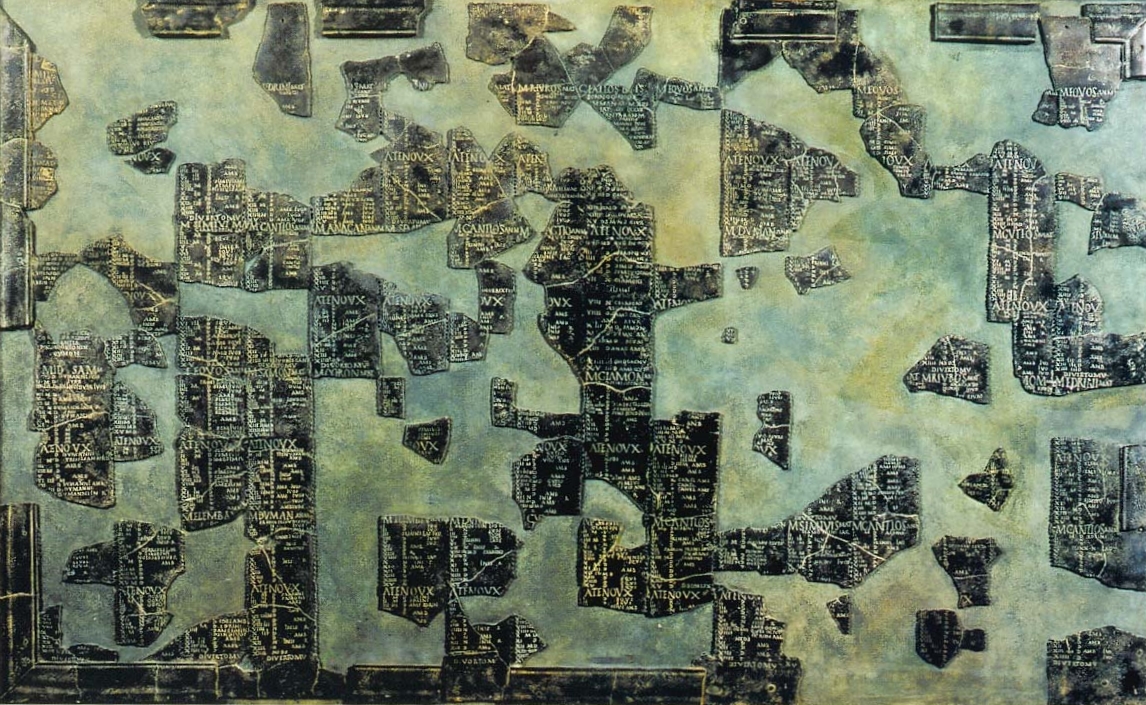
By the close of the first millennium BCE, Lugus was among the most widely honoured gods of the Celtic world. The epigraphic record attests his worship across Gaul, and many scholars read the chief Gaulish deity Julius Caesar called “Mercury” — the god Caesar said the Gauls revered above all others — as this same figure. His name was set into the ground itself. Lugdunum, “the hill of Lugus”, was organised as a Roman colony in 43 BCE and grew into Lyon, capital of Gallia Lugdunensis; the same element runs through Lugudunum Convenarum in the Pyrenees, Lugdunum Batavorum in the Netherlands, and Luguvalium, the fort that became Carlisle. In Irish tradition the same god surfaces as Lugh Lámhfhada, the long-armed, and Lugh Samildánach, the many-skilled — the hero who claimed every craft at once before the court of the Tuatha Dé Danann and then killed the Fomorian Balor at the second battle of Mag Tuired by putting a sling-stone through the Evil Eye.
The cult did not survive the new religion. Gaul and Ireland were Christianised across roughly the fourth to sixth centuries, and organised worship of Lugh ended with it; no temple kept his rites, no priesthood carried his name forward. He persisted only as material for other people’s work. Medieval Irish scribes wrote him into the literature as a hero-king of a vanished divine race, a character in stories rather than a god receiving offerings. And his name clung to the harvest: Lughnasadh, the festival of the first of August, and Lúnasa, the modern Irish word for the month — a line on a calendar that almost no one connects to the deity it once marked. The scholarly link between the Gaulish Lugus and the Irish Lugh is a reconstruction, and the identification with Caesar’s Mercury is an interpretation, not a fact; even the god’s pan-Celtic existence has been questioned. What is certain is that nobody prays to him.
Worth remembering
- His name is stamped across the map of Roman Europe: Lugdunum (Lyon), capital of Gallia Lugdunensis, plus Lugudunum Convenarum, Lugdunum Batavorum, and Luguvalium (Carlisle) — a god whose name founders reached for when they named a city, though some of those Lug- elements may instead be personal names.
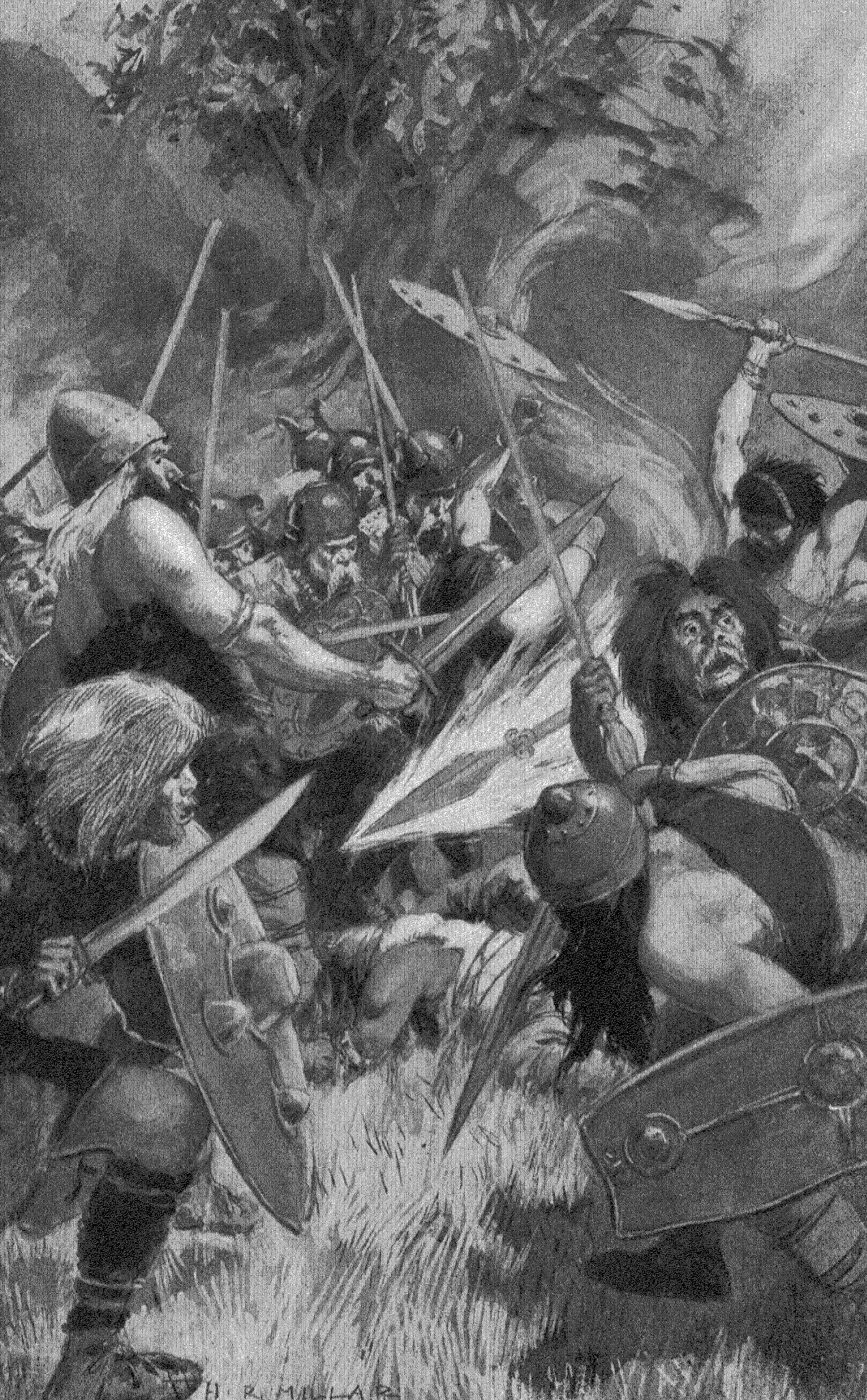
- In the Irish tale 'The Second Battle of Mag Tuired', Lugh arrives at the court of Nuada claiming every craft at once — wright, smith, champion, harper, poet, sorcerer, physician — and wins admission as the Samildánach; he then leads the Tuatha Dé Danann and kills the Fomorian Balor by driving the Evil Eye back into his skull with a sling-stone.
Gallery
Sources
- Lugh bore the epithets Lámfada ('of the long hand') and Samildánach ('skilled in many arts'); he led the Tuatha Dé Danann, killed his grandfather Balor by striking the Evil Eye with his sling, and gave his name to the 1 August festival Lughnasadh. World History Encyclopedia
- Lugdunum (Lyon) was organised as a colonia in 43 BCE by Lucius Munatius Plancus; its name derives from Lugudunon, 'hill of Lugus', attested on a coin of 42 BCE. Livius.org
- Caesar's description of the chief Gaulish god, whom he identified with the Roman Mercury, has been interpreted as a reference to Lugus; the Lugdunum–Lugus etymology and Lug- place-names are a reconstruction that remains contested, with Bernhard Maier questioning whether a Continental Lugus existed at all. Wikipedia
A graveyard tradition: leave a stone to show you came, and remembered.