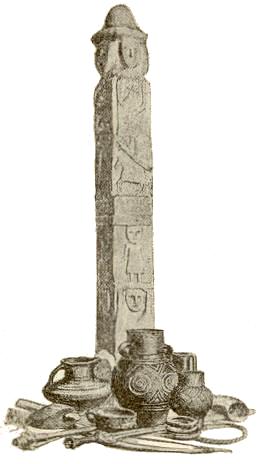
Perun was the high god of the pagan Slavs — lord of thunder, lightning and war, the maker of storms whom the sixth-century Roman writer Procopius already described as the one god the Slavs held above all others. He was the god of warriors and oaths: the treaties the Rus signed with Byzantium were sworn on his name, and to break such an oath was to invite death by one’s own blade. By the late tenth century his idol — silver-headed, golden-moustached — stood at the head of the official pantheon Prince Vladimir set up before his palace in Kyiv, the closest thing the eastern Slavs had to a state religion.
Then Vladimir changed gods. In 988, choosing Byzantine Christianity for his realm, he turned on the very pantheon he had raised: Perun’s idol was tied to a horse’s tail, beaten with rods as it was dragged down to the Dnieper, and thrown into the river — and the chronicle remembers ordinary people weeping along the banks as the god they had grown up with floated away. Christianization spread across the Slavic lands over the next two centuries; the last open pagan stronghold, the temple at Cape Arkona on the Baltic, fell to a Danish army in 1168. Perun lived on only sideways — his thunder absorbed into the figure of the prophet Elijah, his name surviving in the word for a lightning bolt — a supreme god demoted to a saint’s understudy and a curse.
Worth remembering
- Rus treaties of 907 and 945 CE were sealed by oath on Perun: the warriors swore by their weapons and by their god, and an oath-breaker was to die by his own sword — a deity who underwrote the word of an entire people.
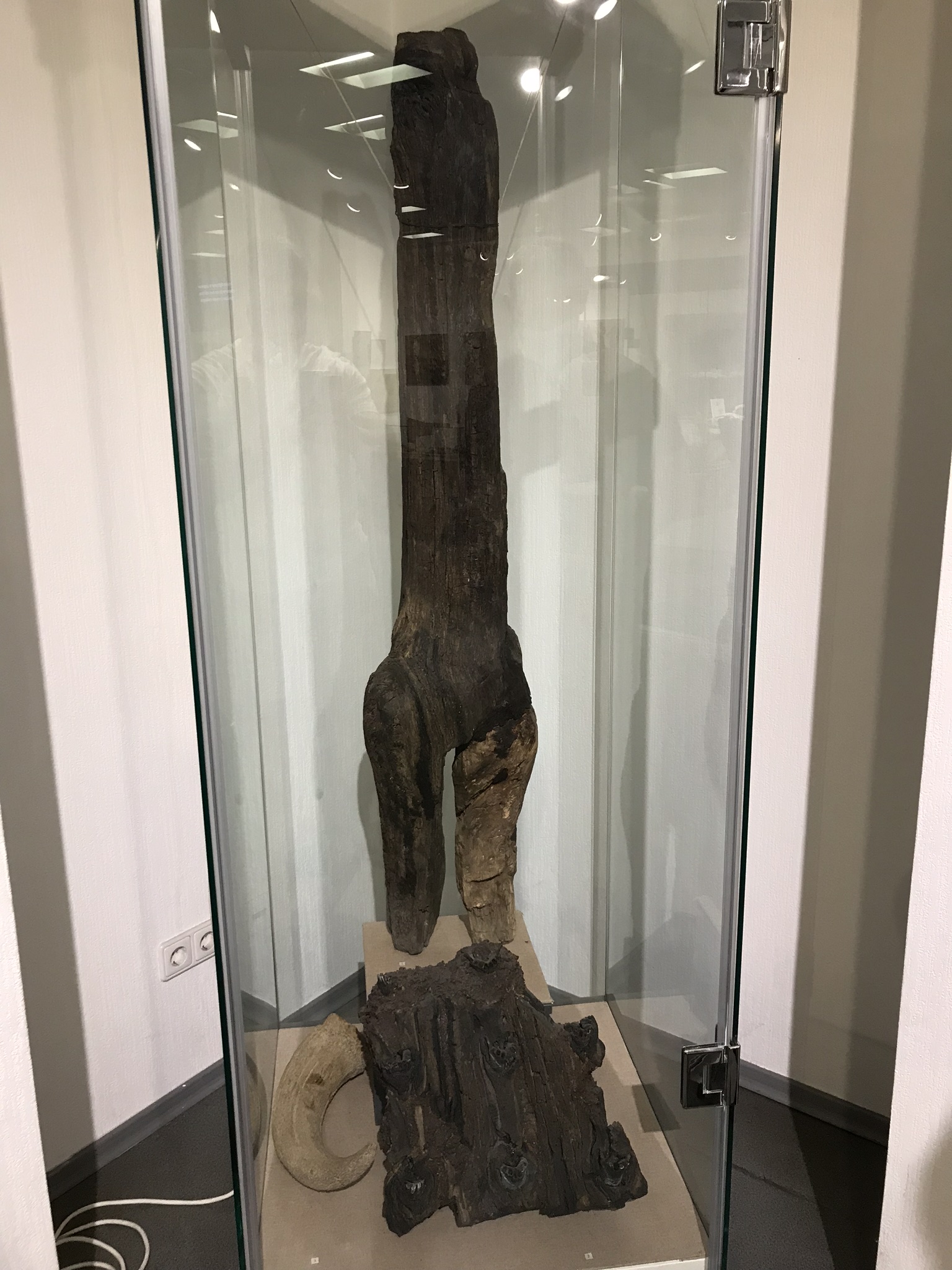
- His idol in Kyiv was described with a silver head and a golden moustache; the Peryn shrine near Novgorod was a circle ringed by eight fire-pits around a central statue, the sacred geometry of his cult built into the ground itself.
Gallery
Sources
- At Vladimir's conversion of Kyiv in 988, the Primary Chronicle records that Perun's idol was beaten with rods and dragged to the Dnieper to be cast in, with onlookers weeping on the riverbanks. The Archaeologist
- The last organized pagan Slavic cult — the temple of Svantevit at Cape Arkona on Rügen — was destroyed by Danish forces in 1168, marking the end of pre-Christian Slavic religion. Ancient Origins
- Perun headed Prince Vladimir's official Kyivan pantheon of 980 CE; modern Rodnovery (Slavic Native Faith) is a late-20th-century reconstruction, not a continuous tradition. Wikipedia
A graveyard tradition: leave a stone to show you came, and remembered.