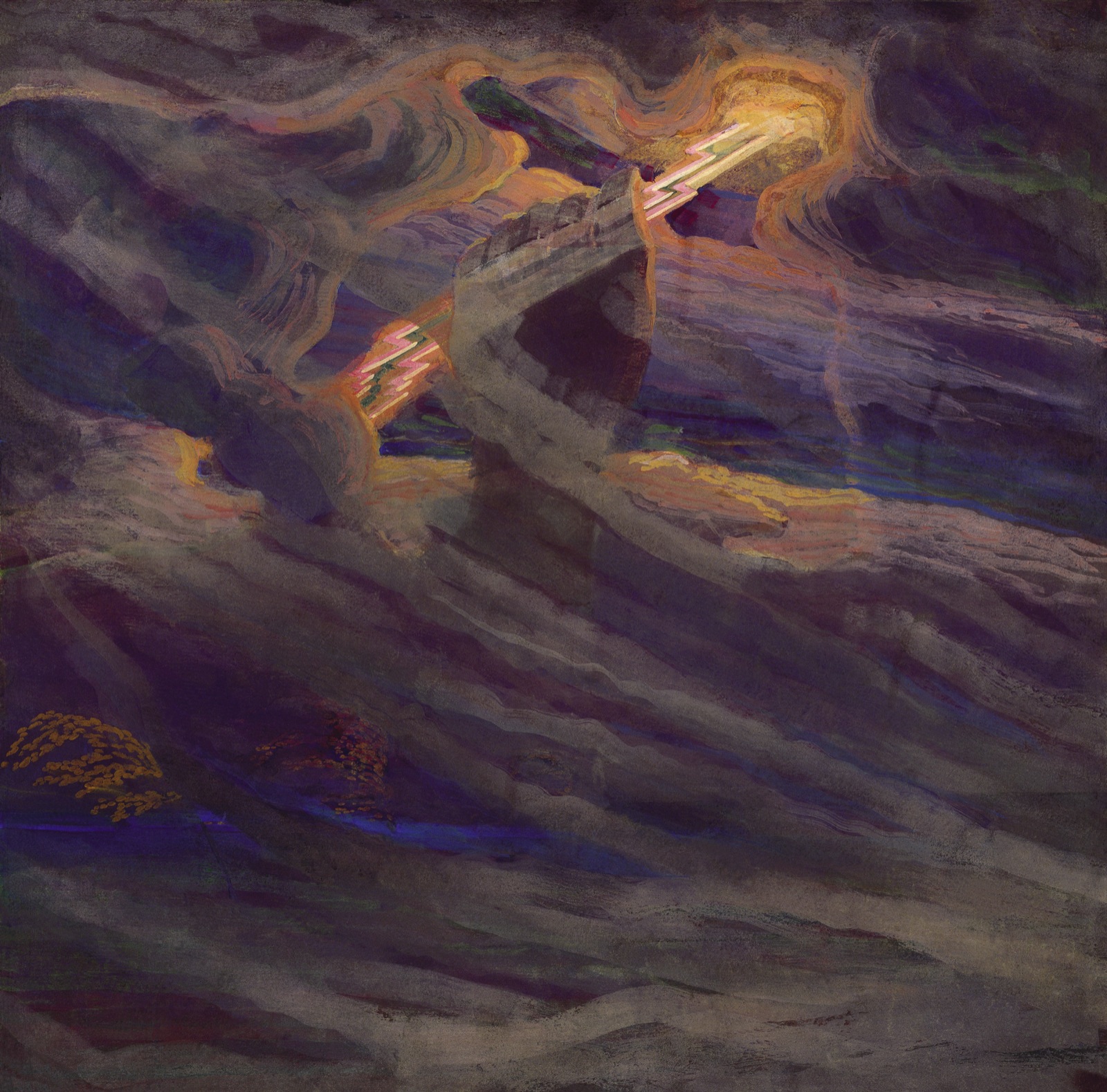
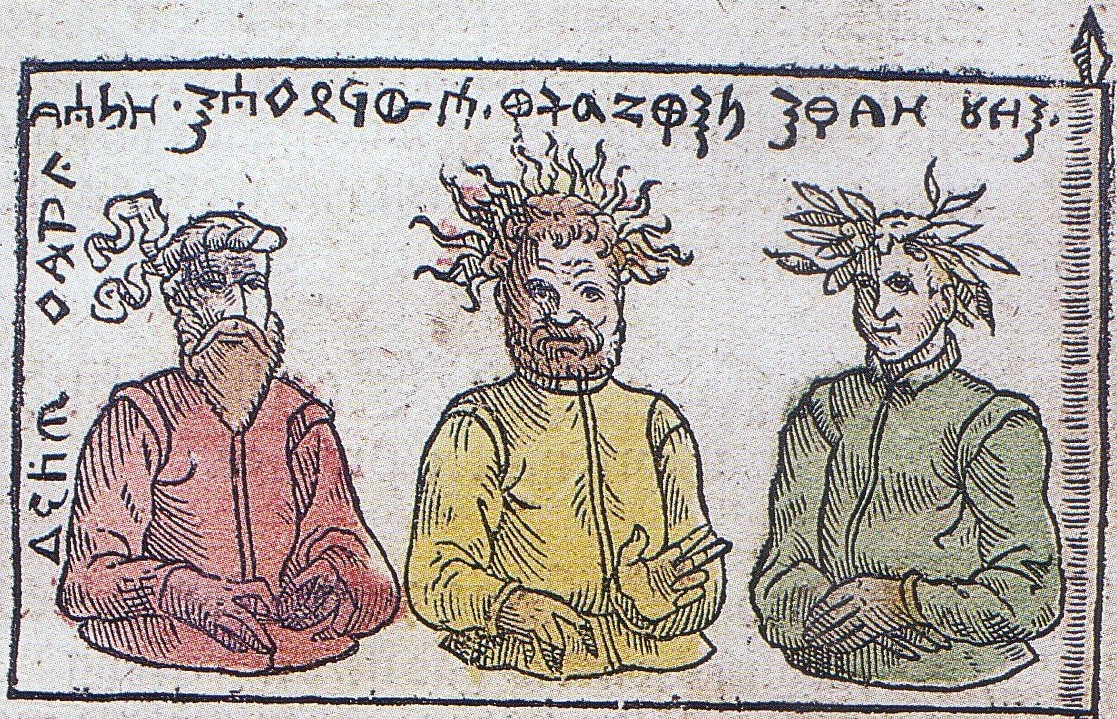
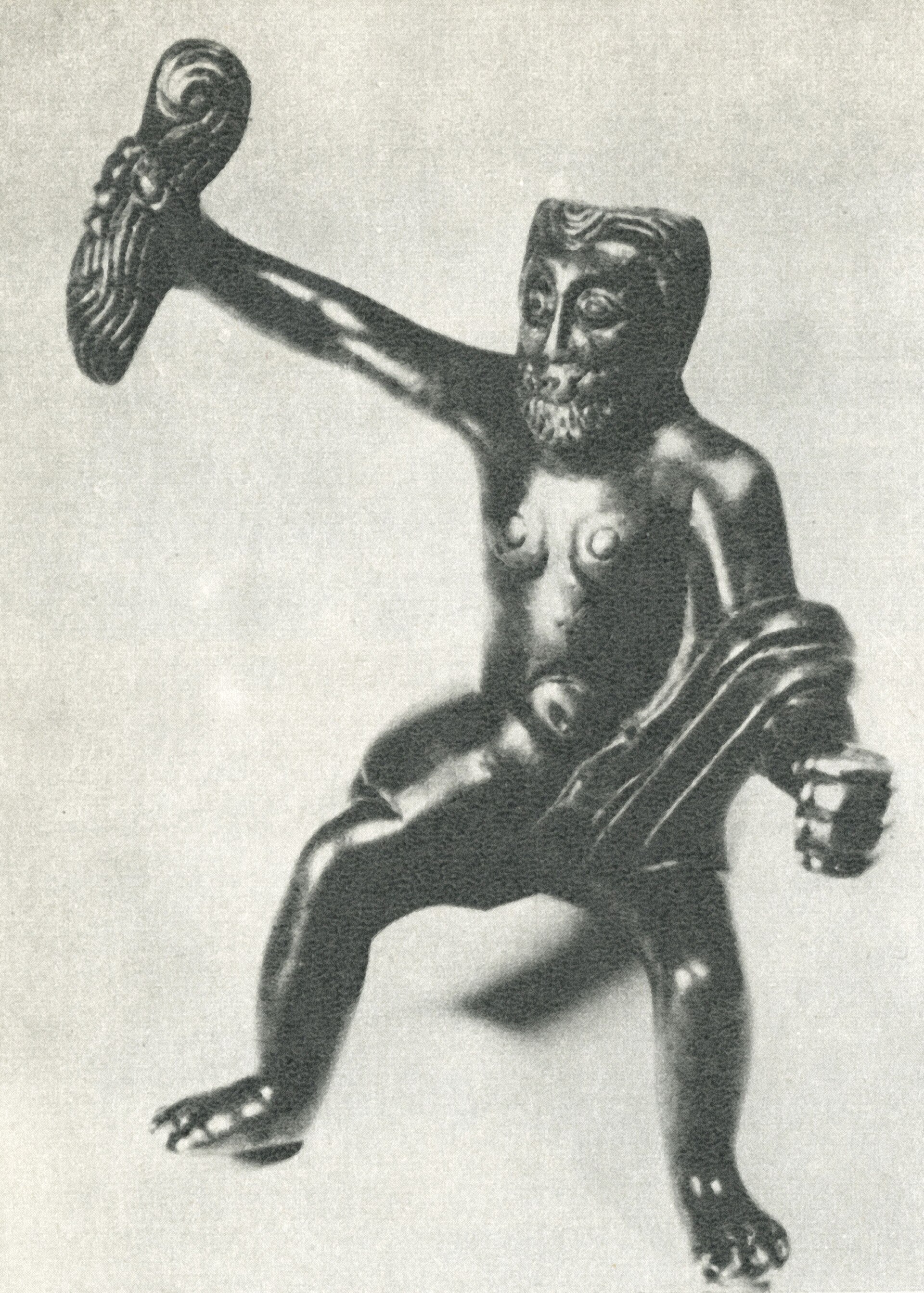
For the pagan Balts — Lithuanians, Latvians, and Old Prussians — Perkūnas was the god you watched the sky for. Thunder god, rain god, god of war and of the moral order, he was the most prominent and actively worshipped deity in the Baltic pantheon, broadly the cousin of the Slavic Perun and the Norse Thor. His sign was the oak: cult oaks bore his name, and the eternal fire kept for him burned in front of a sacred oak at the Prussian Romowe sanctuary and on the hill in Vilnius where the cathedral now stands. While the rest of Europe had been Christian for centuries, the Balts held out. The Lithuanian grand dukes clung to their rites longer than anyone else on the continent, and Lithuania entered the 1380s as the last pagan state in Europe, its priests still tending Perkūnas’s flame.
The end came by conquest and by treaty. The Old Prussians were beaten and forcibly converted by the Teutonic Knights in the 13th-century Prussian Crusade; their language was extinct by the early 1700s and their god with it. Lithuania converted in 1387, when Grand Duke Jogaila accepted baptism to take the Polish crown and marry Jadwiga, and agreed to baptise his people — the Perkūnas temple on the Vilnius hill was pulled down, its perpetual fire put out, and the sacred oak groves felled; Samogitia followed in 1413. The cult did not survive, but the name did. Perkūnas stayed alive in Lithuanian and Latvian folk songs and tales, most of them collected only in the 19th century, and as a personal name; into the 1780s priests were still cutting down oaks villagers worshipped. The modern Baltic faith Romuva, revived in 1967 by the ethnologist Jonas Trinkūnas and recognised by Lithuania in 1992, invokes him again — but as a 20th-century reconstruction assembled from folklore, not an unbroken line back to the fire on the hill.
Worth remembering
- On the hill where Vilnius Cathedral now stands, a temple to Perkūnas kept a perpetual fire — his symbol — burning before a sacred oak; the same eternal flame stood at the Romowe sanctuary of the Prussians. Perkūnas was so bound to the oak that as late as the 1780s Catholic priests were still going to remote Lithuanian villages to make people cut down the trees they worshipped.
- The Lithuanian grand dukes held out longer than anyone else in Europe. Lithuania was the last country on the continent to accept Christianity, converting only in 1387; Samogitia followed in 1413. The Old Prussians, a related Baltic people, had been conquered and forcibly Christianized by the Teutonic Knights during the 13th-century Prussian Crusade, and the Old Prussian language itself died out by the early 18th century.
Gallery
Sources
- Perkūnas was the Baltic god of thunder and one of the most important deities in the Baltic pantheon; in front of the sacred oak at the Romowe sanctuary the eternal fire, his symbol, was kept burning, and most surviving information about him comes from folklore songs, legends and tales collected in the 19th century. Wikipedia
- The Grand Dukes of Lithuania clung to their pagan rites for longer than anyone else in Europe, only finally accepting Christianity in 1387; Perkūnas is strongly associated with the oak tree, and as late as the 1780s Catholic priests were still travelling to remote Lithuanian villages instructing people to cut down trees they had been worshipping. The Spectator
- Lithuania was the last country in Europe to adopt Christianity, becoming the last European nation to convert in 1387 under Grand Duke Jogaila; the old Baltic faith was later reorganised as the religion Romuva, officially recognised as a Baltic faith in 1992. 3Seas Europe
A graveyard tradition: leave a stone to show you came, and remembered.