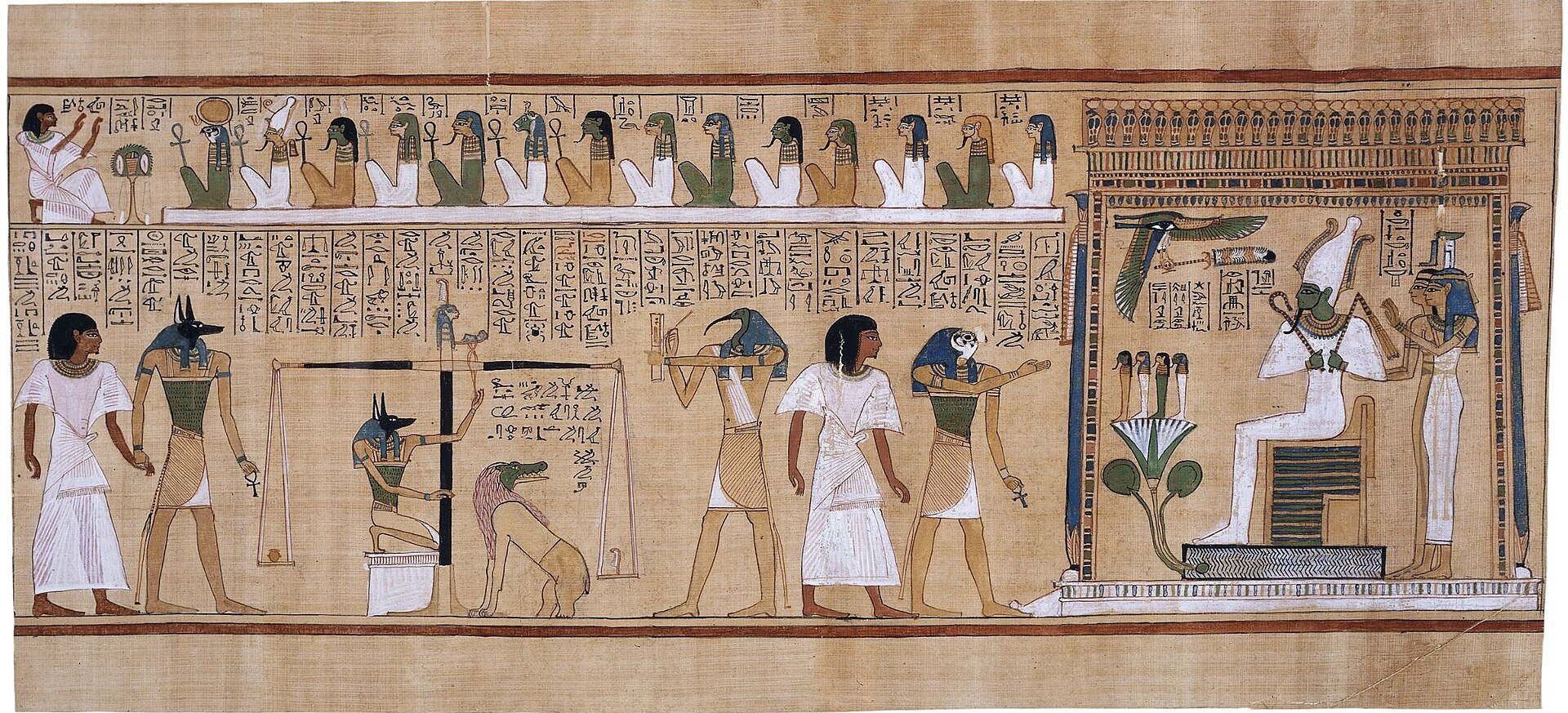
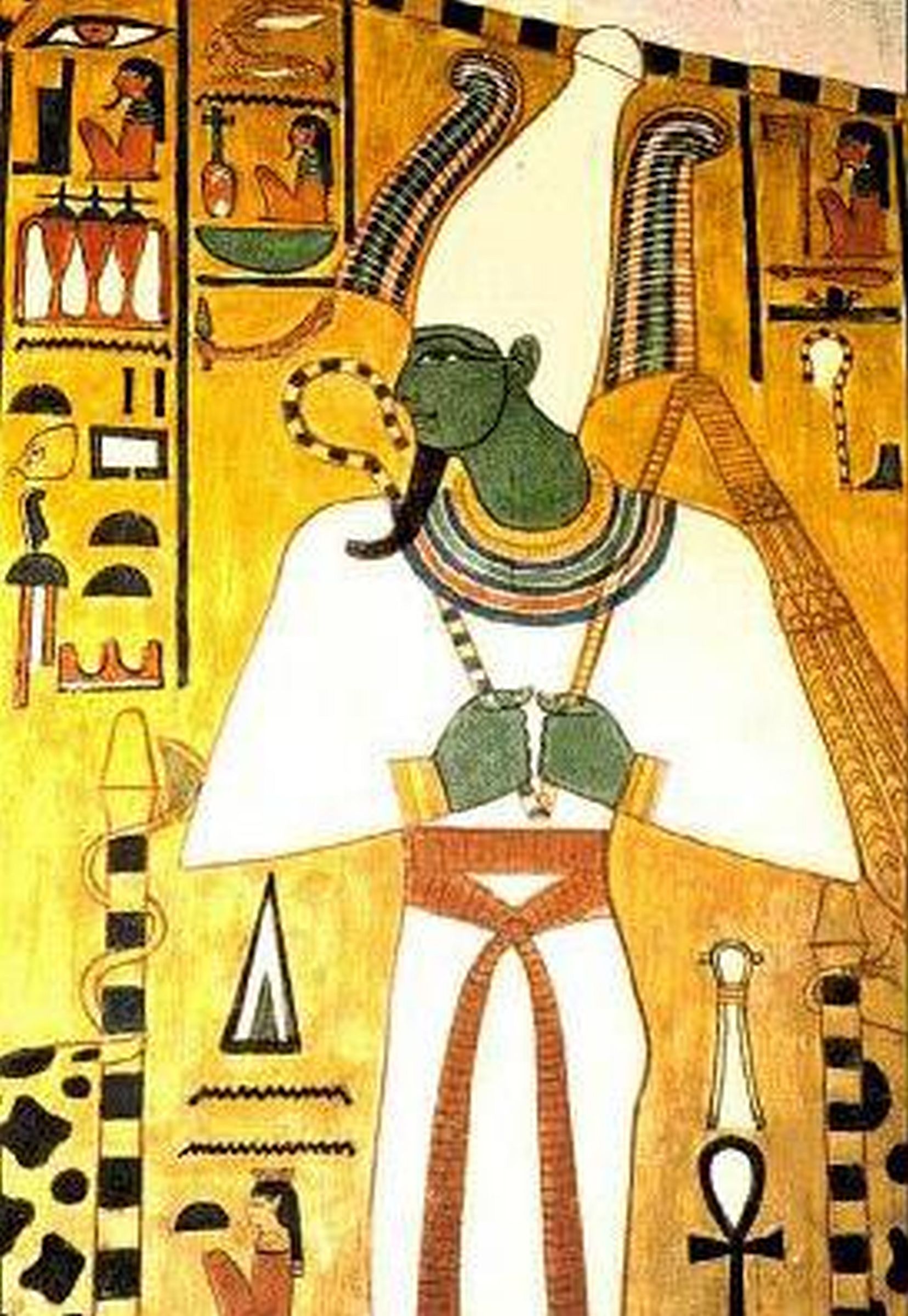
Osiris was the god who made death survivable. Murdered by his brother Set, dismembered, and reassembled and revived by his wife Isis, he became lord of the underworld and judge of the dead — and, crucially, the promise that every Egyptian could follow. To die “an Osiris” was to be reborn as he had been; the elaborate machinery of Egyptian funerary religion, from the weighing of the heart to the spells of the Book of the Dead, existed to win each person that resurrection. For three thousand years his cult city of Abydos was the most coveted burial ground in Egypt, drawing pilgrims and the dead who wanted to lie near the god who had beaten death.
The god of resurrection could not, in the end, resurrect his own worship. As Christianity became the religion of the Roman Empire, the temples that sustained Osiris emptied; the last datable hieroglyphic inscription was cut at Philae in 394 CE, and around 537 the emperor Justinian had Philae itself — the final working temple of the old gods — shut down. The faith that had spent three millennia rehearsing the defeat of death simply stopped being practised. It is a fitting grave for this museum: a deity whose entire promise was that nothing truly ends, ended — his temples closed, his mysteries unperformed, his name no longer the password to eternity but a line in a mythology.
Worth remembering
- Each autumn, priests planted 'Osiris gardens' — linen moulds shaped like the god, packed with Nile soil and grain — and watched the seeds sprout green through his body, a yearly proof of resurrection acted out in dirt and barley.
- At Abydos, his great cult city, mystery plays re-enacted his murder by Set and his return to life, including mock battles between the followers of Horus and of Set, as the god's gold image was carried from the dark of the temple out into the sun.
Gallery
Watch
Sources
- Osiris, god of the dead and the afterlife, is attested from the Pyramid Texts (c. 2400 BCE); from the Middle Kingdom his cult centre at Abydos became the most sought-after pilgrimage and burial site in Egypt. Encyclopaedia Britannica
- Osiris's worship persisted virtually unbroken for roughly 3,000 years, with Abydos as its heart. World History Encyclopedia
- The graffito of Esmet-Akhom, dated 24 August 394 CE and carved at Philae, is the last known dated hieroglyphic inscription — written at a temple where the old gods were still being worshipped. Wikipedia
A graveyard tradition: leave a stone to show you came, and remembered.