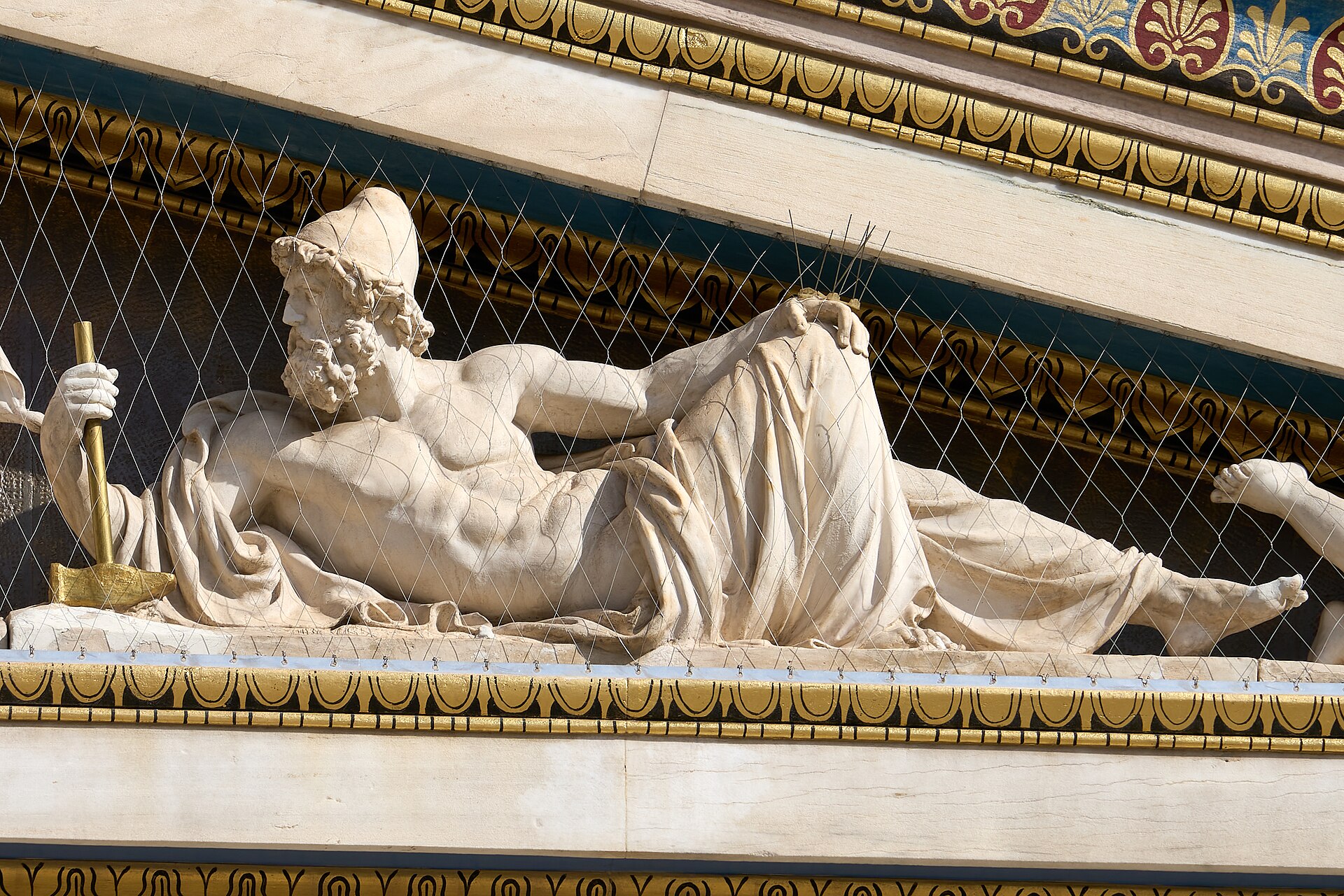
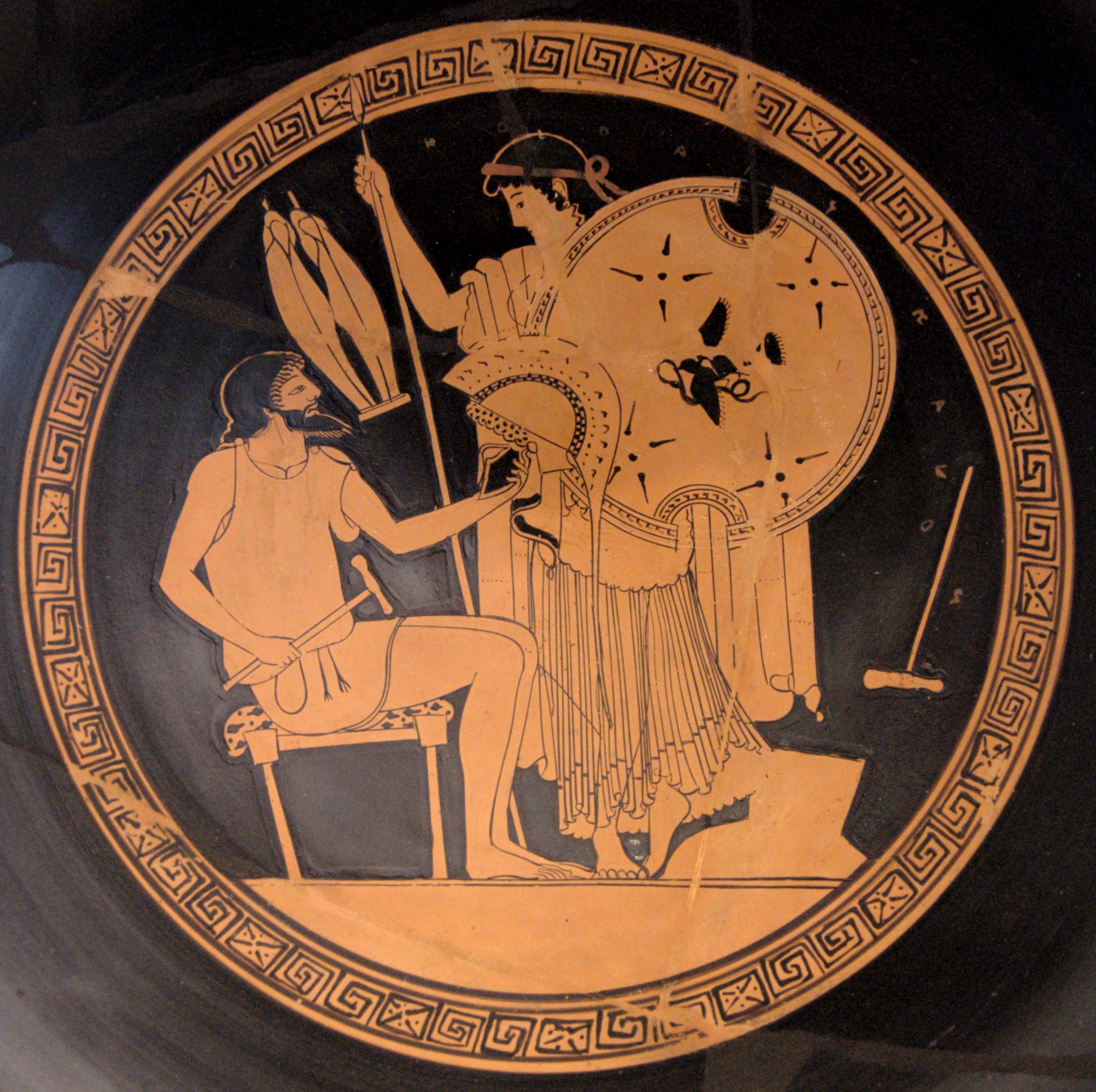
Hephaestus was the one Olympian whose usefulness never depended on being beautiful or beloved. Cast out at birth for a deformity, raised by sea-nymphs on the sea floor, he built his workshop out of exile and made himself indispensable from it: Zeus’s sceptre and aegis, Hermes’s winged sandals, Pandora herself, the bronze automata that served as his assistants, and — in the Iliad’s most famous set-piece — the shield of Achilles, forged for Thetis as thanks for saving him. He made Aphrodite’s girdle, the belt that made her irresistible, and married her himself; when she took Ares to bed, Hephaestus caught the pair in an unbreakable net of his own forging and hauled them in front of the other gods to be laughed at. He was worshipped chiefly at Athens and on the volcanic island of Lemnos, where his own fall was said to have landed, honored with the annual Chalkeia festival and the five-yearly Hephaestia with its torch races.
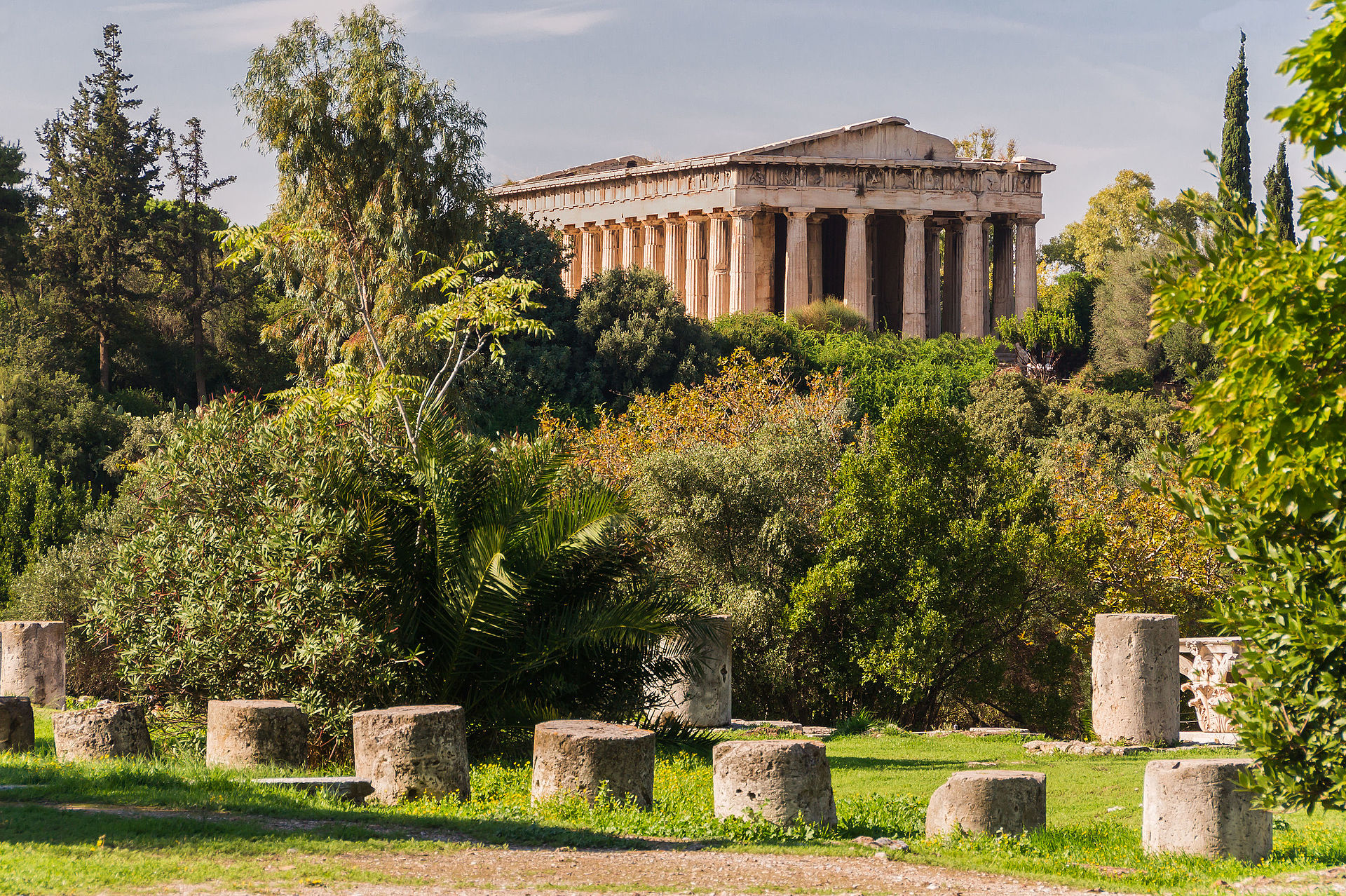
His main sanctuary, the temple above the Athenian Agora begun in 449 BCE, outlasted every other major Greek temple standing today, and not because anyone kept protecting it. Theodosius I’s edicts of 391-393 CE banned the sacrifices, shut down the festivals, and ended his public cult along with the rest of the pantheon’s. But around 700 CE someone converted his temple into a church dedicated to Saint George, and the building stayed in use — a roof over it, walls maintained, doors that opened every Sunday — for eleven more centuries, until 1834. Every other Olympian’s grandest house was burned, quarried for other buildings, or left to fall in on itself. The lame god’s forge survived by accident, kept upright by people who had forgotten who built it.
Worth remembering
- Cast from Olympus at birth for his lameness — thrown by Hera in shame, or by Zeus for taking Hera's side, depending on the telling — he fell into the sea and was raised in secret by the nymph Thetis, whom he repaid decades later by forging her son Achilles a new suit of armor after the Trojans stripped his first.
- His temple above the Athenian Agora, begun in 449 BCE and finished during the Peace of Nicias, was converted into the church of Saint George Akamates around 700 CE and stayed in continuous use as a church until 1834 — the accident of reuse that left it, alone among the great temples of Greece, essentially still standing.
Gallery
Sources
- Hephaestus was born to Hera alone (out of spite at Zeus fathering Athena unaided) and was cast down from Olympus for being lame or deformed; in Homer's account he fell into the sea and was raised by the sea-nymph Thetis, later forging Achilles's armor for her in gratitude. Wikipedia
- Construction of the Temple of Hephaestus in the Athenian Agora began in 449 BCE; it was not fully complete until the Peace of Nicias (421-415 BCE). Around 700 CE it was converted into the Christian church of Saint George Akamates, which is why it survives today as one of the best-preserved ancient Greek temples anywhere. Wikipedia
- Hephaestus was the divine blacksmith who crafted Zeus's sceptre and aegis, Hermes's winged helmet and sandals, Pandora, the bronze automata of his workshop, and the shield of Achilles; Athens and the volcanic island of Lemnos were his principal cult centers, honored with the annual Chalkeia festival and the Hephaestia held every five years. World History Encyclopedia
A graveyard tradition: leave a stone to show you came, and remembered.