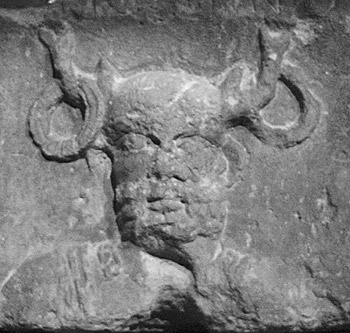
Cernunnos is the best-known Celtic god most people cannot actually describe, because almost nobody could — not even, it seems, the Gauls who carved him. His name appears in the ancient record exactly once: on a battered stone pillar dedicated to Jupiter and other gods by a guild of Paris boatmen sometime under the emperor Tiberius, between 14 and 37 CE, unearthed by chance in 1710 under the choir of Notre-Dame de Paris. The inscription is so worn that only the letters “-ernunnos” are fully legible; “Cernunnos” is the scholarly reconstruction, not a certainty. On that pillar’s top tier stands an aged, frowning, antlered man, a torc hanging from each horn like something forgotten there — the single moment history bothers to write his name next to his face.
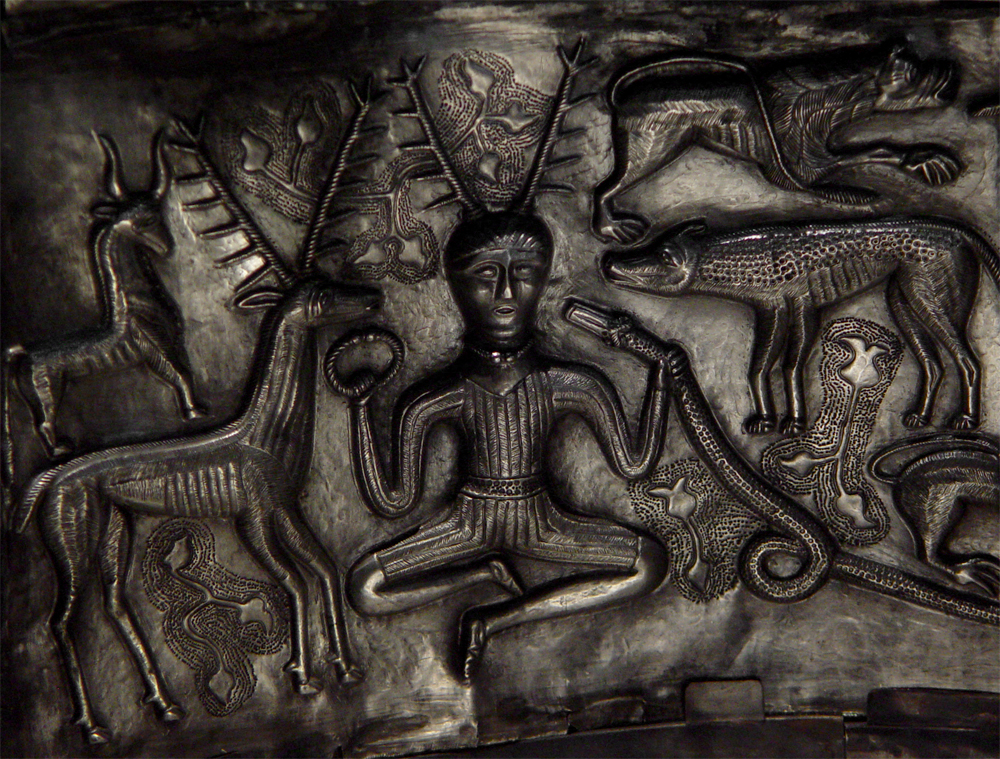
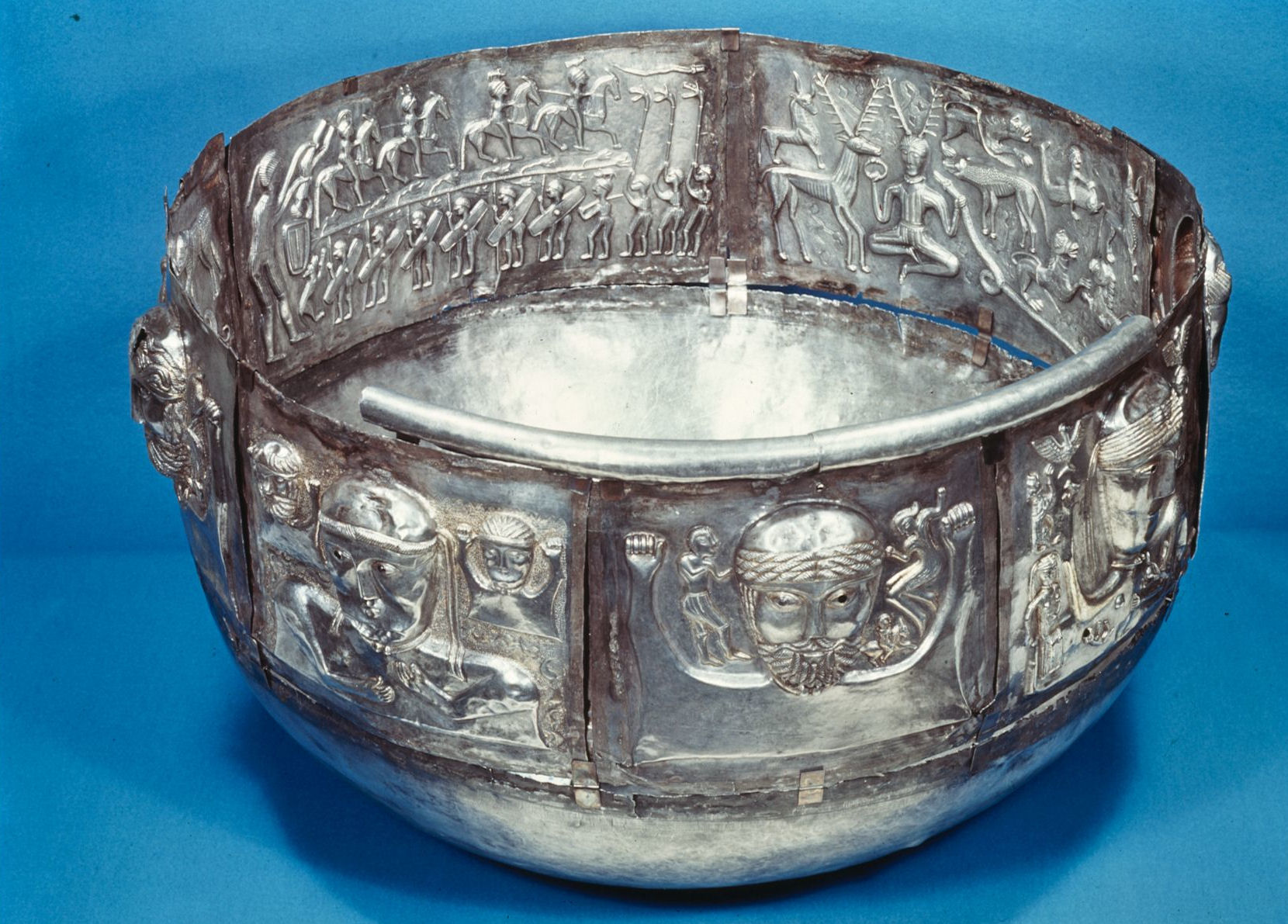
Everything else attached to him is iconography without commentary. An antlered figure sits in prayer at Val Camonica in northern Italy, carved perhaps as early as the 4th century BCE, seven hundred years before anyone wrote “Cernunnos” down — and nothing proves the Alpine carvers and the Paris boatmen meant the same god. A cross-legged antlered man holding a torc and a ram-horned serpent turns up on the Gundestrup Cauldron, a silver vessel dragged from a Danish bog, its own date so loosely bracketed — anywhere from 200 BCE to 300 CE — and its craftsmanship so plausibly Thracian rather than Celtic, that it raises as many doubts as it settles. Roughly two dozen images across Gaul, clustered mainly around Paris and Reims, get folded into “Cernunnos” by modern convention. No surviving text tells you what he ruled over, what story explained his antlers, what a Gaulish worshipper actually asked of him, or whether Cernunnos was one god at all rather than a regional label pinned after the fact onto several. The god is, in the most literal sense, better attested in stone than in thought.
He went out the way Gallo-Roman paganism generally did: not with a single dramatic conversion but with the slow, centuries-long Christianization of Gaul and then Celtic Britain, roughly the 5th to 6th century CE. The evidence that this was a deliberate erasure, not mere neglect, is physical — one statue matching his type was found beheaded, and the antlers on other surviving images look chipped off on purpose, not worn by time. A god who was barely written about while alive was, when he died, at least struck at with real intent.
He has a modern afterlife, and it is worth being precise about what kind. Early-20th-century writers, especially the Egyptologist Margaret Murray in her 1931 book The God of the Witches, proposed that horned deities across Europe were fragments of one unbroken, continent-wide pre-Christian religion — a thesis with no verifiable evidence behind it, which nonetheless got built into the “Horned God” of Gerald Gardner’s mid-20th-century Wicca. Cernunnos is now one of the names most often draped over that modern archetype. It is the same maneuver already logged for Perun, resurrected as Slavic Rodnovery, and for Odin and Thor, resurrected as Heathenry and Ásatrú: a real, late-20th-century reconstruction, assembled from fragments by people who said so, standing in the empty space left by a religion that actually ended. The difference with Cernunnos is that the fragments were thinner to begin with — no chronicle wept for him, because no chronicle ever really explained him. He didn’t outlive his death so much as he outlived the fact that anyone ever fully described him alive. Even total, undisputed dominance leaves a record; Cernunnos barely got the entry.
Worth remembering
- On the Gundestrup Cauldron he sits cross-legged, a torc in one raised hand and a ram-horned serpent in the other, surrounded by a stag, a lion, a dog and a man riding a dolphin — an iconography borrowed so freely that scholars still argue whether the cauldron depicts a Celtic god at all, or a Thracian silversmith's idea of one.
- On the Pillar of the Boatmen his antlers are hung with torcs like a coat rack — a detail no myth explains, because no myth about him survives to explain it.
Gallery
Sources
- Cernunnos's name is only clearly attested once in antiquity, on the 1st-century CE Pillar of the Boatmen from Paris (dedicated under Tiberius, 14-37 CE), where it labels an aged, antlered figure with torcs hanging from his horns; even that inscription is damaged and only the letters '-ernunnos' are fully legible Wikipedia
- The Pillar of the Boatmen was unearthed in 1710/1711 during excavation under the choir of Notre-Dame de Paris; the reassembled blocks, showing Cernunnos alongside Roman gods (Jupiter, Vulcan) and other native Gaulish deities (Esus, Smertrios), are now displayed in the frigidarium of the Musée de Cluny Wikipedia
- The best-known depiction of the antlered god is on the Gundestrup Cauldron, a silver vessel found in a Danish bog and dated broadly between 200 BCE and 300 CE — a find so far from Gaul, and so imprecisely dated, that it complicates rather than confirms any single cult; the figure holds a torc in one hand and a ram-horned serpent in the other, seated cross-legged among wild beasts Wikipedia
- After Christianization, images identified with Cernunnos were subject to iconoclastic destruction: one statue was found deliberately beheaded, and the antlers on other surviving figures appear to have been chipped off on purpose Wikipedia
- The modern neopagan 'Horned God' is a term coined in the early 20th century; Margaret Murray's The God of the Witches (1931) claimed horned figures across Europe and beyond formed one unbroken pre-Christian cult, a thesis with no verifiable evidence, which Gerald Gardner then built into his mid-20th-century Wiccan religion Wikipedia
A graveyard tradition: leave a stone to show you came, and remembered.