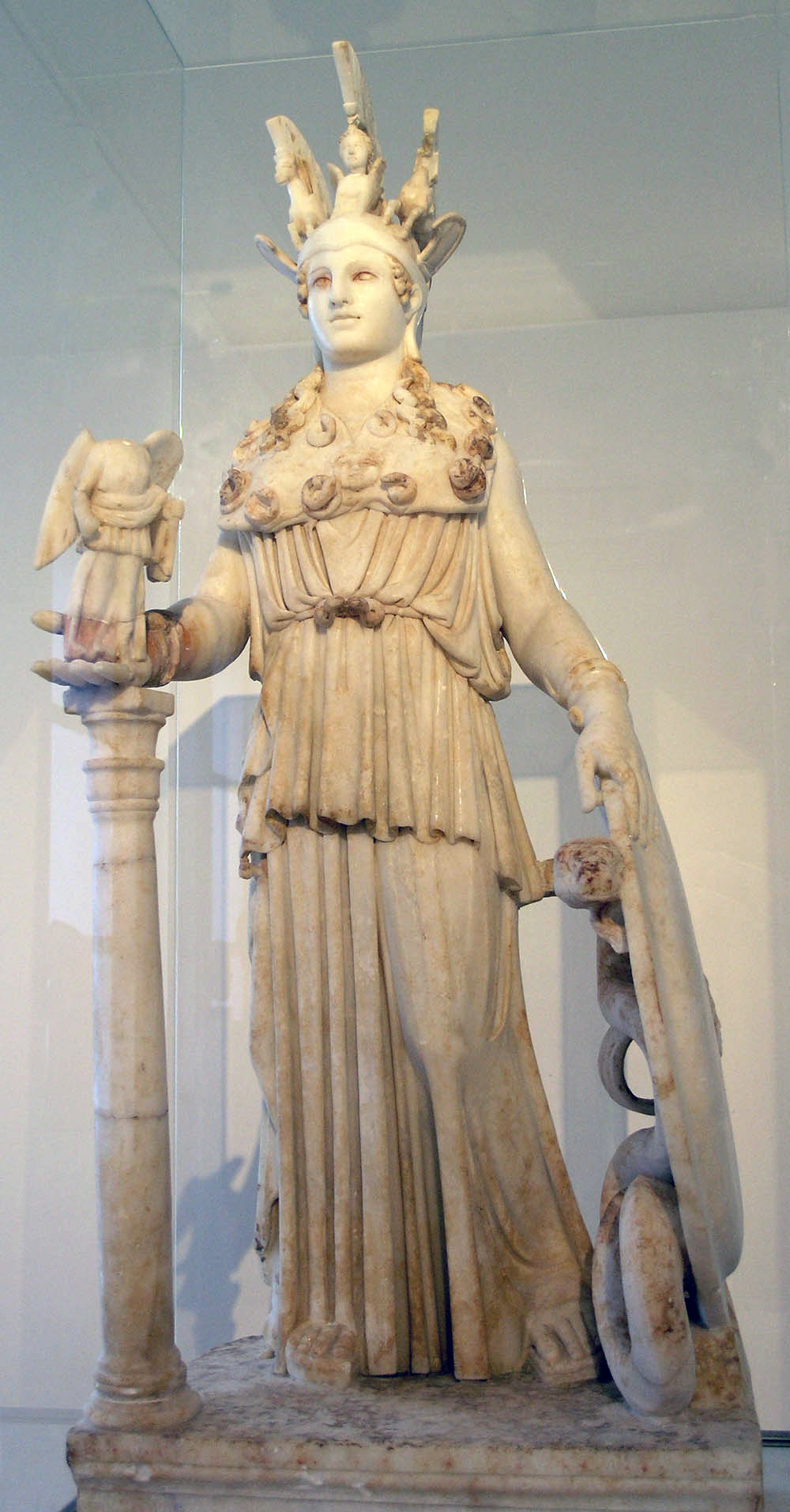
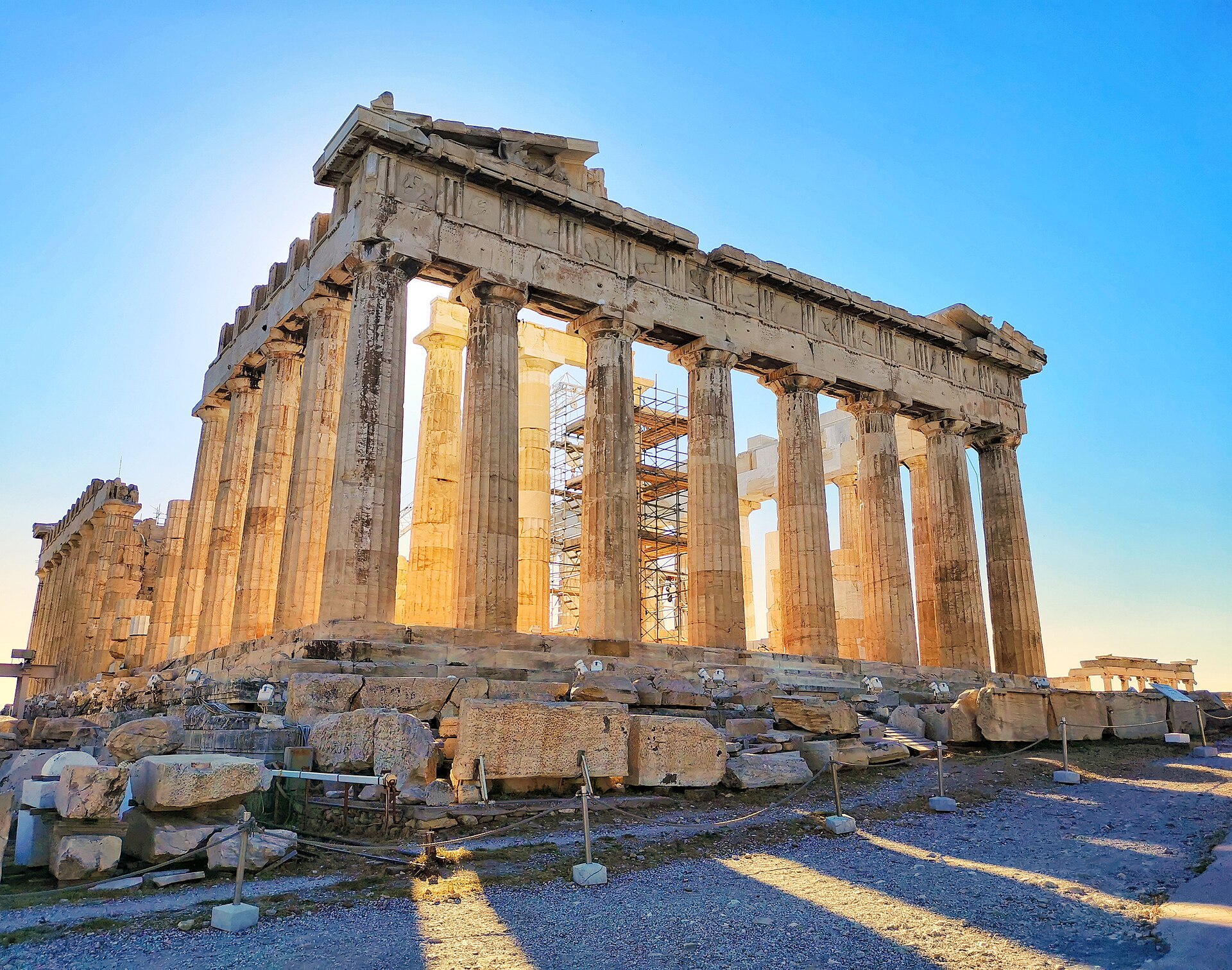
Athena was the patron deity of Athens and one of the most worshipped figures in the Greek world. She held three domains at once — wisdom, defensive war, and the crafts — and the city took her name after she gave it the olive tree, winning a contest with Poseidon for the Acropolis. Her worship reached back at least to the 8th century BCE, with older roots in Mycenaean Greece where the name appears as “a-ta-na” in Linear B. At the height of Athenian power, between 447 and 432 BCE, the city built the Parthenon for her on the Acropolis and set inside it Pheidias’s Athena Parthenos, a statue over 12 metres high made of ivory and some 1,140 kilograms of gold. Every four years the Panathenaic festival carried a woven robe to her in procession through the city. She was honoured well beyond Athens, across the Greek mainland and colonies, and the Romans worshipped her as Minerva.
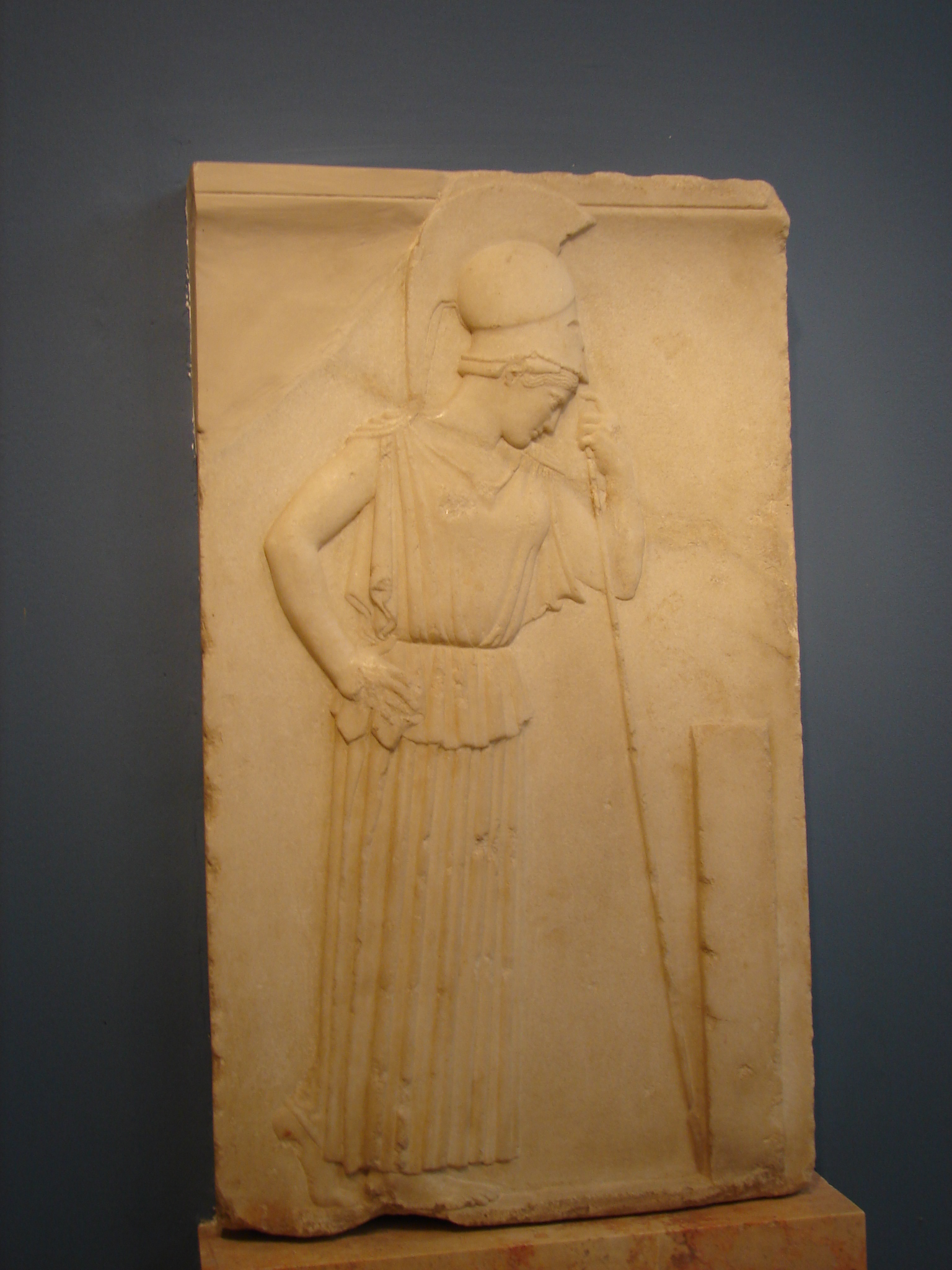
Her worship ended by imperial law. After Christianity became the state religion of the Roman Empire, Theodosius I issued the anti-pagan edicts of 391–392 CE: sacrifice was banned, entry to temples forbidden, and on 8 November 392 the worship of the old gods prohibited outright. The institutions that sustained Athena’s cult were shut down, and within a few generations the Parthenon itself was converted into a Christian church, its east end opened for an apse and parts of its sculpture cut away. The building still stands and is among the most visited monuments on earth; the Varvakeion Athena and the Mourning Athena relief sit in Athenian museums; Minerva remains a stock figure of Western art. None of it is worship. No one sacrifices to Athena now, and her fame is the exact measure of her death.
Worth remembering
- Pheidias's cult statue, the Athena Parthenos, stood over 12 metres high inside the Parthenon — ivory for the skin and roughly 1,140 kilograms of gold over a wooden core, the goddess armed and holding a winged Nike in her outstretched hand. The original was lost in antiquity; the best surviving record is the Varvakeion Athena, a marble copy about one-twelfth the size.
- Athens won her patronage in a contest with Poseidon: he struck the Acropolis rock to bring forth a salt spring, she planted an olive tree, and the olive was judged the better gift. Every four years the Panathenaic festival carried a newly woven robe through the city to her, with athletic games whose prizes were amphorae of olive oil.
Gallery
Sources
- Athena was goddess of wisdom, war, and the crafts and patron of Athens; the city chose her after she gave them the olive tree, beating Poseidon's offering. World History Encyclopedia
- The Parthenon was built 447–432 BCE for Athena and housed Pheidias's Athena Parthenos, a chryselephantine statue over 12 m high using about 1,140 kg of gold over a wooden core; in the 5th–6th century CE it was converted into a Christian church. World History Encyclopedia
- Theodosius I's decrees of 391–392 CE (Codex Theodosianus xvi.10.10–12) banned all public and private sacrifice and forbade entry to temples; on 8 November 392 he prohibited the worship of the pagan gods entirely. Wikipedia (citing Codex Theodosianus)
- Under Theodosius, temple suppression escalated from the prohibition of sacrifice to orders for temples to be closed and demolished by the end of the 4th century. Encyclopaedia Romana, University of Chicago
A graveyard tradition: leave a stone to show you came, and remembered.