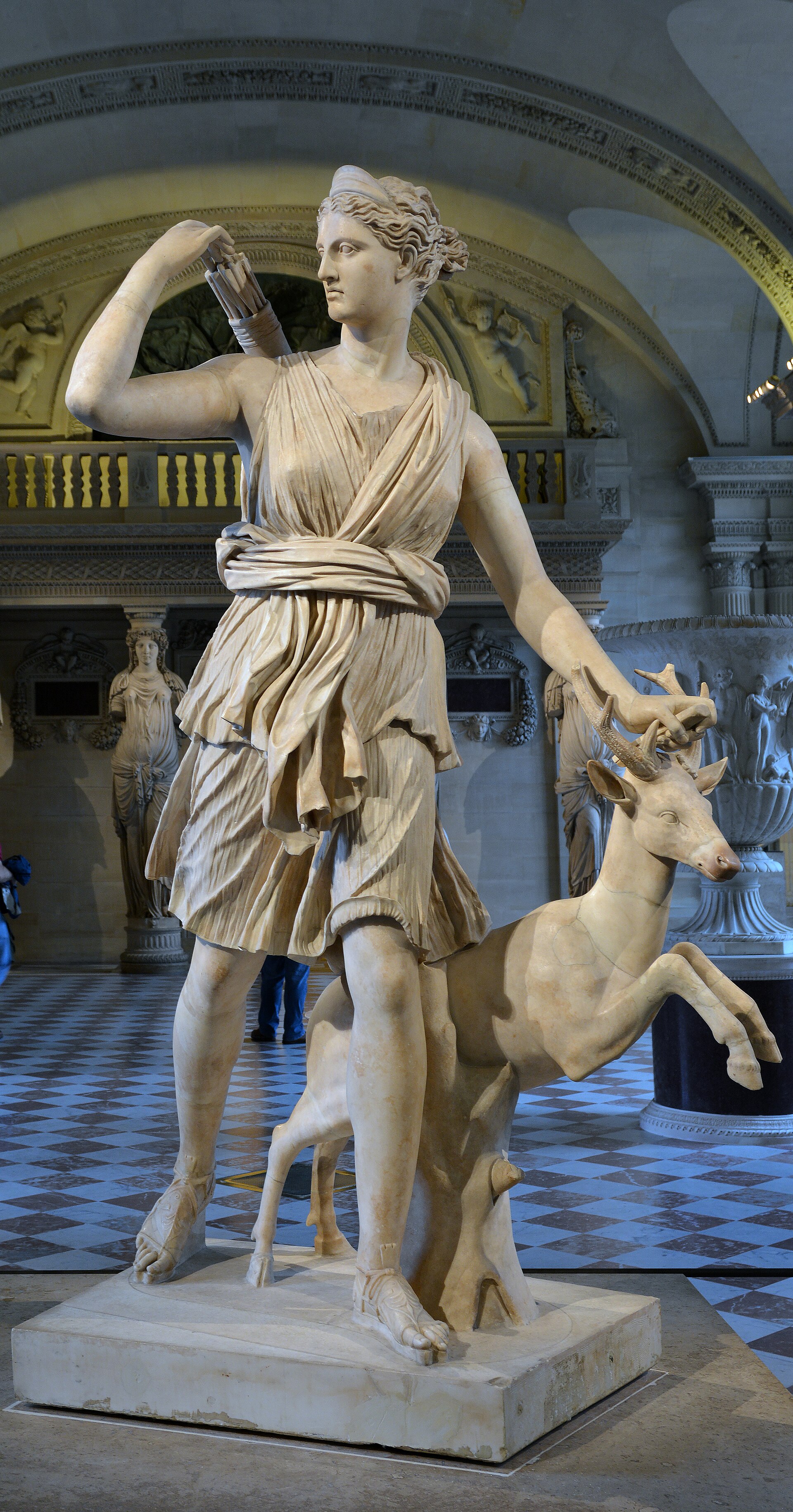
Artemis was the virgin goddess of the hunt, the wild, and the moon, twin sister of Apollo and one of the most widely worshipped figures in the ancient Mediterranean. At Ephesus her cult outgrew the standard Greek Olympian profile entirely: the temple built for her there, finished around 323 BCE after an earlier structure burned in 356 BCE, measured about 137 by 69 metres with more than 127 columns roughly 18 metres high — twice the footprint of the Parthenon. Antipater of Sidon ranked it among the Seven Wonders of the Ancient World, judging it grander than the pyramids of Giza or the Hanging Gardens of Babylon. Her cult statue there carried the Ephesia Grammata, six words of no fixed meaning — askion, kataskion, lix, tetrax, damnameneus, aision — inscribed on its feet, girdle, and crown, and copied onto amulets from Sicily to Syria as protective charms independent of the goddess who first bore them. Beyond Ephesus she was hunted with, prayed to before childbirth, and paired with Apollo as one of the “Twin Archers” across the Greek world; the Romans worshipped her as Diana.
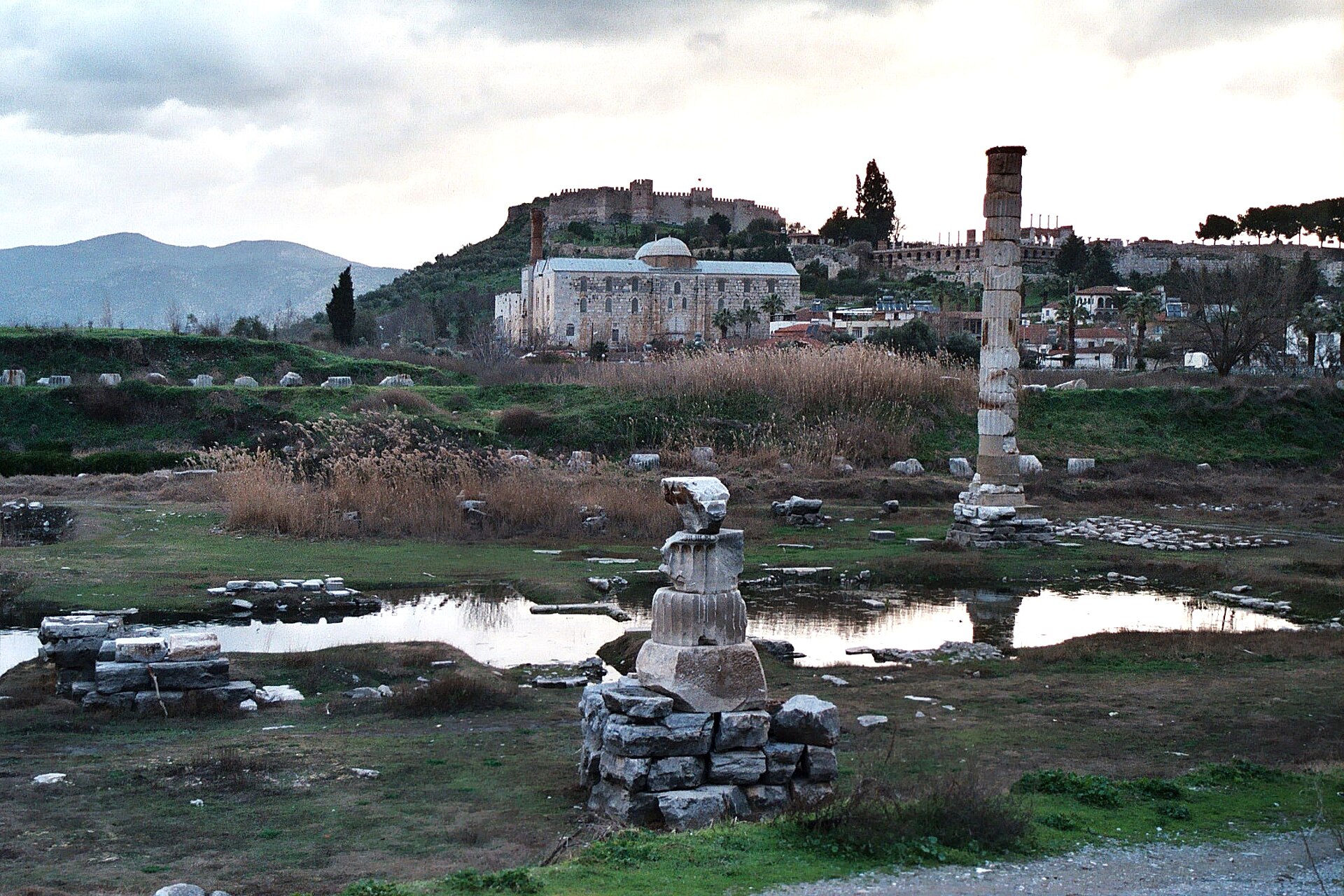
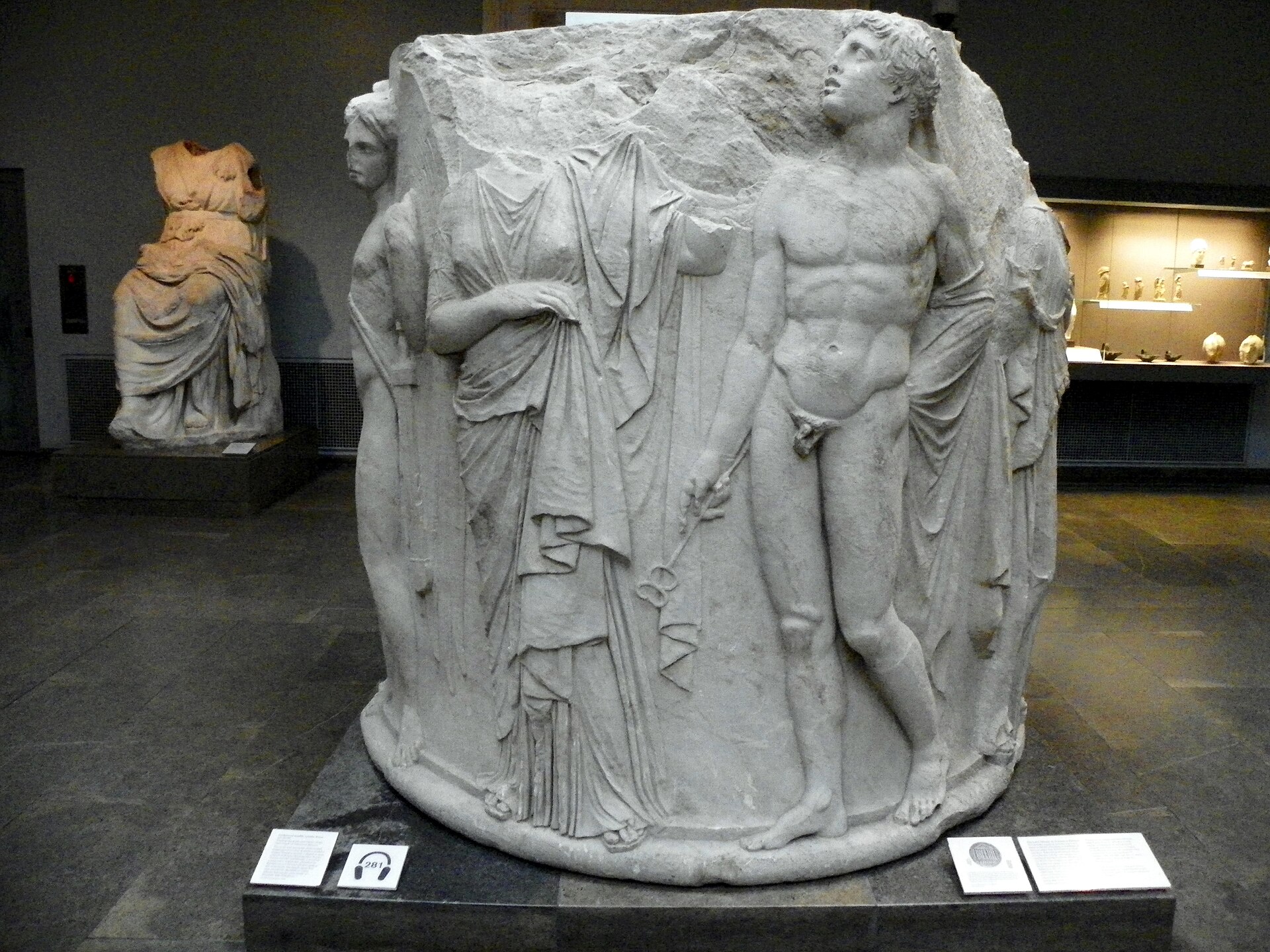
Her temple did not survive one blow but two, decades apart. In 268 CE a Gothic raid, per the historian Jordanes, “set fire to the renowned temple of Diana at Ephesus,” gutting a building that had stood for over six centuries. It was repaired and stayed in use — worship did not end with the fire. It ended by policy: Theodosius I’s edicts of 391–392 CE banned pagan sacrifice and ordered temples closed across the empire, and in 401 CE the rebuilt sanctuary at Ephesus was torn down for the last time by a Christian mob, its stones hauled off for other buildings. What is left on the site today is a single reconstructed column standing in marsh reeds, next to foundations excavated by British archaeologists in the 1860s. The Diana of Versailles, a Roman copy of a lost Greek bronze, stands in the Louvre, unprayed to. A temple twice the size of the Parthenon, called the greatest building the ancient world could name, left one column standing. Dominance is not eternal.
Worth remembering
- The cult statue of Artemis at Ephesus carried the Ephesia Grammata — six untranslatable words, askion kataskion lix tetrax damnameneus aision — inscribed on its feet, girdle, and crown. Copied onto amulets and spoken aloud as protective charms, the words spread across the Greek and Roman world detached from the statue itself, valued for their sound rather than their sense.
- Her temple at Ephesus, rebuilt after a fire in 356 BCE and finished around 323 BCE, stood roughly 137 by 69 metres with more than 127 columns about 18 metres tall — twice the footprint of the Parthenon — and made Antipater of Sidon's list of the Seven Wonders of the Ancient World, which called it grander than the pyramids or the Hanging Gardens.
Gallery
Sources
- The Temple of Artemis at Ephesus was included in Antipater of Sidon's list of the Seven Wonders of the Ancient World; the third and final temple, begun in 323 BCE, measured about 137 m by 69 m with more than 127 columns roughly 18 m high. Wikipedia
- In 268 CE, according to the historian Jordanes, a raid by the Goths 'laid waste many populous cities and set fire to the renowned temple of Diana at Ephesus.' Wikipedia
- The last incarnation of the temple was destroyed in 401 CE; Ammonius of Alexandria records its closure, and Christian sources describe its final demolition under agitation associated with John Chrysostom. Wikipedia
- Artemis was the Greek virgin goddess of the hunt, wild animals, the wilderness, childbirth, and the moon; she and her twin brother Apollo were known as the Twin Archers, and her Roman counterpart was Diana. Theoi Greek Mythology
- The Ephesia Grammata were six magical words — askion, kataskion, lix, tetrax, damnameneus, aision — inscribed on the feet, girdle, and crown of the cult statue of Artemis at Ephesus and used as protective charms across the Greek world. Wikipedia
A graveyard tradition: leave a stone to show you came, and remembered.