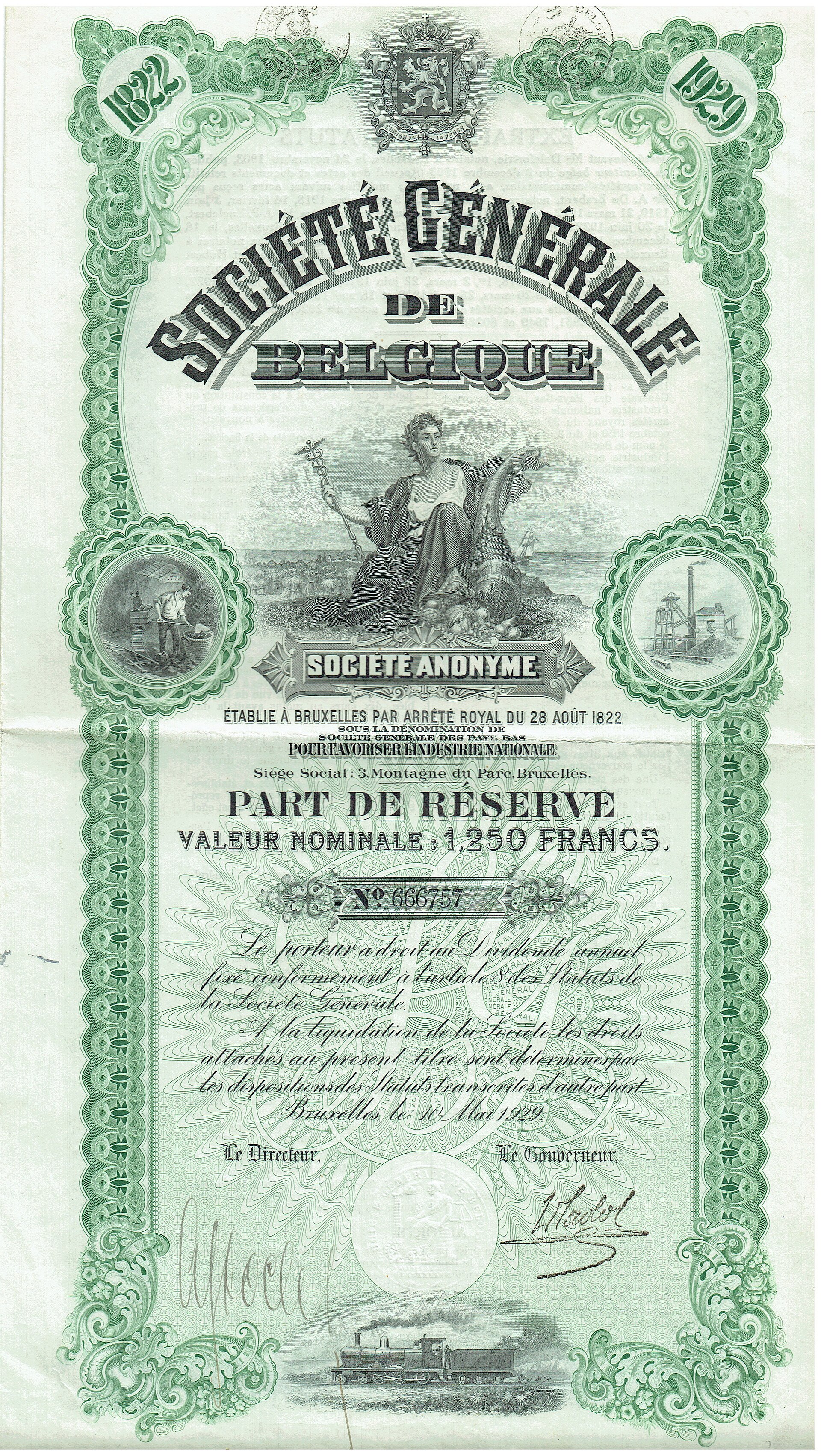
The Société Générale de Belgique was, for most of its life, the closest thing a modern democracy had to a private government of its economy. Founded in 1822, it served the new Belgian state as central bank and treasurer, financed the country’s industrial revolution, and grew into a holding company with stakes across banking, coal, steel, utilities, shipping, and arms — controlling, at its height, something like a third of the entire Belgian economy. Through Union Minière it also held the mineral wealth of the Belgian Congo, the copper and cobalt that made the colony profitable. Belgians called it “the Old Lady,” and historians called it a state within the state.
Its end came not from the market or the state but from a takeover. In 1988 the Italian financier Carlo De Benedetti launched a surprise raid for control, triggering the most dramatic corporate battle in Belgian history; the French conglomerate Suez intervened as a “white knight” and won. Belgian ownership of the country’s central holding company passed to Paris, and over the next fifteen years Suez did what acquirers do — sold the portfolio piece by piece to (mostly French) buyers, hollowing the company out. By 2003 the SGB had been reduced to a few dozen employees, and in October it was merged into its subsidiary Tractebel and renamed Suez-Tractebel; the brand and the logo were retired, and 181 years of independent existence ended with a name change. The institution that had effectively run the Belgian economy was absorbed into a larger foreign group and simply switched off.
Worth remembering
- Founded as the new nation's de facto central bank, it issued banknotes and acted as state treasurer until the National Bank of Belgium was created in 1850, then pioneered the 'mixed bank' that combined deposit banking with industrial shareholdings — a model copied across Europe.
- Through Union Minière du Haut-Katanga and its other holdings it controlled an estimated 70% of the colonial economy of the Belgian Congo, including copper and cobalt mines that supplied much of the world.
Gallery
Sources
- Société Générale de Belgique controlled roughly one-third of the Belgian economy; the 1988 takeover battle ended with the French group Suez winning control over the rival bid by Carlo De Benedetti RTBF
- On 31 October 2003 the SGB was merged into its subsidiary Tractebel to form Suez-Tractebel; the brand and logo disappeared, ending 181 years of independent existence La Libre Belgique
A graveyard tradition: leave a stone to show you came, and remembered.