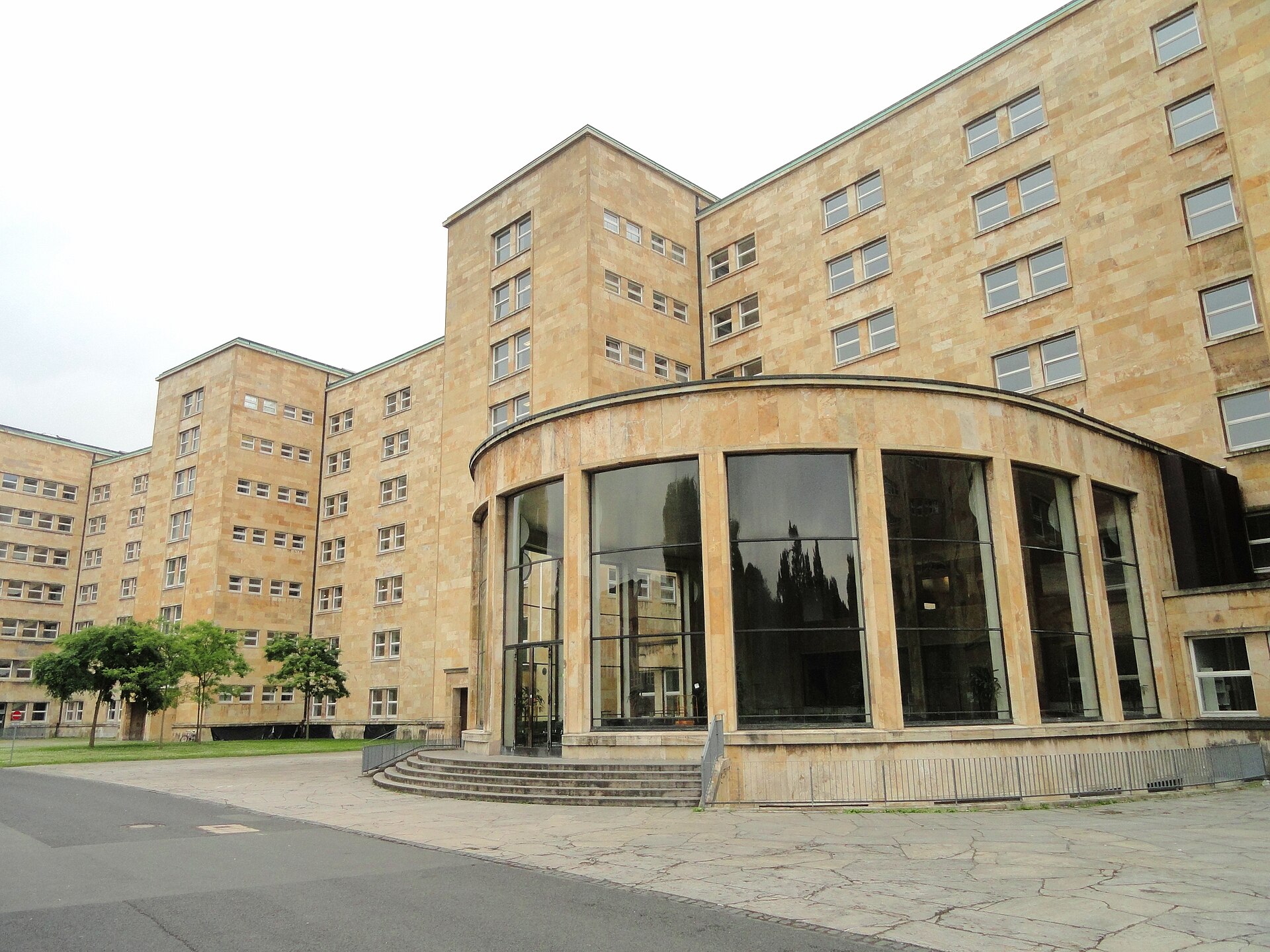
IG Farben was assembled in 1925 from the giants of German chemistry — BASF, Bayer, Hoechst, Agfa and others — into a single cartel that immediately became the largest company in Europe and one of the largest on earth. It dominated dyes, then synthetic fuel and synthetic rubber, the two materials a continental power needed to wage war without imported oil and natural rubber. That capability tied it to the Nazi state completely: it financed the regime, profited from it, and built the chemistry the war ran on. Its plant beside Auschwitz used concentration-camp labour by the tens of thousands, and a firm it part-owned manufactured the Zyklon B used to murder people in the camps.
This is why its death is filed under conquest rather than failure. IG Farben did not collapse — it was deliberately dismantled by the powers that defeated Germany, who had identified the destruction of the cartel as a war aim. Allied decartelisation orders stripped it down and refounded Bayer, BASF, and Hoechst as separate companies in 1951–52; those firms are heirs to pieces of it, not continuations of it. The empty legal shell, “IG Farben in Liquidation,” shuffled along for another half-century settling claims from survivors, until in 2003 it finally filed for bankruptcy and was gone — a reminder that a company can be too dominant, and too implicated, to be allowed to live.
Worth remembering
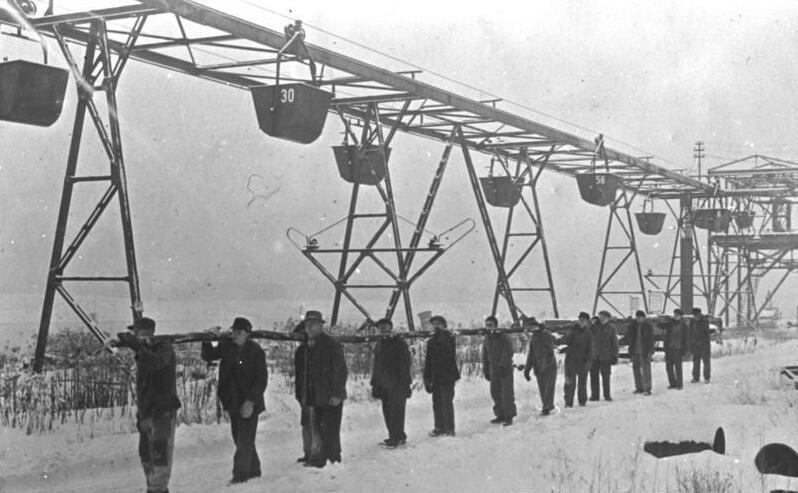
- By the mid-1930s it was the largest company in Europe and the fourth largest in the world, with a near-monopoly on German dyes and control of synthetic fuel, synthetic rubber (Buna), pharmaceuticals, and explosives — the industrial spine of German rearmament.
- It built its Buna plant beside Auschwitz and had the SS run a camp, Monowitz, to supply it with prisoners; tens of thousands of forced labourers passed through, and its part-owned subsidiary Degesch made the Zyklon B used in the gas chambers.
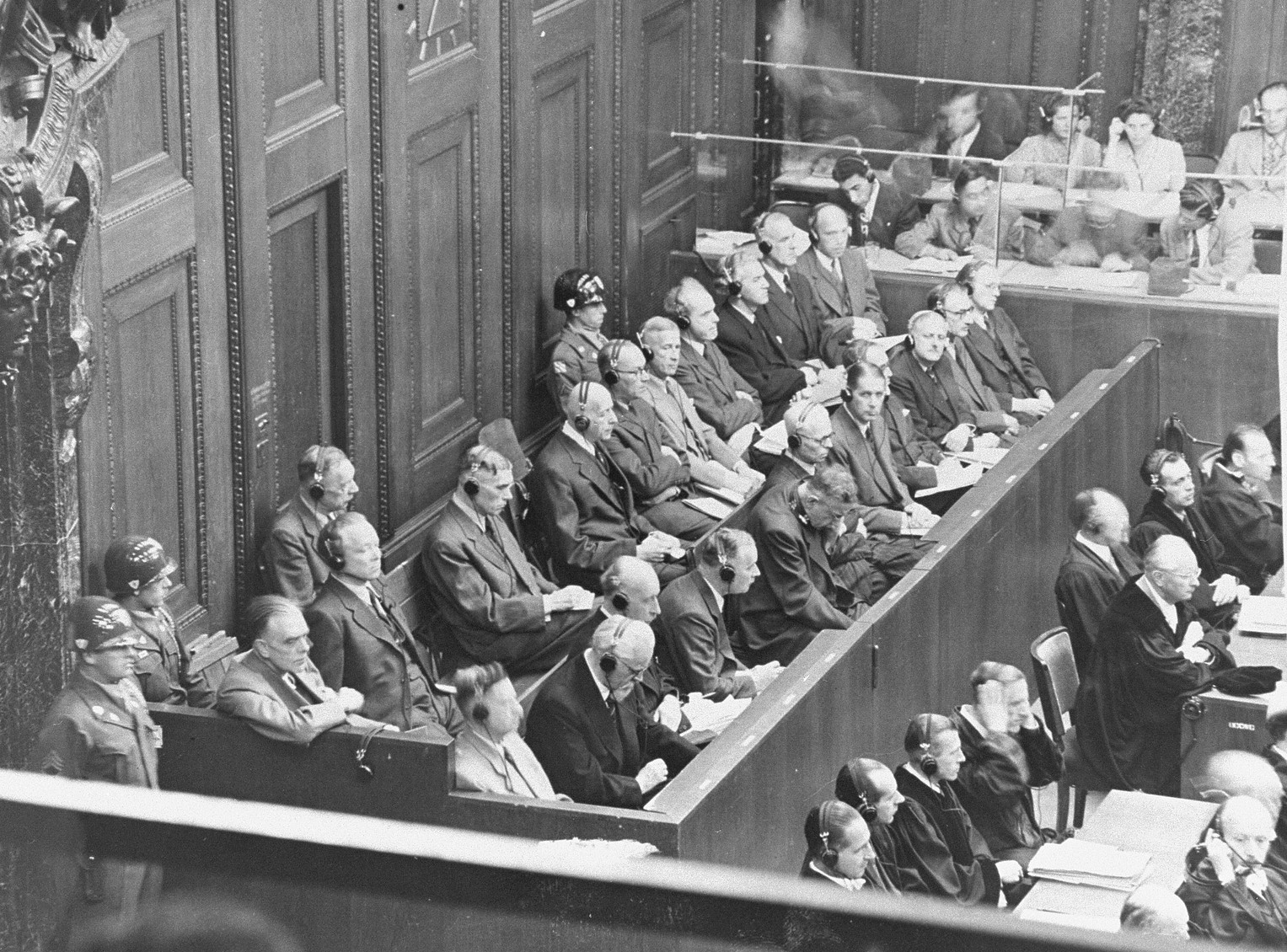
- After the war, 24 of its directors were tried at Nuremberg in 1947–48 and 13 convicted — the IG Farben trial — before the company was broken up by Allied decartelisation order into Bayer, BASF, Hoechst and Agfa.
Gallery
Sources
- IG Farben was the world's largest chemical concern from its founding in 1925 until its dissolution by the Allies after WWII; it built a synthetic oil and rubber plant at Auschwitz to exploit slave labour Encyclopaedia Britannica
- IG Farben was broken up and ordered into trusteeship by the WWII Allies in 1952; the shell continued only to pay Nazi-era claims and filed for bankruptcy in November 2003 Deseret News
- 24 IG Farben executives were tried at Nuremberg (1947–48) and 13 convicted; the company operated the Monowitz labour camp and held a stake in Degesch, the maker of Zyklon B Harvard Law School Nuremberg Trials Project
A graveyard tradition: leave a stone to show you came, and remembered.