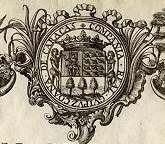
The Caracas Company was Spain’s answer to the Dutch and English chartered companies: a Basque joint-stock venture chartered in 1728 by Philip V, handed a monopoly on trade between Spain and the colony of Venezuela. Its real business was cacao. It bought the crop cheap from Venezuelan planters, sold it dear in Europe, and to defend that arrangement it ran its own coast guard, the guardacostas, against the Dutch smugglers from Curaçao who had given the planters a competing market. For half a century it dominated the Venezuelan economy, suppressed contraband, and even defended the coast against the British during the War of Jenkins’ Ear.
Its monopoly also made it hated. Fixing purchase prices low and closing off the smuggling that had been the planters’ safety valve drove the colonial elite into open revolt: in 1749 the planter Juan Francisco de León marched on Caracas at the head of an armed crowd demanding the company be thrown out, and the rising took the Spanish authorities years to put down. The company survived that, but not the reforms of its own crown. The Bourbon free-trade regulation of 1778 abolished its exclusive monopoly, and with its commercial rationale gone, the company was reorganised in 1785 — its capital folded into the new Royal Company of the Philippines. It vanished as a distinct entity, and unlike the great east-India companies it is now barely remembered, a once-dominant monopoly dissolved quietly into a successor and out of memory.
Worth remembering
- It bought Venezuelan cacao at around 10 pesos a unit and sold it in Spain at roughly 45, and to protect that margin it ran a private fleet of coast-guard ships to hunt the Dutch smugglers who had been the planters' alternative buyers.
- The low fixed prices and the crackdown on smuggling enraged Venezuelan planters; in 1749 Juan Francisco de León led hundreds of armed men into Caracas demanding the company's expulsion, a rebellion that took nearly three years to suppress and prefigured the later independence movements.
Gallery
Sources
- The Royal Guipuzcoan Company of Caracas (1728–1785) held a monopoly over Venezuelan trade, suppressed Dutch smuggling, and was deeply resented by planters; it disappeared in 1785 after a long campaign by local elites and the 1778 free-trade reform Encyclopedia of Latin American History and Culture
- In 1785 the Guipuzcoan Company's capital was absorbed into the Real Compañía de Filipinas, institutionalised by royal decree of Charles III Caracas Chronicles
A graveyard tradition: leave a stone to show you came, and remembered.