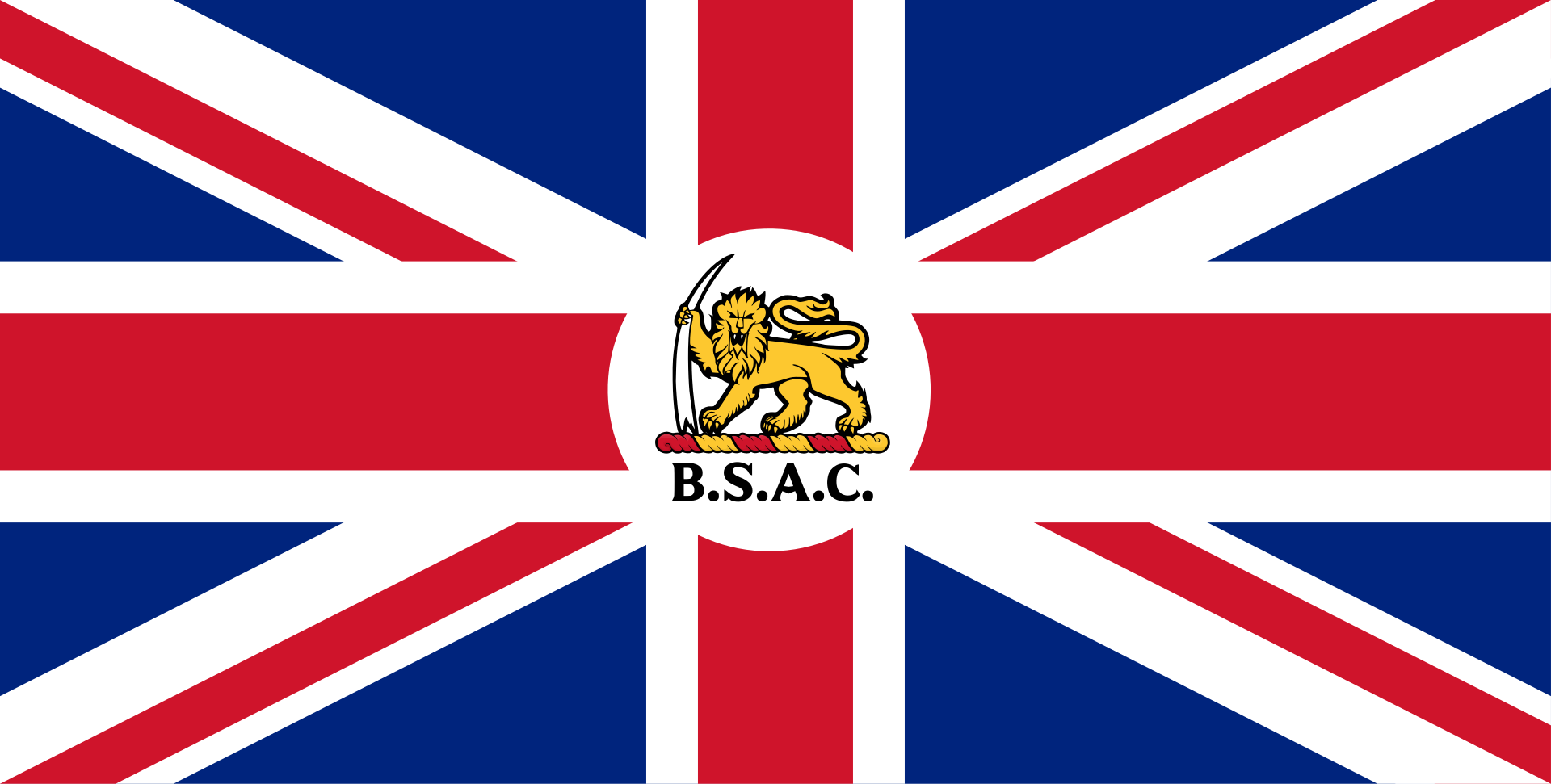
The British South Africa Company was the instrument through which Cecil Rhodes turned a fortune in diamonds into an empire. Its 1889 royal charter handed it sovereign powers over a vast, vaguely bounded stretch of south-central Africa, and it used them to conquer: the Pioneer Column of 1890 planted a settler colony in Mashonaland, and the Matabele Wars of 1893 and 1896 destroyed the Ndebele kingdom with machine guns. The company named the conquered land Rhodesia, after its founder, and governed both Southern and Northern Rhodesia — together more than a million square kilometres — as a private administration with its own police force and flag, run for the benefit of London shareholders.
Its governing power was always on loan from the British state, and the state took it back. After a 1922 referendum, Southern Rhodesia’s white settlers chose self-government, which arrived in 1923; Northern Rhodesia passed to direct Colonial Office rule in 1924. Stripped of its role as a government, the company carried on as an investment vehicle living off mineral royalties, above all from the Northern Rhodesian copperbelt — until 1964, when the imminent independence of Zambia forced it to surrender those rights too. With its last source of value gone, the British South Africa Company merged into Charter Consolidated in 1965 and disappeared as an independent entity, the corporate shell of a company that had once owned and ruled a country.
Worth remembering
- In 1890 it sent the Pioneer Column into Mashonaland to plant a settler colony, then crushed the Ndebele kingdom in the Matabele Wars of 1893 and 1896 with Maxim guns — a private company waging wars of conquest on its shareholders' account.
- It governed two territories larger than most European states, ran its own paramilitary police, and held the mineral rights to the Northern Rhodesian copperbelt right up to 1964, when it was forced to surrender them to Zambia on the eve of independence.
Gallery
Sources
- The BSAC, chartered in 1889, administered Southern and Northern Rhodesia until it lost that role in 1923 and 1924; it later merged into Charter Consolidated in 1965 Encyclopaedia Britannica
- Charter Consolidated was formed in 1965 by the merger of the British South Africa Company with the Central Mining & Investment Corporation and the Consolidated Mines Selection Company Grace's Guide to British Industrial History
A graveyard tradition: leave a stone to show you came, and remembered.