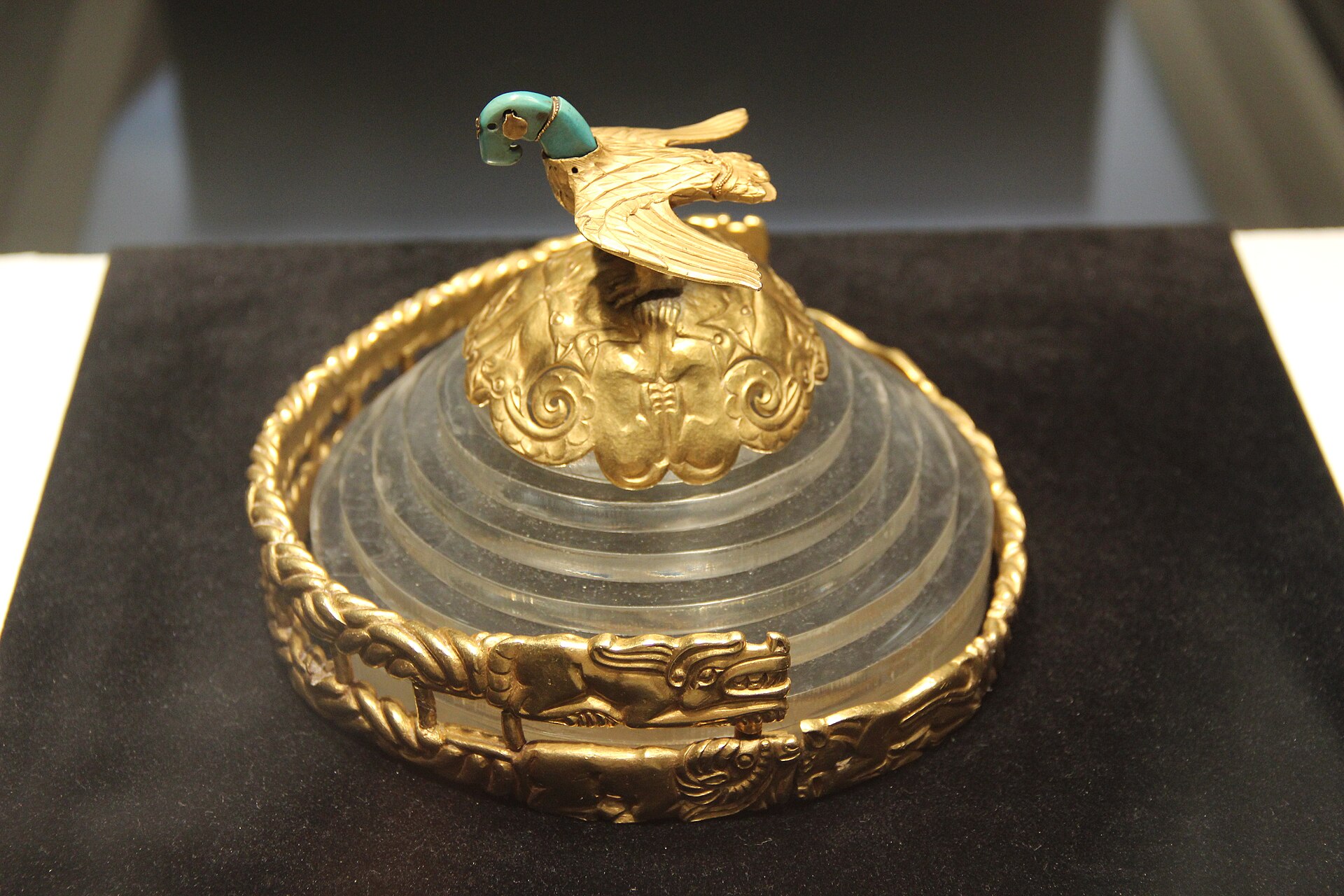
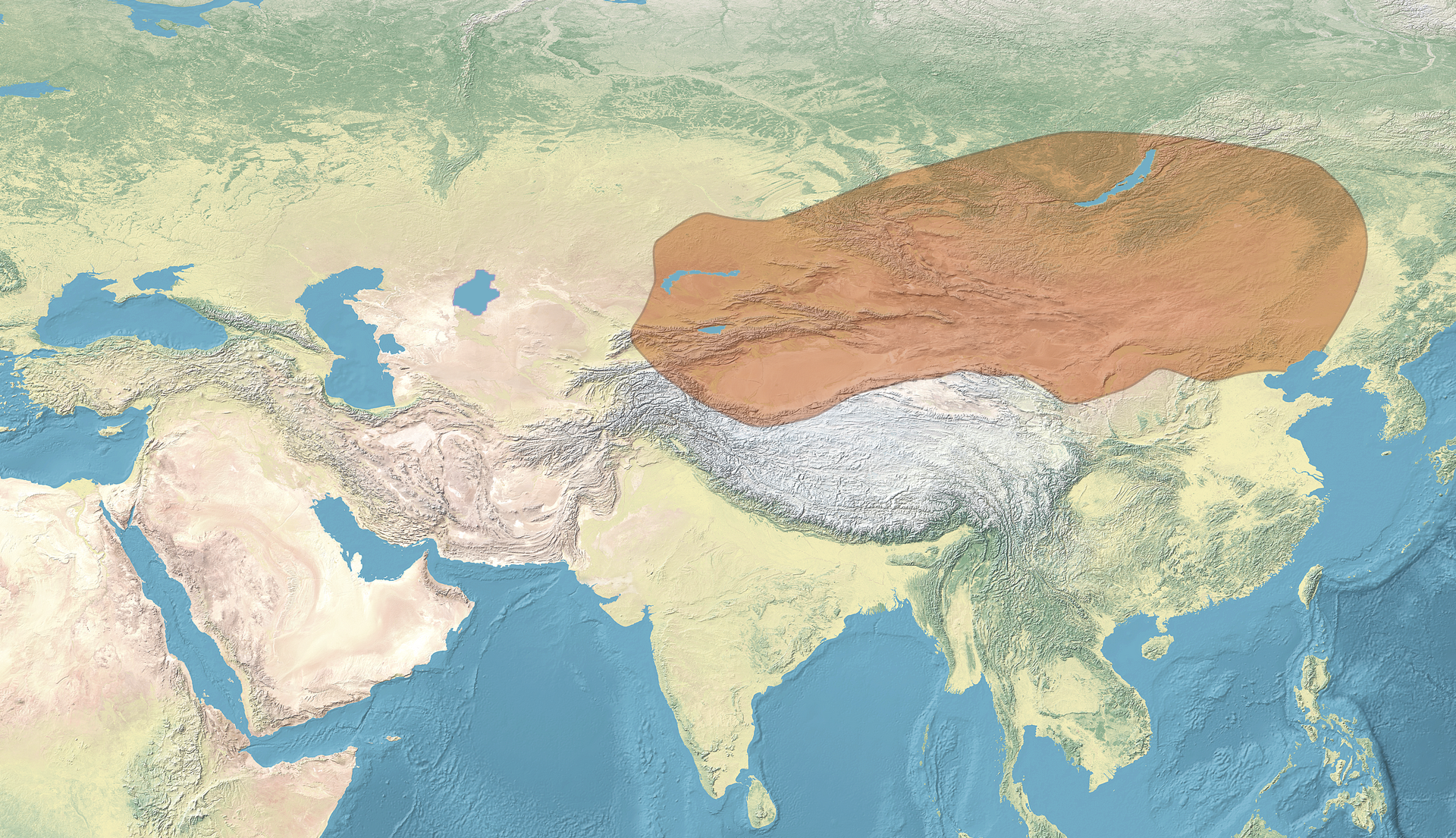
Around 209 BCE Modu Chanyu seized power, killed his father, and bound the scattered tribes of the Mongolian and Manchurian grasslands into a single confederation ruled from the centre and split into a left (eastern) and right (western) wing. His army was built on mounted archers, and within a decade it had broken the Donghu and pushed back the Yuezhi. In 200 BCE Modu trapped the founding Han emperor Gaozu and besieged him for seven days near Pingcheng; the Han escaped only by buying peace. For most of a century the Chinese paid the steppe under the heqin policy — annual silk and grain, plus Han princesses sent north as brides, renewed at each new reign — and linked their frontier walls into what became the Great Wall to hold the horsemen off. Emperor Wu of Han abandoned appeasement in 133 BCE and went on the offensive, and after 119 BCE the Xiongnu withdrew north while the Han pushed settlers into the Gansu corridor.
The confederation came apart from within. It split into rival eastern and western lines in the first century BCE, and after 48 CE the Southern Xiongnu submitted to the Eastern Han as vassals and were settled along the frontier, where they served as auxiliaries against their own northern kin. Between 89 and 91 CE a Han–Southern pincer, with the Xianbei attacking from the east, shattered the Northern Xiongnu; the Northern Chanyu was defeated near the Altai and fled west, and the Xianbei took over the steppe in their place. Southern remnants persisted long enough to found short-lived states during the Sixteen Kingdoms in the 4th–5th centuries, but as a distinct power the Xiongnu were gone. They left no writing of their own — their court scribes wrote in Chinese — and their language is unclassified, so almost everything known about them comes from the records of the Han who fought and paid them. The often-repeated link to the European Huns rests on the resemblance of the names; the evidence for it remains controversial and unproven.
Worth remembering
- At Baideng in 200 BCE, Modu Chanyu lured Emperor Gaozu of Han into the open with feigned retreats and then surrounded and besieged him for seven days on a plateau near Pingcheng; the emperor escaped only by negotiation, and the Han began paying off the steppe with silk, grain, and princesses under the heqin system.
- Xiongnu rulers were buried at Noin-Ula in northern Mongolia under deep timber chambers; kurgan 22 preserved felt carpets, embroidered woolen tapestries and lacquerware, with imported Chinese silks among the goods — evidence of the tribute and trade that flowed onto the steppe.
Gallery
Sources
- Maodun (Modu) took the title of shanyu over the Xiongnu in 209 BCE; at Pingcheng/Baideng in 200 BCE he used a feigned retreat to surround Emperor Gaozu (Liu Bang), who was then forced to pay yearly tribute of silk and foodstuffs (the heqin system); the confederation lost the Silk Road to the Han c. 60 BCE, split in two in 54 BCE, and the southern Xiongnu were finally subjugated by the Han. EBSCO Research Starters
- The Xiongnu empire ran c. 209 BCE–93 CE; the Han bought peace with tribute and marriage alliances renewed at each accession; Emperor Wu's offensive campaigns began in 133 BCE; an 89 CE campaign drove northern groups west toward Central Asia; the Xiongnu apparently had no written language of their own, and the proposed link to the Huns is controversial. Facts and Details (citing Columbia Encyclopedia / Britannica)
- The Battle of Baideng (200 BCE) was a Xiongnu victory in which Emperor Gaozu of Han was blockaded and besieged for seven days on the Baideng plateau near Pingcheng by Modu Chanyu; afterward Liu Bang followed Lou Jing's advice to marry a daughter to Modu, beginning the Han heqin policy. Wikipedia
- Noin-Ula in northern Mongolia is an elite Xiongnu burial ground; kurgan 22 (early 1st century CE), excavated by a Russian–Mongolian team under Natalia Polosmak, preserved felt carpets, woolen tapestries, lacquerware and textiles. L.I.S.A. Wissenschaftsportal, Gerda Henkel Stiftung
A graveyard tradition: leave a stone to show you came, and remembered.