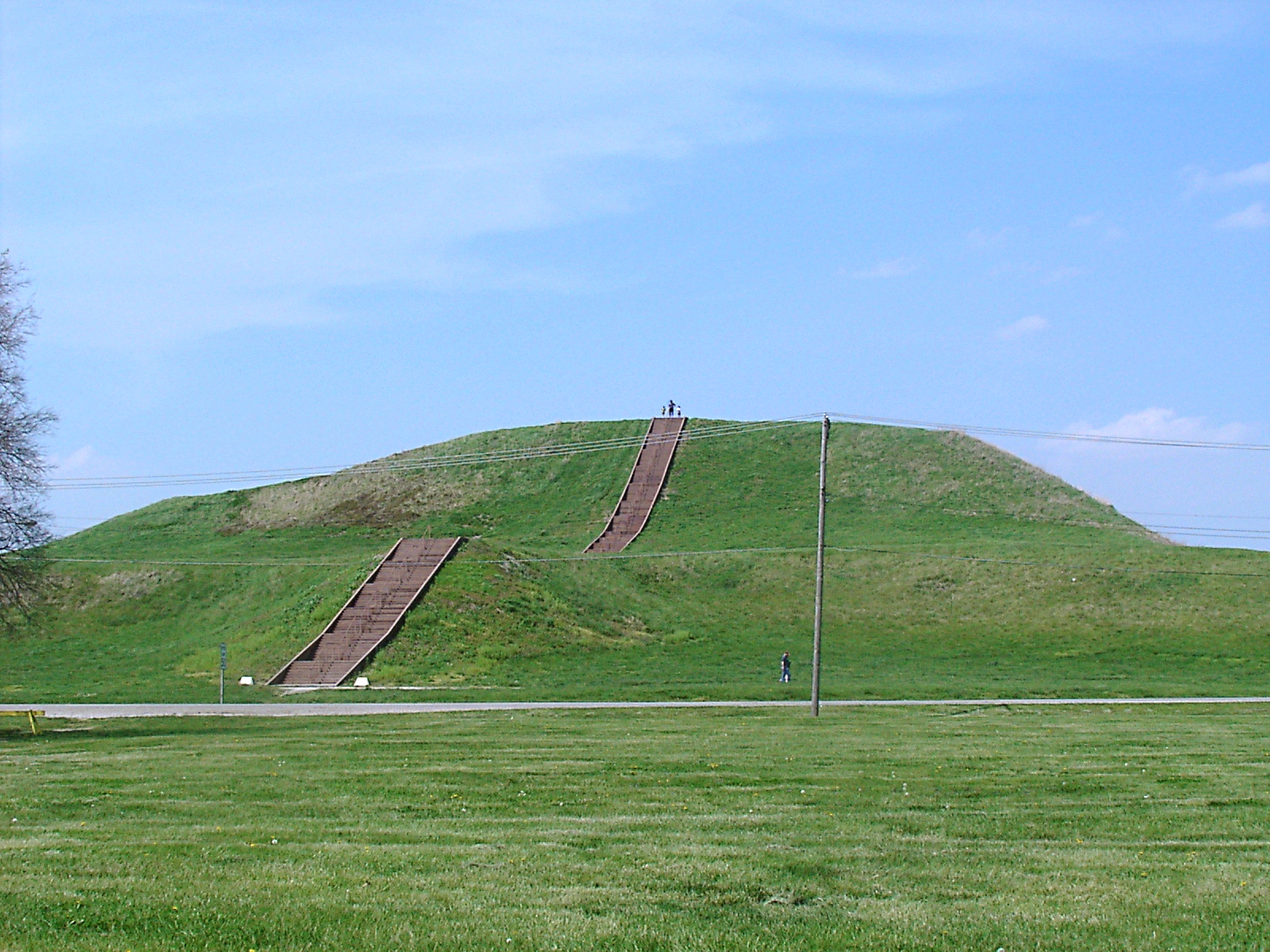
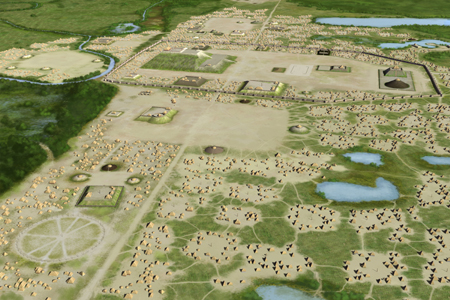
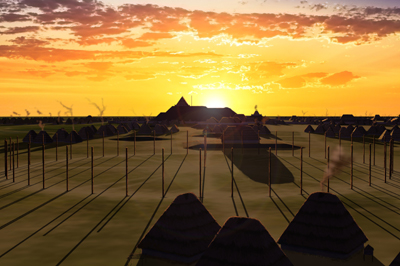
Around 1050 CE, on the floodplain east of where the Missouri meets the Mississippi, a settlement expanded into a city within a generation — archaeologists call it the “big bang.” At its height it held 15,000 to 20,000 people, the largest concentration north of Mexico and bigger than London at the same date. The builders moved earth by the basketload to raise more than 120 mounds across nearly 1,600 hectares. The largest, Monks Mound, climbs about 30 metres over four terraces and remains the biggest earthwork in the Americas. They laid out a 19-hectare Grand Plaza, erected timber post-circles now called Woodhenge to track the solstices, and in Mound 72 buried a high-status man on a bed of shell beads surrounded by more than 250 bodies, many of them sacrificed.
By about 1350 CE the city was empty. No army took it; the depopulation was gradual and the cause is still argued — sustained drought, repeated flooding of the bottomlands, deforestation of the surrounding hills, and political or social breakdown have all been proposed, with no consensus on which mattered most. The people who built Cahokia left no writing, so their account of why they walked away does not exist. Their descendants among later Mississippian and Native nations are not securely identified. The name “Cahokia” is borrowed from a different tribe who happened to live nearby a few centuries after the city died; what its own residents called it is unknown.
Worth remembering
- Monks Mound rises about 30 m (roughly 100 ft) over four terraces, the largest prehistoric earthwork in the Americas, with a base measuring roughly 291 m by 236 m.
- In Mound 72, archaeologists recovered more than 250 skeletons; many were sacrificed to accompany high-status burials, including one man laid on a platform of shell beads with several hundred finely worked arrowheads.
Gallery
Sources
- Monks Mound is the largest prehistoric earthwork in the Americas, standing 30 m high and covering over 5 ha; the site covered nearly 1,600 ha with some 120 mounds during the Mississippian period. UNESCO World Heritage Centre
- Cahokia's peak population was over 15,000, the biggest concentration of people north of the Rio Grande until the eighteenth century; the city's original name has been lost and 'Cahokia' is a modern designation from a tribe that lived nearby in the 19th century. World History Encyclopedia
- At its peak around 1100 the site encompassed about 120 earthen mounds and a population of nearly 20,000, stretching over 4,000 acres. Cahokia Mounds State Historic Site (Illinois DNR)
- In Mound 72 more than 250 skeletons were recovered; many were sacrificed to accompany one or more important individuals, one of whom lay on a platform of shell beads with several hundred fine arrowheads. Cahokia Mounds State Historic Site (Illinois DNR)
A graveyard tradition: leave a stone to show you came, and remembered.