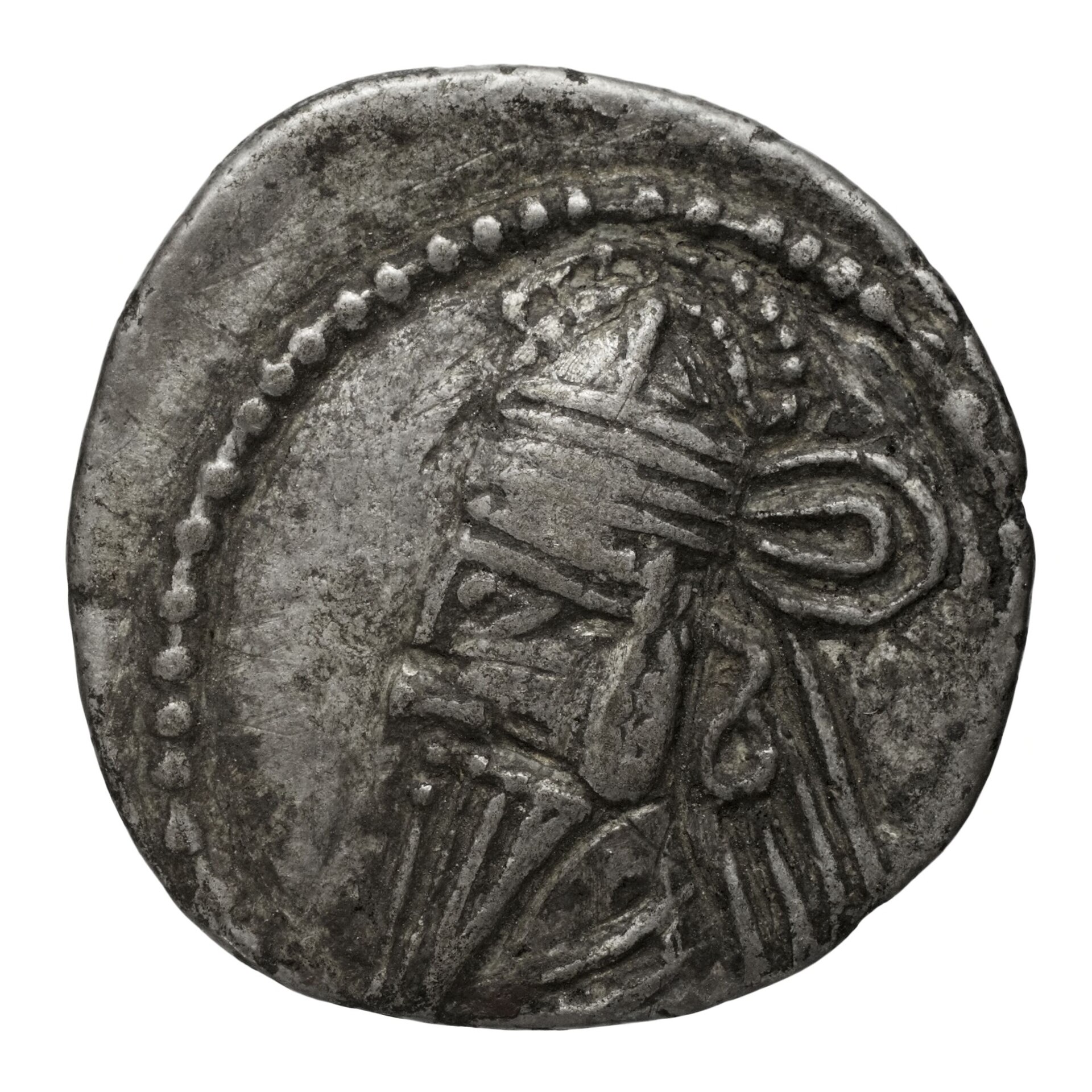
Arsaces I broke the satrapy of Parthia away from the Seleucids around 247 BCE, and over the next two centuries his line built an empire that reached from the Euphrates to the edge of the Indus and controlled the western half of the Silk Road. Its army was built on cavalry: light horse-archers who fired the “Parthian shot” backward at full gallop during a feigned retreat, and armoured cataphracts on armoured horses. In 53 BCE at Carrhae these tactics annihilated the seven legions of Marcus Licinius Crassus, killed Crassus himself, and took the legionary eagles — the only time Rome lost its standards to an eastern power and could not win them back by force. For nearly three centuries Parthia was the one state Rome treated as a peer rather than a target, fighting it to repeated stalemate along the Euphrates while its kings held court at Ctesiphon and minted silver drachms across the trade routes.
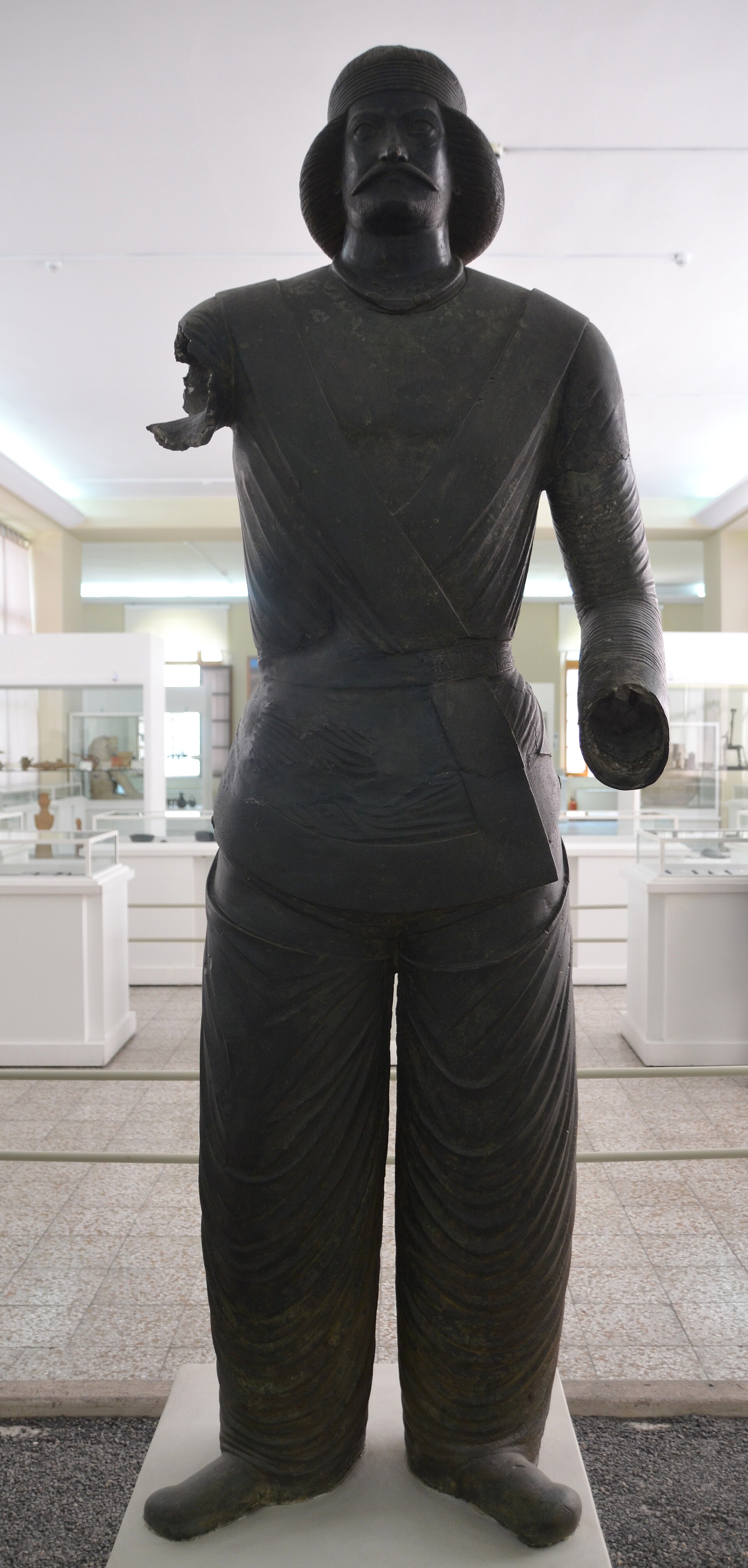
The empire bled itself in the second century: war with Trajan and later Roman emperors, sacks of Ctesiphon, plague carried back to Rome, and recurring civil wars between rival claimants who weakened the central throne. In 224 CE Ardashir I, a vassal king from Persis in the empire’s own south, defeated and killed the last Parthian king, Artabanus IV, at the Battle of Hormozdgan on 28 April, ending almost five centuries of Arsacid rule. The Sasanians who replaced them cast the Parthians as illegitimate and disordered, rewrote the dynastic record around their own Persian descent, and let much of the Arsacid past fall out of the official memory — which is why Parthia survives mainly through its coins, Roman accounts of the enemy, and a handful of objects like the bronze nobleman from Shami.
Worth remembering
- At Carrhae (53 BCE) Parthian horse-archers and cataphracts destroyed the army of Marcus Licinius Crassus and captured the legionary eagle standards — the standards Rome would spend decades trying to recover by diplomacy rather than war.
- Ctesiphon, on the Tigris near modern Baghdad, became the Parthian winter capital under Orodes II and sat astride the western half of the Silk Road carrying silk, spices, and bullion between Rome and Han China.
Gallery
Sources
- The Parthian (Arsacid) Empire ran from 247 BCE to 224 CE; Arsaces I founded it by seizing the satrapy from a weakened Seleucid state, and it fell when Ardashir I, founder of the Sasanian Empire, defeated and killed the last Parthian king Artabanus IV in 224 CE. World History Encyclopedia
- In 224 CE at the Battle of Hormozdgan, Ardashir I defeated Artabanus IV; the Parthian Empire fell and the Sasanian era began. Encyclopaedia Britannica
- At Carrhae in 53 BCE the Parthians decisively defeated the Roman triumvir Crassus and captured Roman military standards; their archers used the 'Parthian shot', firing backward from horseback at full gallop while feigning retreat. World History Encyclopedia
- The Battle of Hormozdgan was fought on 28 April 224 CE; Artabanus marched south to crush the Sasanian revolt, was outmanoeuvred by Ardashir on the plain of Hormozdgan, and was defeated and killed, ending almost five centuries of Parthian rule in Iran. Wikipedia
A graveyard tradition: leave a stone to show you came, and remembered.