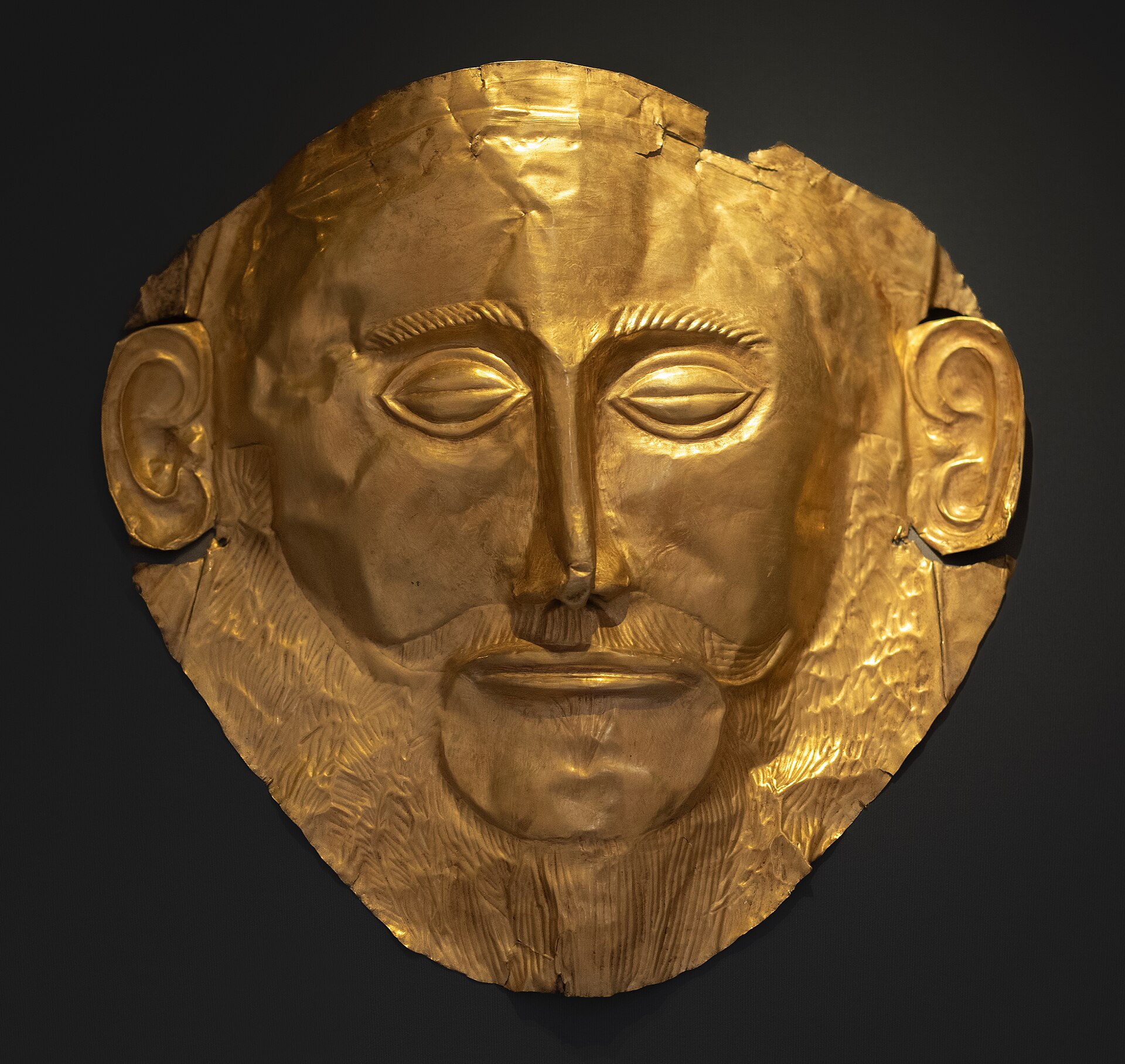
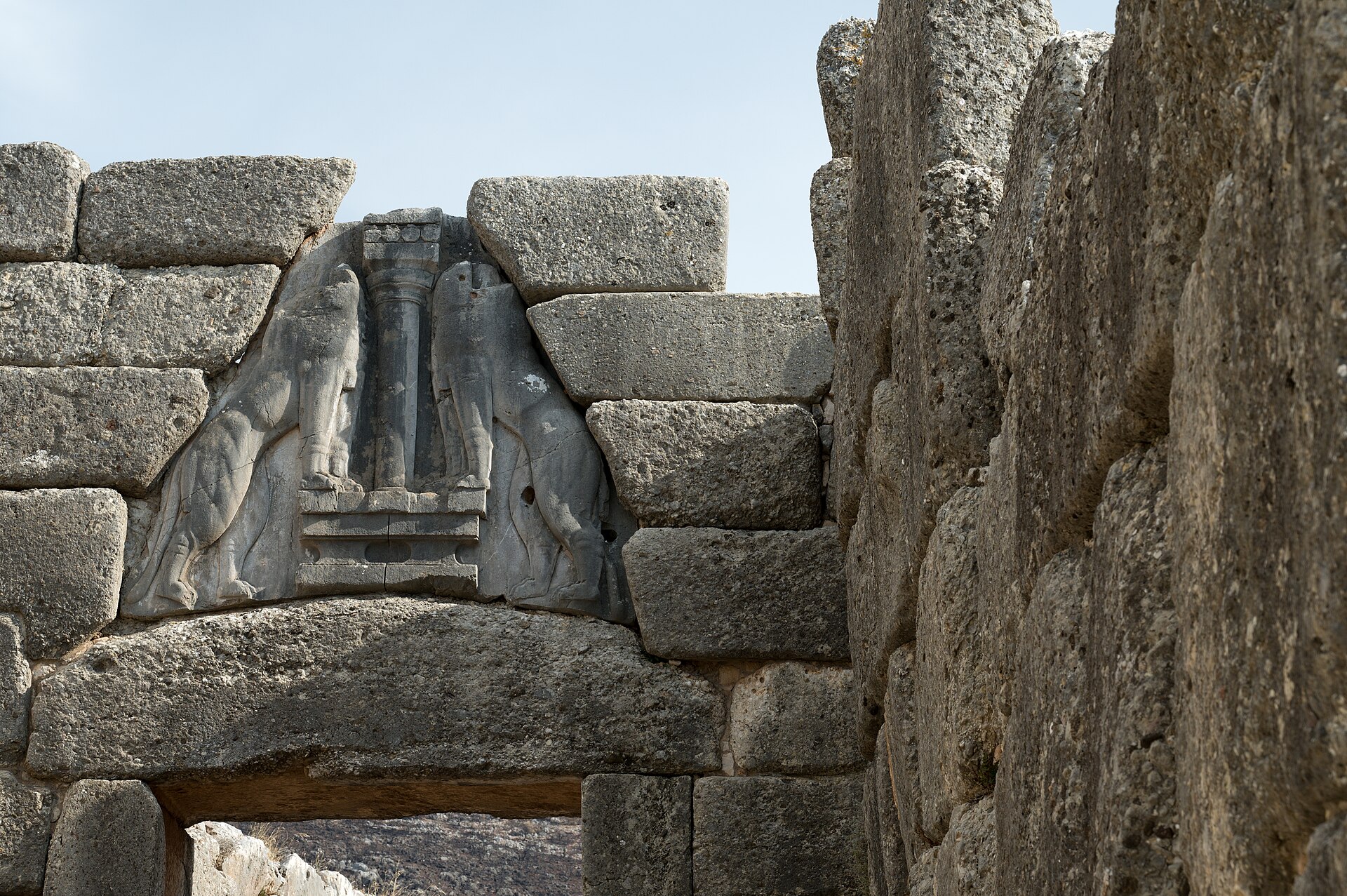
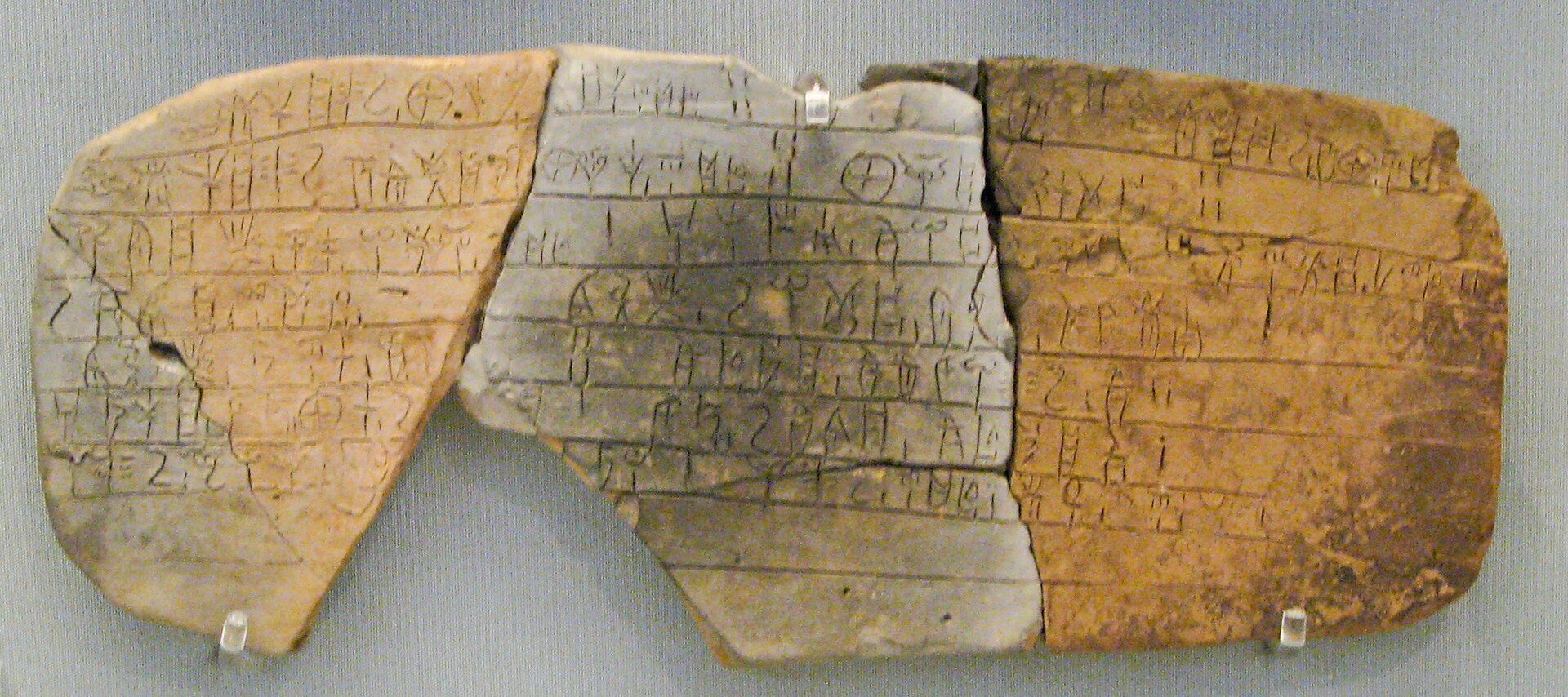
Mycenaean Greece was the first Greek civilization — the Bronze Age world of gold-masked kings, fortress-palaces and Homer’s half-remembered heroes. From citadels at Mycenae, Pylos and Tiryns, a warrior aristocracy ran palace economies that recorded every ration and weapon in Linear B, the earliest written form of Greek, and traded across the eastern Mediterranean. They built the Lion Gate, buried their lords with beaten-gold masks, and were powerful enough that the later Greeks remembered them as the men who sailed against Troy.
Then, around 1200 to 1100 BCE, it all came apart in the great collapse that took down most of the Bronze Age Mediterranean at once. The palaces burned — by raiders, earthquake, drought, revolt, or all of them; the evidence is still argued — and were not rebuilt. The most telling loss was knowledge itself: with the palaces gone, the bureaucracy that used Linear B vanished, and Greece simply forgot how to write. For roughly four centuries — the Greek Dark Ages — there are no inscriptions, few imports, and far fewer people. When literacy returned it was a new alphabet for a new world, and the Mycenaeans survived only as legend: a golden age the Greeks could feel behind them but could no longer read.
Worth remembering
- The palace scribes wrote everything down in Linear B — grain rations, bronze, lists of rowers — on unfired clay; only when the palaces burned around 1180 BCE did the fire bake the tablets hard enough to survive, so the records exist only because the world that kept them ended.
- The Shaft Graves at Mycenae held five gold death masks — including the beaten-gold 'Mask of Agamemnon' that Schliemann excavated in 1876 — and bronze swords inlaid with gold hunting scenes: the wealth behind Homer's memory of a city 'rich in gold', written down centuries after it had already fallen silent.
Gallery
Sources
- Mycenaean civilization flourished c. 1700–1100 BCE and collapsed in stages from c. 1230 to c. 1100 BCE amid earthquakes, the Sea Peoples, climate stress and internal unrest. World History Encyclopedia
- Mycenae's dominance in the Late Mycenaean period (1400–1100 BCE) reached the Cyclades, Crete, Cyprus and western Asia Minor; the city was burned around 1100 BCE. Encyclopaedia Britannica
- The 'Mask of Agamemnon', a beaten-gold death mask excavated by Schliemann in 1876, dates to c. 1600 BCE — some three centuries before any historical Trojan War. Smarthistory
A graveyard tradition: leave a stone to show you came, and remembered.