The first empire to unite nearly all India, whose greatest king Ashoka renounced war after Kalinga and whose last was murdered by his general Pushyamitra Shunga.
Born
322 BCE
Died
185 BCE
Lived
137 years
Dead for
2,211 yrs
Cause of death
Conquest
Replaced by
Shunga Empire
The Obituary
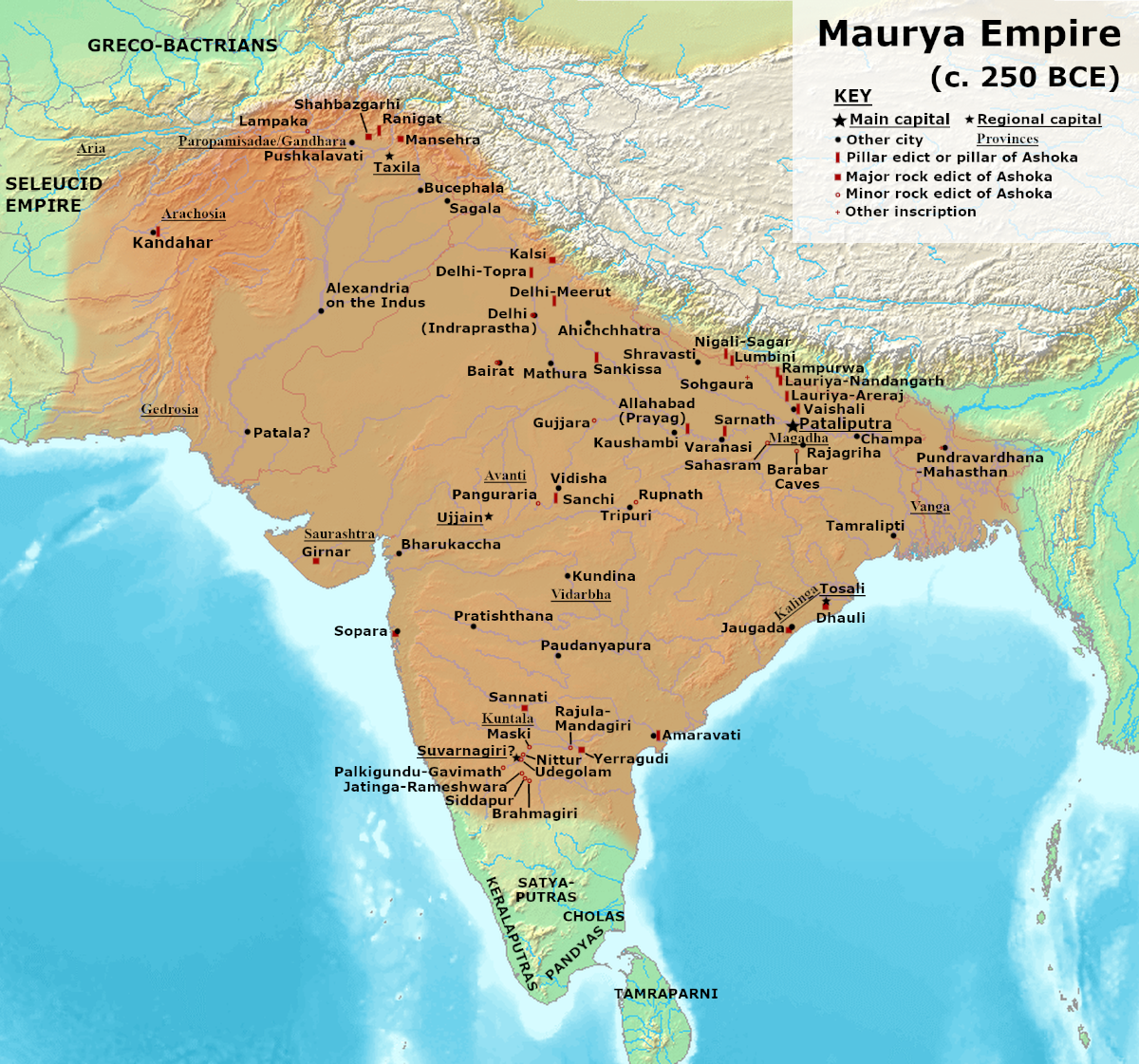
Chandragupta Maurya overthrew the Nanda dynasty and, advised by the strategist Chanakya, built the first empire to control most of the Indian subcontinent. His grandson Ashoka extended it further, then after the bloody conquest of Kalinga embraced Buddhism and promoted non-violence, dispatching missionaries as far as the Mediterranean. After Ashoka’s death the empire weakened under less able successors and provincial revolts. In 185 BCE the last Mauryan emperor, Brihadratha, was assassinated by his own army commander, Pushyamitra Shunga, who founded the Shunga Empire and ended Mauryan rule.
Worth remembering
Emperor Ashoka, sickened by the slaughter at Kalinga, converted to Buddhism and spread it across Asia.
Ashoka's edicts, carved on pillars and rocks, are among India's earliest decipherable writing.
Gallery
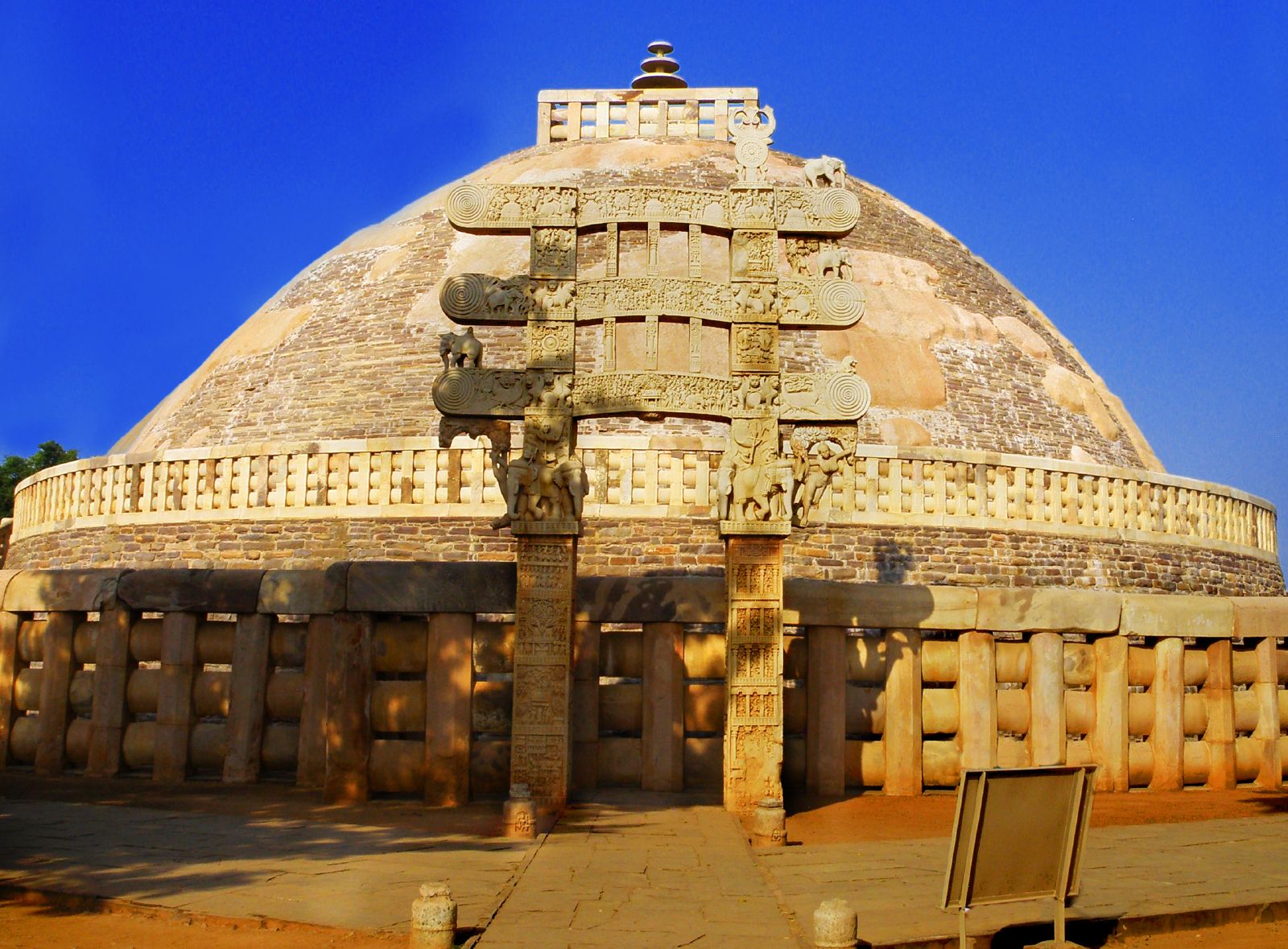
The Great Stupa at Sanchi viewed from the Eastern gatewayNandanupadhyay · CC BY-SA 2.0Map of the Maurya Empire at its greatest extent c. 250 BCEAvantiputra7 · CC BY-SA 3.0
Watch
Chandragupta, Ashoka and the Maurya Empire — Khan Academy
Sources
Maurya Empire founded c. 322 BCE by Chandragupta Maurya Wikipedia
Last Mauryan emperor killed in 185 BCE by his commander Pushyamitra Shunga Encyclopaedia Britannica
Chandragupta Maurya founded the empire after overthrowing the Nanda dynasty c. 322 BCE, advised by the strategist Chanakya, and at its height it encompassed most of the Indian subcontinent World History Encyclopedia
After the Kalinga war Ashoka issued edicts across the empire promoting dharma, non-violence, and religious tolerance, and dispatched Buddhist missions as far as Sri Lanka and the Hellenistic kingdoms World History Encyclopedia
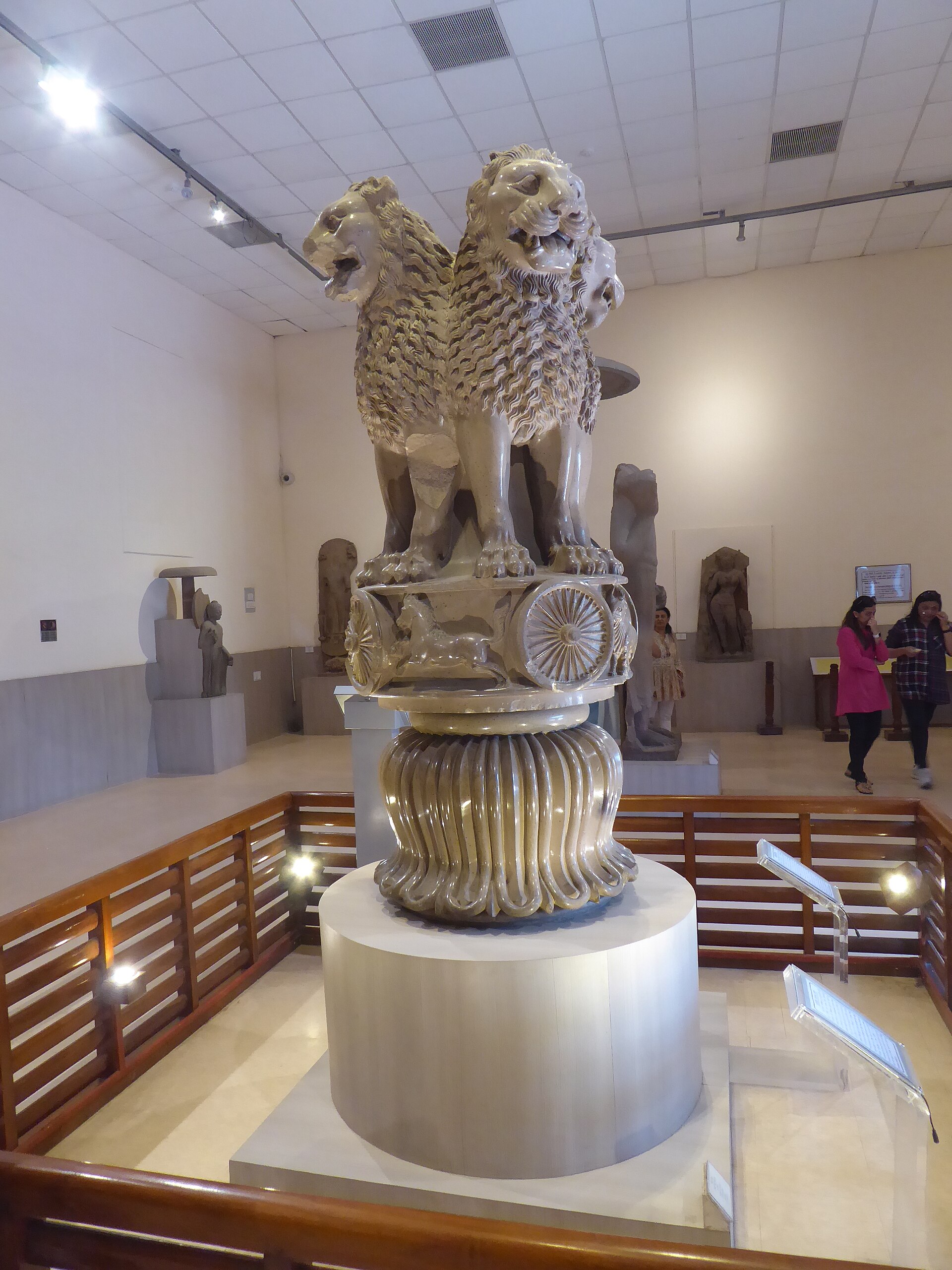
Ashoka erected pillar edicts at key sites across the subcontinent; the Lion Capital at Sarnath became India's national emblem Encyclopaedia Britannica
A graveyard tradition: leave a stone to show you came, and remembered.
Buried nearby — by shared fate or a neighbouring lifespan.