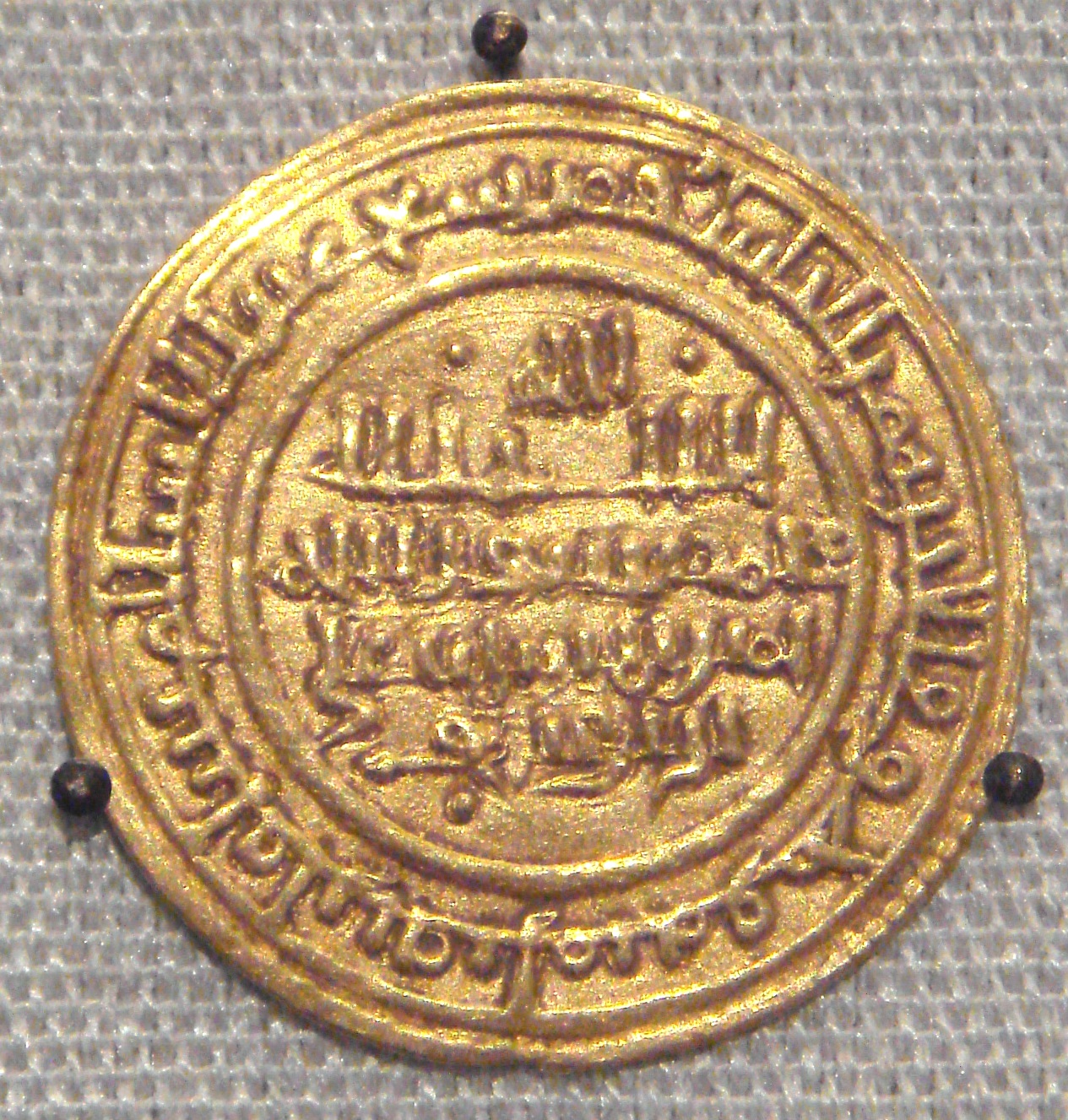
The Almoravids came out of the desert as a religious reform movement. Around 1040 the Lamtuna and other Sanhaja Berber tribes of the western Sahara, in what is now Mauritania and southern Morocco, were united under the preacher Abdallah ibn Yasin and a strict Maliki Islam. The Sanhaja men wore the litham, a veil drawn across the face below the eyes; contemporaries called the Almoravids al-mulaththamun, “the veiled ones,” and under their rule sumptuary law forbade anyone else from wearing it. They took Sijilmasa and the other trans-Saharan trade hubs, and the camel caravans that crossed the Sahara carried West African gold to Marrakesh, Fez, Tunis, and Cairo — at the medieval peak, two-thirds of the gold circulating in the Mediterranean came from West Africa. They founded Marrakesh around 1070 as their capital and minted gold dinars in quantity. In 1086 Yusuf ibn Tashfin crossed into Iberia and beat Alfonso VI of Castile at Sagrajas, halting the Reconquista, and absorbed al-Andalus. At its height the empire ran from Aoudaghost near the Senegal River to Zaragoza on the Ebro.
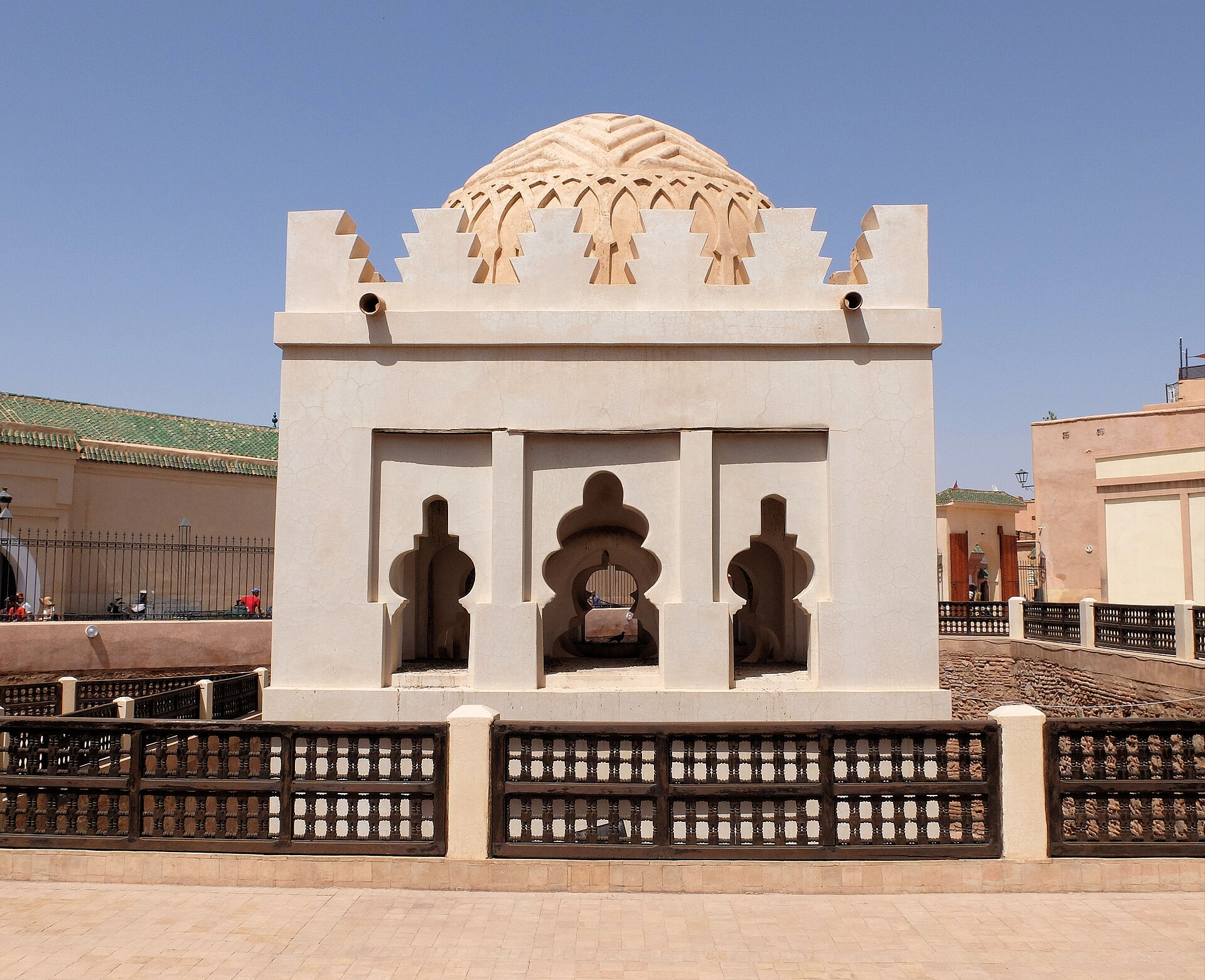
The movement that founded them was answered by another movement. Out of religious opposition to the Almoravid jurists came the Almohads, who declared the Almoravids’ creed corrupt. Their leader Abd al-Mu’min took Fez in 1146 and Marrakesh in 1147; the last Almoravid ruler, Ishaq ibn Ali, was killed when the city fell. There was no continuation — the dynasty was swallowed whole by the power that replaced it. Marrakesh did not vanish with it. The city the Almoravids built is still there, and the Almoravid Koubba, a small domed ablutions pavilion from the early 12th century, survives as the only intact Almoravid building in the city, buried and rediscovered in 1948. The walls and the cisterns outlasted the dynasty. The dynasty did not.
Worth remembering
- Founded Marrakesh around 1070 as the imperial capital of a desert movement, governing it as a centre of trade, religious scholarship, and the mint that struck their gold dinars — coins so trusted that Christian Iberia copied them as the maravedí.
- On 23 October 1086 Yusuf ibn Tashfin crossed into Iberia and crushed Alfonso VI of Castile at the Battle of Sagrajas (Zallaqa), halting the Christian Reconquista and bringing al-Andalus under Almoravid rule.
Gallery
Sources
- The Almoravids emerged from a coalition of the Lamtuna, Gudala, and Massufa, nomadic Berber tribes, around 1040 under the reformist preacher Abdallah ibn Yasin; Marrakesh was founded as the capital c. 1070. At their height the empire stretched from Aoudaghost in the south to Zaragoza in al-Andalus. On 23 October 1086 Yusuf ibn Tashfin defeated Alfonso VI at the Battle of Sagrajas (Zallaqa). The conquest of Marrakesh by the Almohads in 1147 ended Almoravid rule, and the last ruler, Ishaq ibn Ali, was killed. Wikipedia
- The Almoravid movement began among the Sanhaja Berbers of present-day Mauritania and southern Morocco and gained strength through alliance with the Lamtuna; the Almoravids seized trade hubs like Sijilmasa, dominating the trans-Saharan routes and minting gold dinars. In 1086 they defeated Alfonso VI at Sagrajas, bringing much of Islamic Spain under their rule, and established Marrakesh as their imperial capital. The Almohads gradually conquered Almoravid strongholds, culminating in the fall of Marrakesh in 1147. Medievalists.net (citing Azania: Archaeological Research in Africa)
- Camel caravans controlled by Sanhaja Berbers crossed the Sahara to bring West African gold to cities such as Marrakesh, Fez, Tunis, and Cairo; at the trade's peak, two-thirds of the gold moving around the medieval Mediterranean came from West Africa. World History Encyclopedia
A graveyard tradition: leave a stone to show you came, and remembered.