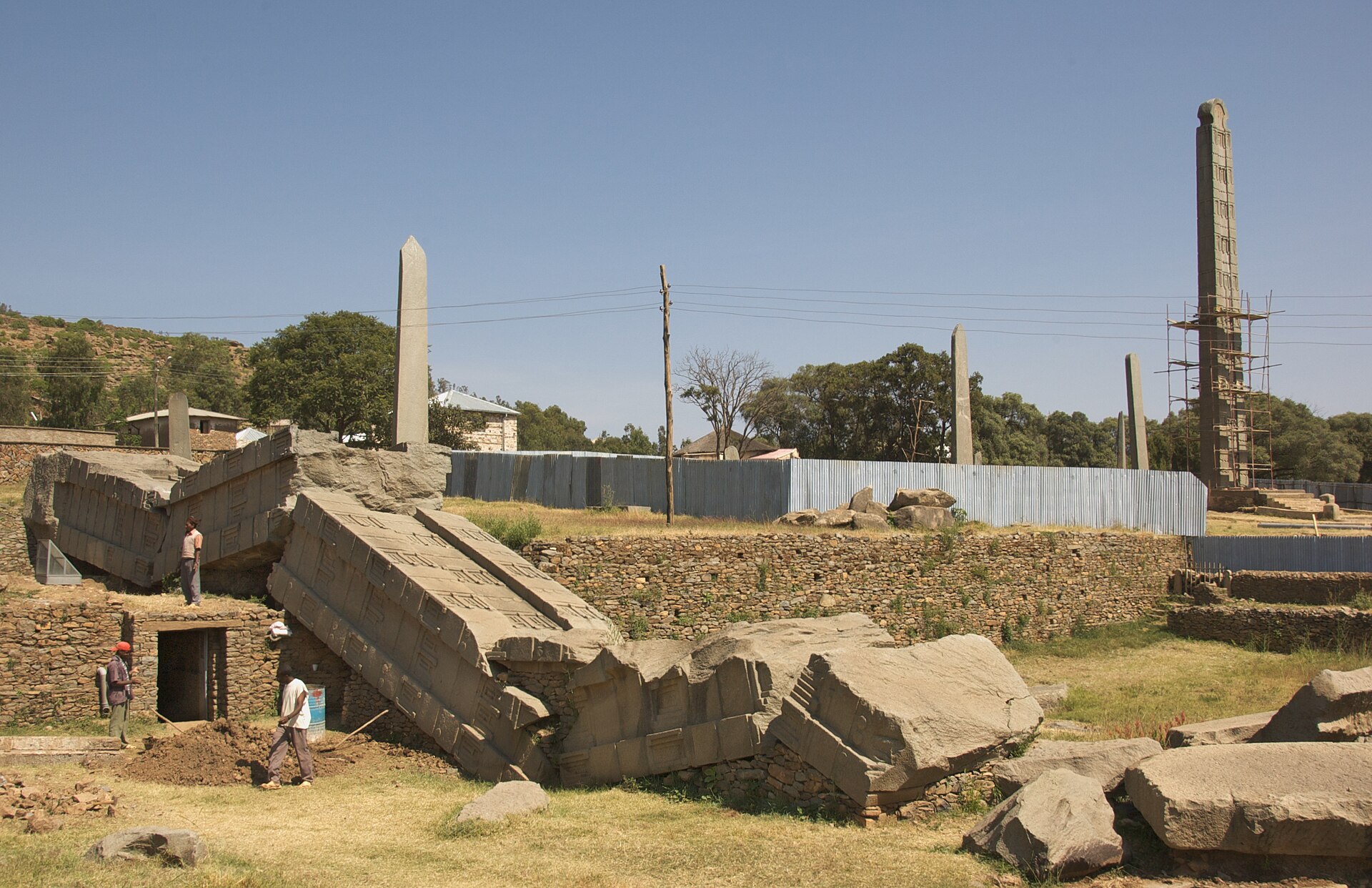
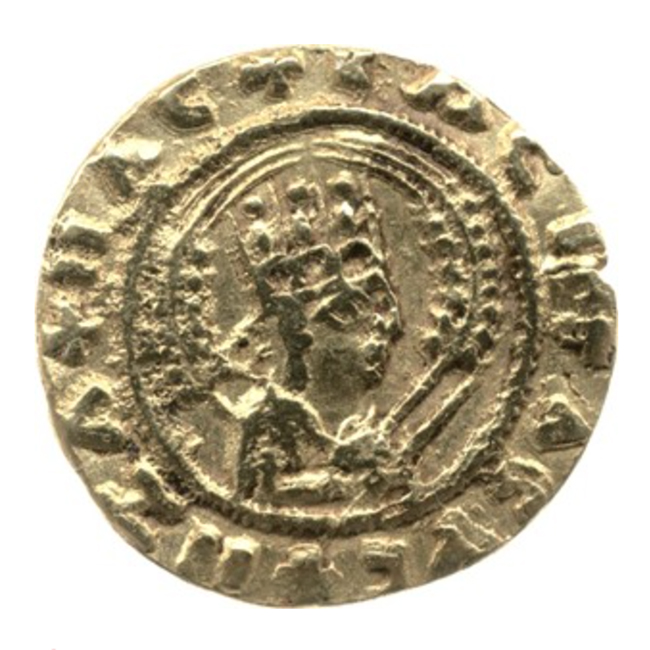
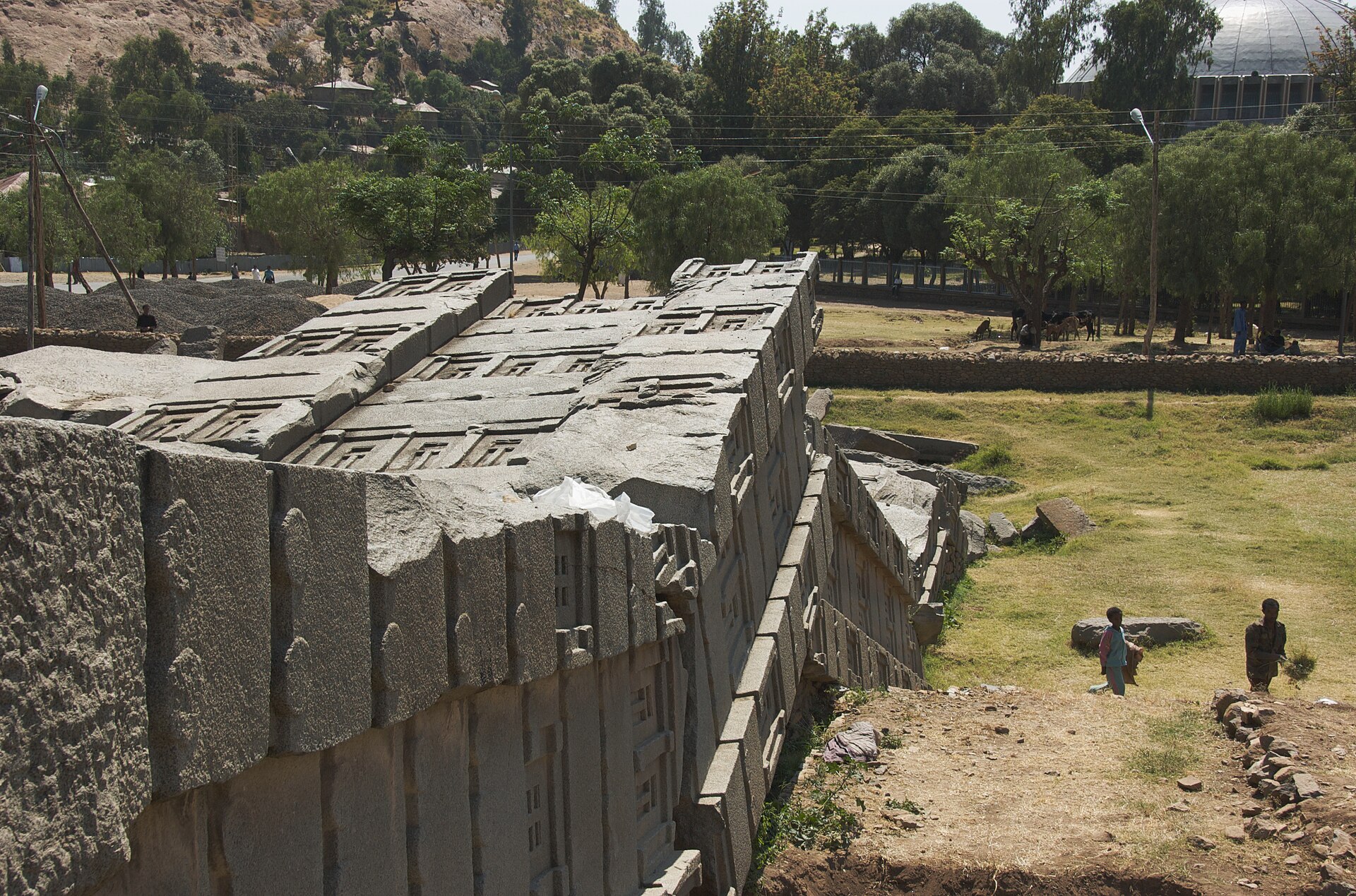
Aksum sat on the inland plateau of the northern Horn of Africa and lived off the sea it did not touch directly. Through its Red Sea port of Adulis it moved gold and ivory out of the African interior in exchange for Egyptian and Indian textiles, iron, glass, and weapons, and it taxed the traffic between Rome and India. From the 3rd century CE it minted its own coins in gold, silver, and bronze — the first sub-Saharan African state to do so — struck with Greek legends and Roman-standard weights so they would pass in foreign markets. Its kings raised granite stelae as grave markers; the largest, about 33 metres and 520 tonnes, was the heaviest single stone ever moved in antiquity, and it cracked while being stood upright. Around 340 CE King Ezana adopted Christianity and put a cross on his later coinage, possibly the first Christian coin in the world. The prophet Mani, writing in Persia in the 3rd century, listed Aksum with Rome, Persia, and China as the four kingdoms that surpassed all others.
The fall tracked the loss of the trade. Aksum’s wealth had come from controlling the Red Sea corridor, and when Arab Muslim shipping took over those waters in the 7th and 8th centuries, the customs and export revenue drained away; environmental overuse of the highland soils and Bedja raids pressed from the other side. By the late 8th century the empire as a Red Sea power had ceased to exist, and the centre of Ethiopian power drifted south into the highlands. Aksum the city outlasted the empire by two more centuries before it too went: tradition holds that around 960–970 CE a non-Christian rebel queen, Gudit, sacked the town, burned its churches, and the royal seat moved east, after which the Zagwe dynasty rose in the highlands. The Ethiopian church and the medieval highland kingdoms carried forward the Christianity and the dynastic claim, and they are still there — but the trading empire that Mani counted among the four great powers was gone, and the stelae standing in the field at Aksum are markers over its grave, not the thing itself.
Worth remembering
- Minted gold, silver and bronze coins from the 3rd century CE — the first sub-Saharan African state to do so — struck with Greek legends and Roman-standard weights for export; around 340 CE King Ezana added a cross, possibly the first Christian coin.
- Raised carved granite stelae as royal tomb markers; the Great Stela measured about 33 m (108 ft) and 520 tonnes, the largest single block transported anywhere in antiquity, and broke while being raised.
Gallery
Sources
- Aksum was the first sub-Saharan African state to mint its own coinage in gold, silver and bronze from the 3rd century CE, with Greek inscriptions and Roman-standard weights; its stelae reached 33 m and 520 tonnes, the largest monolith transported in antiquity. World History Encyclopedia
- The kingdom declined from the late 6th century due to environmental overuse, Bedja incursions and competition from Arab Muslim traders, and by the late 8th century CE the old Aksum empire had ceased to exist. World History Encyclopedia
- The 3rd-century Persian prophet Mani named Aksum one of the four great kingdoms of the world, alongside Babylon/Persia, Rome and Silis (China). African History Extra (Isaac Samuel)
- Gudit (Yodit/Judith) is the rebel leader to whom the downfall of the Aksumite Empire is traditionally ascribed; around 960–970 CE she is said to have laid waste to Aksum, destroyed its churches and monuments, and the seat of the kingdom was transferred away. Dictionary of African Christian Biography
A graveyard tradition: leave a stone to show you came, and remembered.