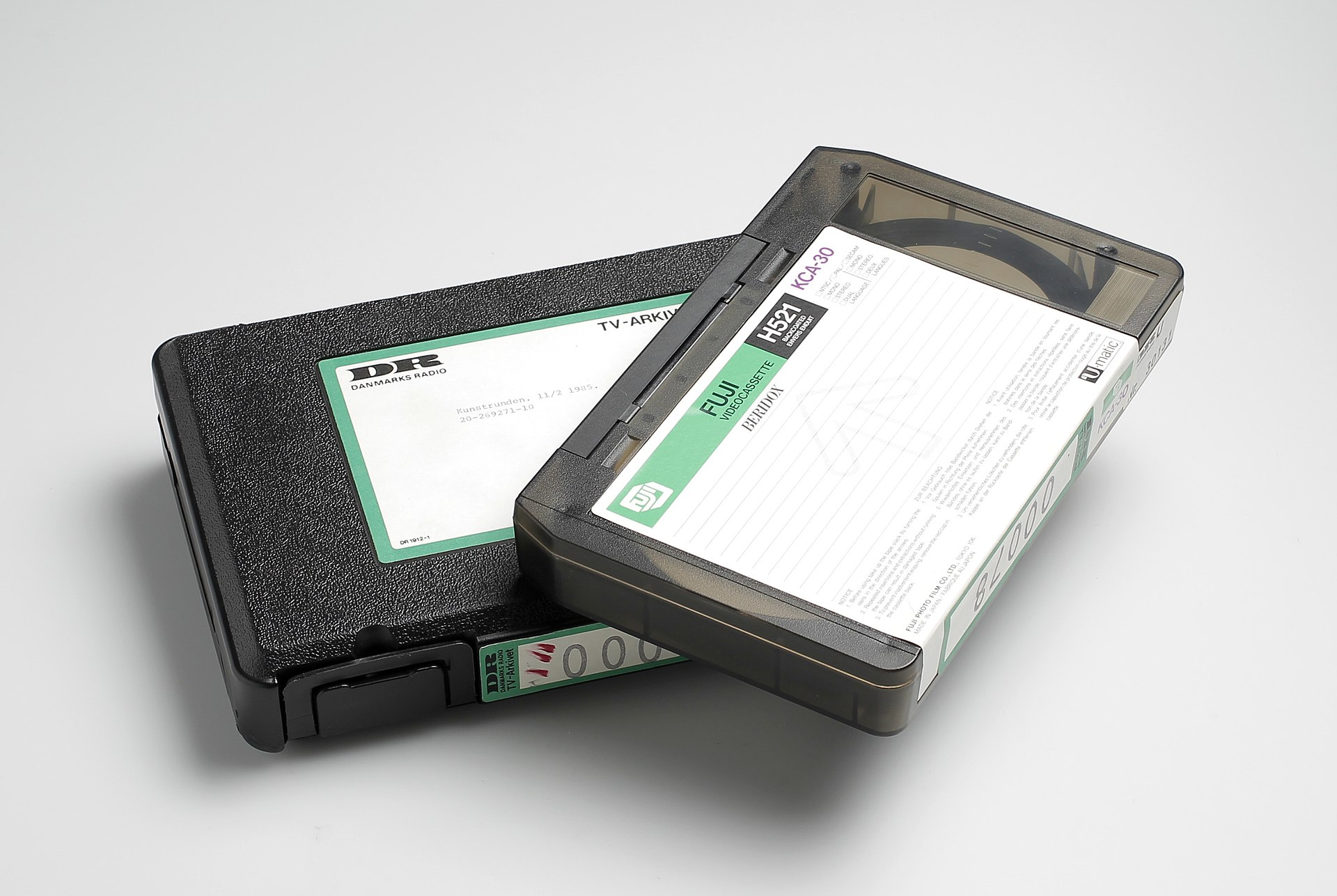
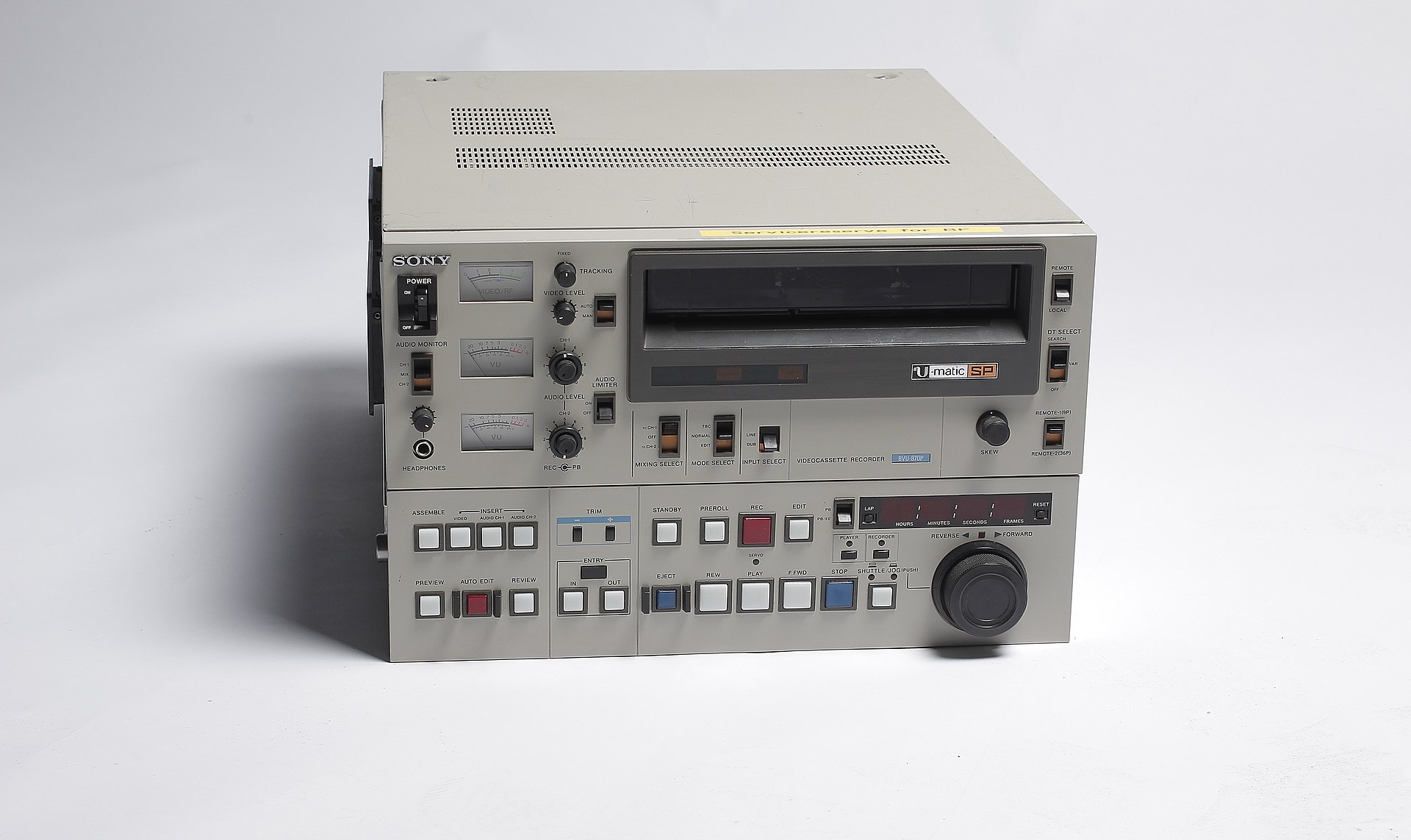
When Sony shipped the VO-1600 in September 1971, it put videotape inside a sealed cassette for the first time that anyone actually bought — no more threading open reels by hand. The 3/4-inch (19 mm) tape and one-hour cassette were too expensive for the living room Sony first aimed at, so the format went sideways into corporate training rooms, classrooms, and AV carts. Its real career began in 1974 with the portable VO-3800: a reporter and one operator could now shoot, and a station could cut and air the footage the same evening. That workflow, electronic news gathering, retired the 16mm film cameras that had covered on-location news for decades. Through the late 1970s and 1980s, and in the higher-quality BVU (Broadcast Video U-matic) line with SMPTE time code and XLR audio, the 3/4-inch deck was the standard fixture in local-station edit bays and network feeds worldwide.
Dominance ran out from below. Sony’s own 1/2-inch Betacam, and then Betacam SP, packed comparable broadcast quality into a smaller, lighter cassette, and by the early 1990s Betacam SP had pushed BVU out of everything but corporate and budget production. Digital formats finished the job over the following decade. Sony kept building decks for the long tail of tape libraries that still needed playback, then ended production in June 2004 and wound down technical support by 2016. The format that had once defined how television news got made became a transfer problem for archives — the National Film and Sound Archive of Australia now lists U-matic among the formats to digitise before the tapes and the surviving players give out.
Worth remembering
- Tape was 3/4-inch (19 mm) wide; standard cassettes recorded up to one hour, while the smaller U-matic S cassettes for portable decks held a maximum of 20 minutes.
- Sold first as a consumer machine in 1971 and flopping on price, it found its market in industry, education, and TV newsrooms, where the VO-3800 made tape-based news crews practical from 1974.
Gallery
Sources
- U-matic was introduced commercially in September 1971 by Sony, used 3/4-inch (19 mm) tape, and was among the first videocassette formats; the VO-1600 was the first U-matic deck. Wikipedia
- The portable Sony VO-3800 (1974) ushered in ENG (electronic news gathering), which made the previous 16mm film cameras used for on-location TV news obsolete. Wikipedia
- By the early 1990s Sony's 1/2-inch Betacam SP had all but replaced BVU outside corporate and budget programme-making; Sony discontinued U-matic in June 2004, with technical support ending in 2016. Wikipedia
- U-matic, developed by Sony and standardised in 1970, is a 3/4-inch tape format historically used for broadcast and institutional video; it is a preservation-priority format for archives. National Film and Sound Archive of Australia
A graveyard tradition: leave a stone to show you came, and remembered.