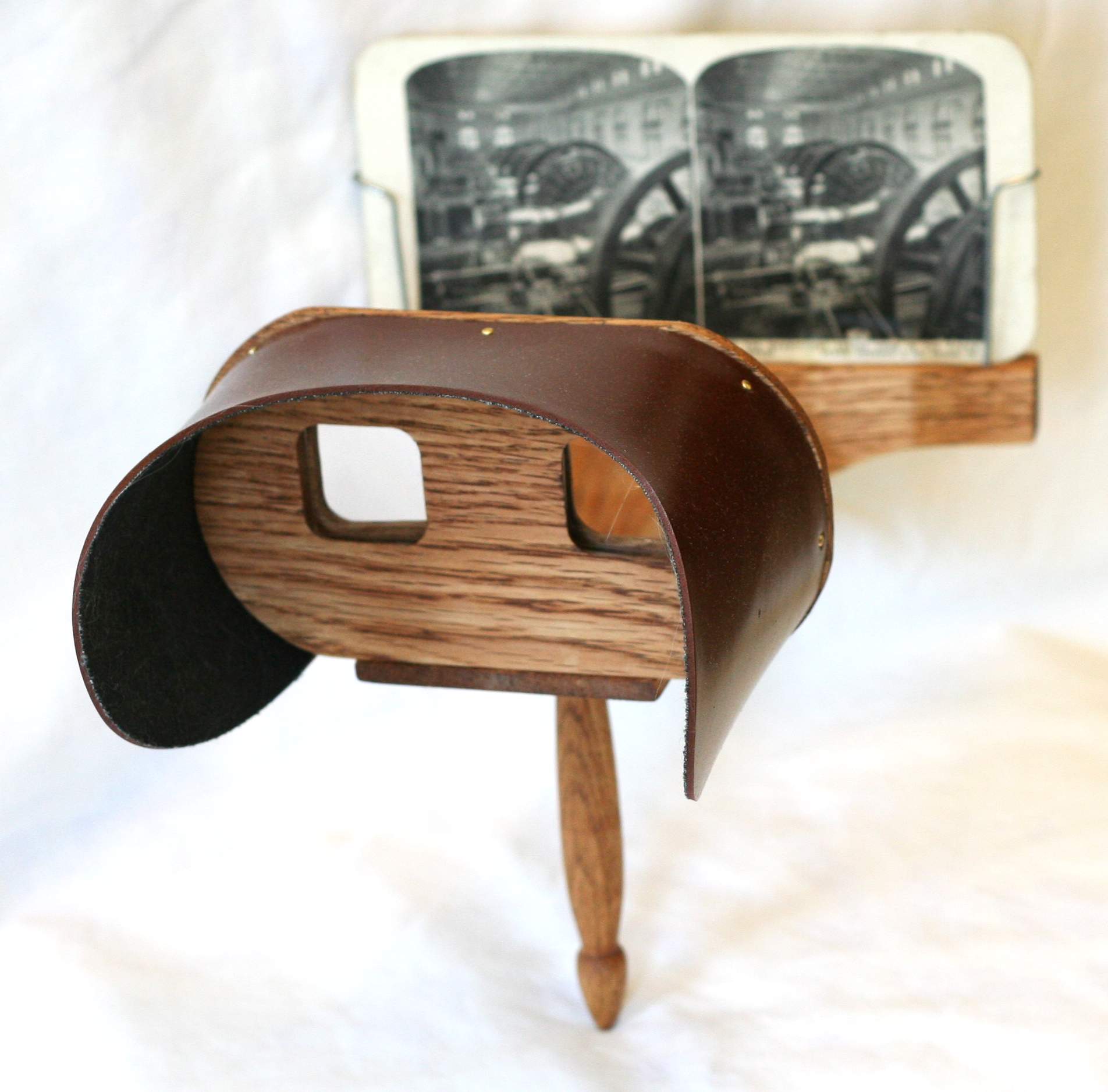
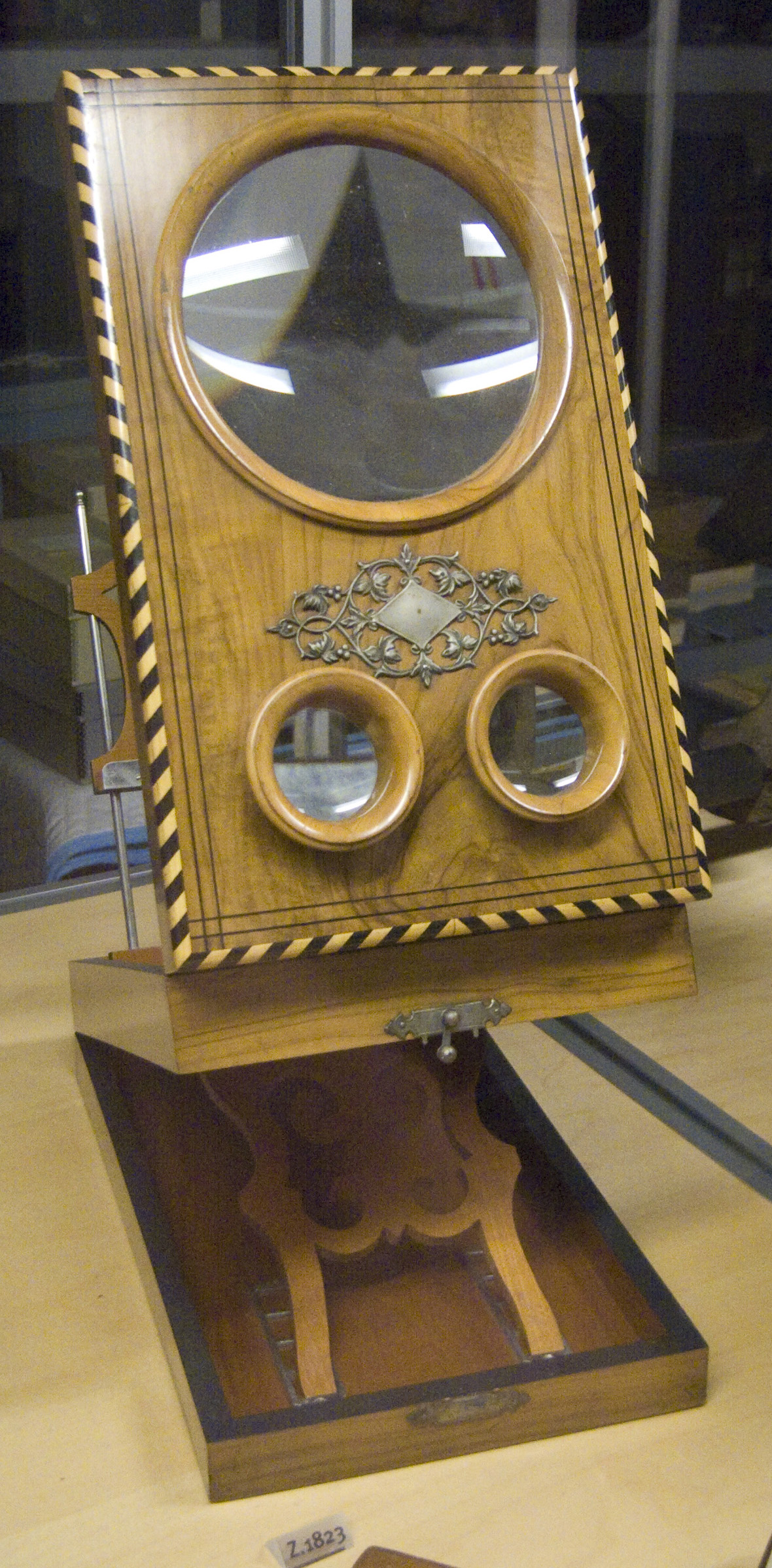
The stereoscope was the first machine that let an ordinary household look at a far-off place and feel its depth. Charles Wheatstone worked out the optics in 1838 — two photographs shot a little apart, one fed to each eye, fused by the brain into a single three-dimensional image — and David Brewster’s lens viewer made it portable. What made it universal was Oliver Wendell Holmes, who in 1861 designed a light, open-frame handheld viewer and deliberately never patented it. Cheap copies flooded out, and the stereograph card became the first photographic mass medium: a way to “visit” the pyramids, the Alps, a battlefield, or a world’s fair from a parlor chair.
The scale of it is easy to underestimate now. Two big American firms, Underwood & Underwood and Keystone View, ran it as heavy industry — Underwood printing on the order of 25,000 views a day at the turn of the century, Keystone buying up nearly every competitor’s catalogue until by 1921 it owned the largest stereo archive ever assembled. Cards came boxed as travel sets, news series from the Boer War and the First World War, and graded school packages with printed captions. For two generations, looking through the viewer of an evening was a normal thing to do.
Then better entertainments arrived. Moving pictures showed depth and motion both; radio filled the evening with sound; illustrated magazines made photographs cheap on every page. Underwood walked away from stereographs in 1920, and Keystone — propped up for a while by sales to schools — finally stopped its line in 1939, the year the Depression’s grip was still tight and, by coincidence, the year the View-Master debuted at the New York World’s Fair. The View-Master kept the trick alive as a children’s toy. The parlor medium that had shown the world to millions was over.
Worth remembering
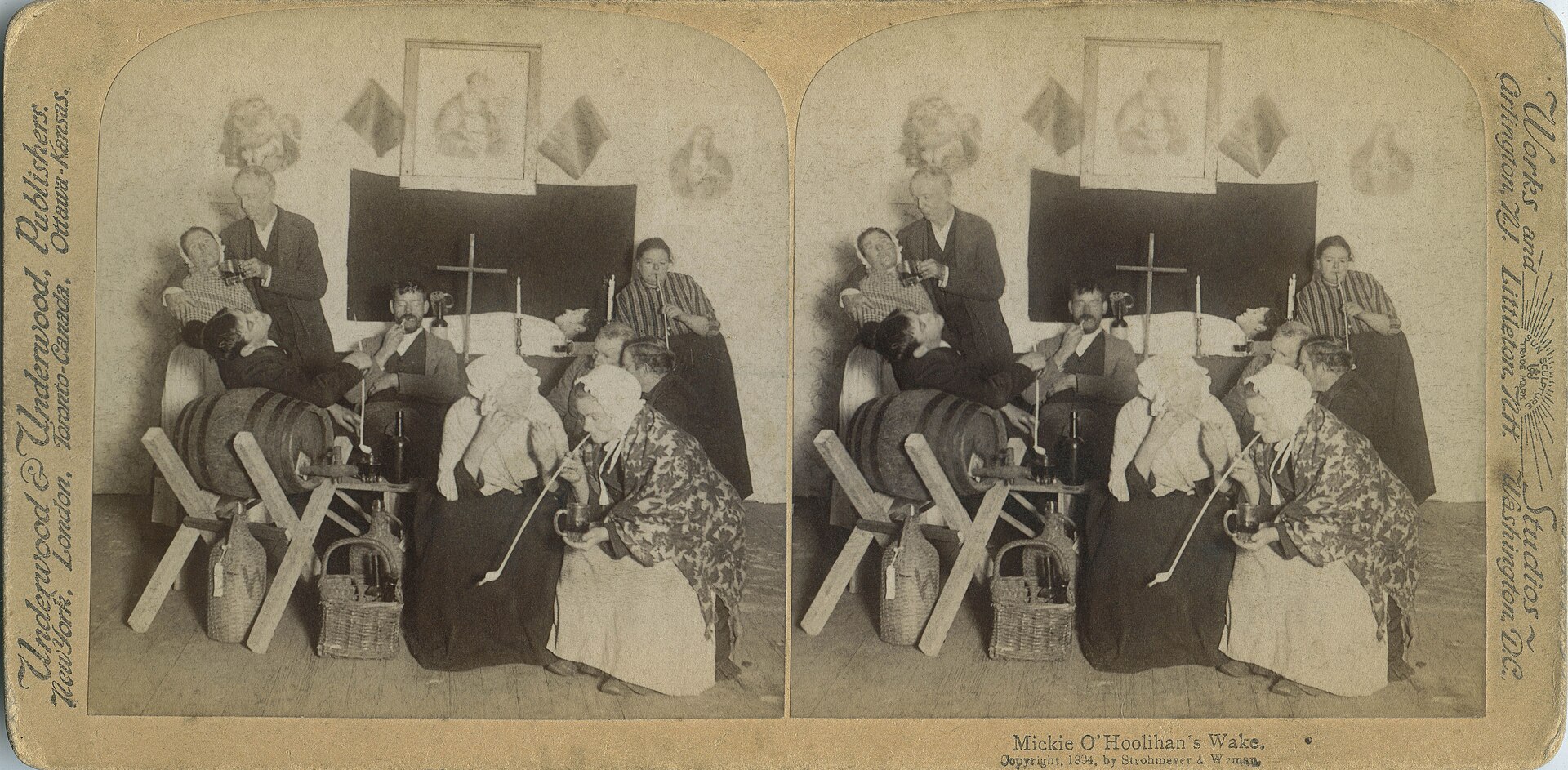
- Each card carried two almost-identical photographs taken about an eye's width apart; the viewer fed one to each eye and the brain fused them into a single scene with real depth — the same binocular trick your eyes do all day, frozen on a card.
- Oliver Wendell Holmes designed his viewer in 1861 and refused to patent it, so anyone could build it. The cheap copies that followed put stereographs into working-class homes and made it the first photographic mass medium; at its peak Underwood & Underwood was printing around 25,000 views a day.
Gallery
Sources
- Wheatstone described the stereoscope principle in 1838 and Brewster improved it with lenses; stereographs were immensely popular from the mid-1850s through the early 20th century Encyclopaedia Britannica
- The Holmes-type viewer dominated the market c. 1880–1940; by 1921 Keystone View owned the negatives and catalogues of almost all its competitors; the industry was overtaken by the rise of cinema and television Victoria and Albert Museum
- Keystone View Company, founded 1892, became the largest producer and discontinued stereograph production in 1939; the last manufacturing closed in 1972 Museum of Obsolete Media
A graveyard tradition: leave a stone to show you came, and remembered.