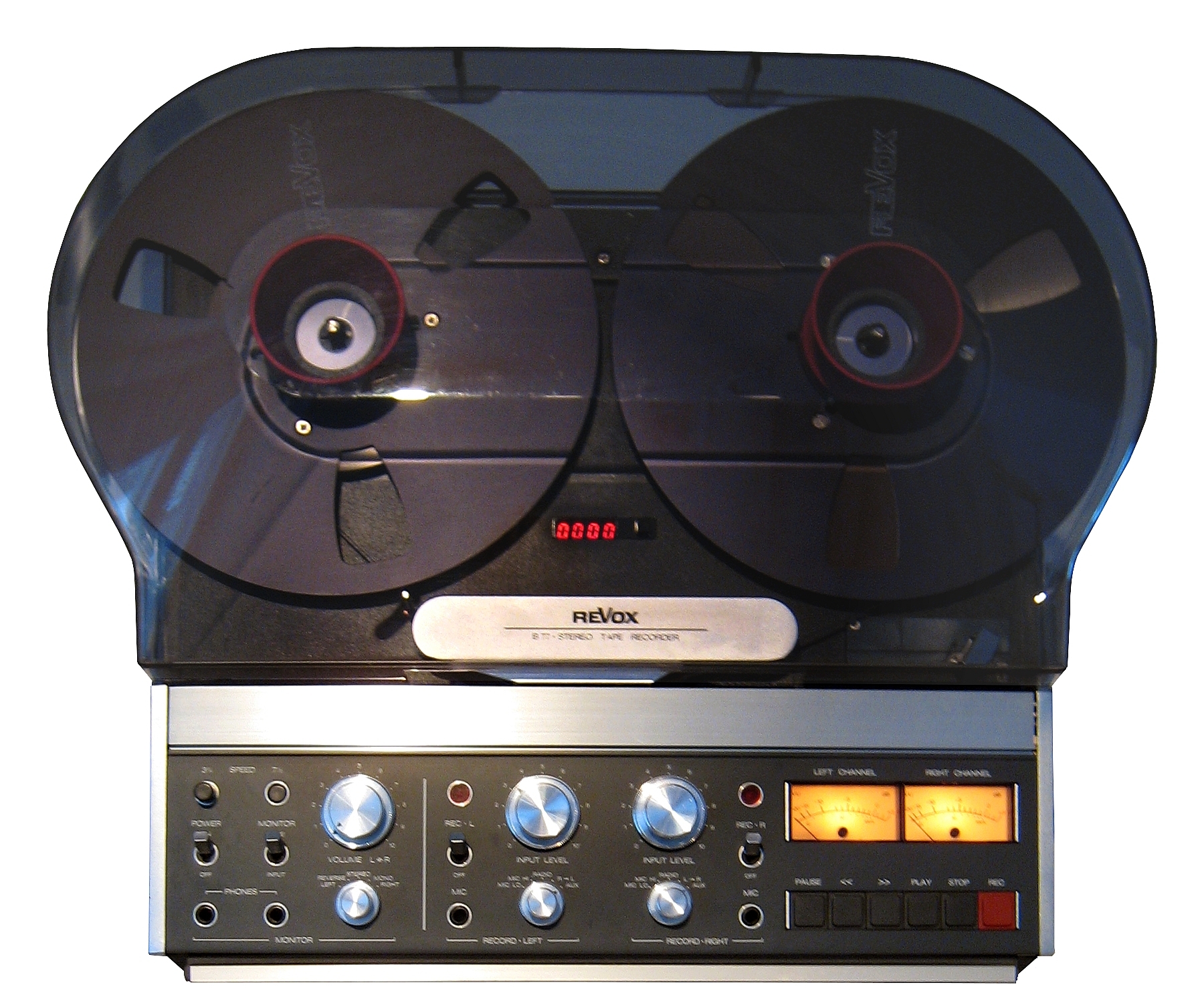
Reel-to-reel recorders pass magnetic tape from one open spool to another across a record/playback head, storing audio as magnetic patterns. The German AEG Magnetophon, shown at the Berlin Radio Show in 1935, proved the format; after American engineer Jack Mullin brought captured machines home in 1945 and demonstrated them to Bing Crosby, the US market opened. Ampex machines spread through broadcasting and studios in the 1950s, home models followed, and through the 1960s and 1970s open-reel was the audiophile standard — wide tape at 15 inches per second produced fidelity no rival matched.
Philips launched the compact cassette in 1963, and convenience won. Cassettes were smaller, easier to thread and steadily more capable. By 1976 prerecorded reel tape had nearly disappeared from shops, and most makers dropped consumer models by the early 1980s. Professional studios held on until digital multitrack eclipsed the format in the 1990s. A small audiophile revival, prizing the format’s warmth and headroom, keeps a few specialist suppliers alive.
Worth remembering
- Bing Crosby funded Ampex's commercial reel-to-reel machines in 1947 so he could pre-record his radio shows instead of performing live — the first major US star to broadcast from tape.
- Studio albums from the 1950s to the 1970s were recorded and mixed on reel-to-reel; wide tape at high speeds enabled the multitrack recording that defined rock, jazz and pop.
Gallery
Watch
Sources
- The AEG Magnetophon was unveiled at the Berlin Radio Fair in 1935; the US consumer market opened via Ampex after the war; prerecorded reel tape had nearly vanished from retail by 1976. Wikipedia
- Peak consumer use of reel-to-reel was the 1960s-70s; digital recording in the 1980s further marginalised analog open-reel. Hi-Fi Hall of Fame
- The compact cassette took over music playback for convenience, and digital audio tape ended reel-to-reel in the music industry. DiJiFi
A graveyard tradition: leave a stone to show you came, and remembered.