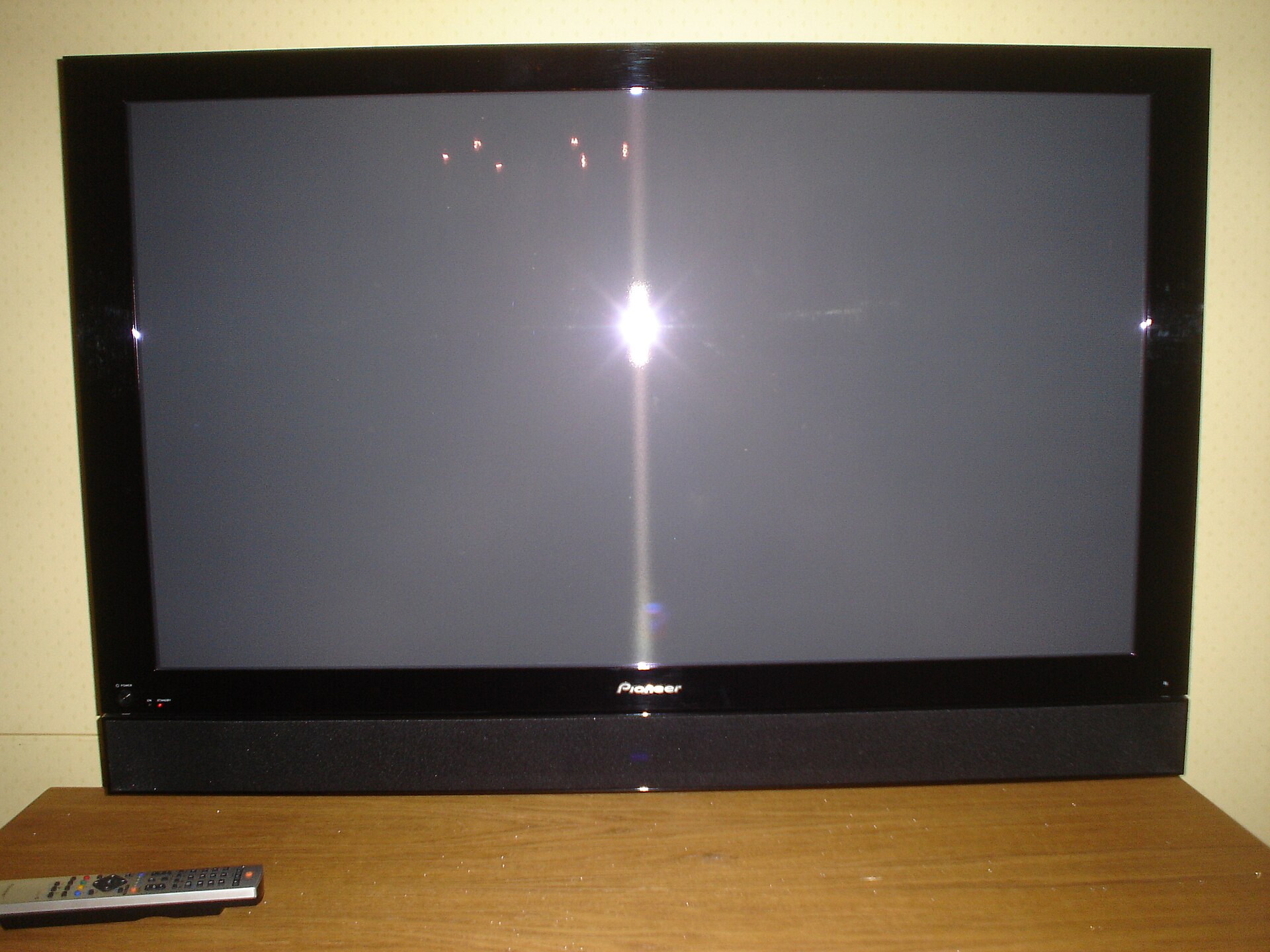
Plasma television was the first technology to deliver a large, thin, wall-mountable TV screen with genuinely good picture quality. Invented at the University of Illinois in 1964 and commercialised in 1997, it worked by exciting plasma gas cells that lit individual phosphor pixels — producing deep blacks and fast motion response that LCDs of the era could not match. At $14,999 for a 42-inch Philips (the 42PW9962) in 1997, it was aspirational hardware; by the mid-2000s prices had dropped enough for mass adoption, and global shipments peaked at 18.2 million units in 2010.
The problem was LCD’s cost trajectory. LCD manufacturing scaled faster, prices fell further, and by 2006 the crossover had begun. Pioneer stopped plasma production in 2009. By 2013 plasma had lost nearly all market share. Panasonic, the format’s last committed champion, announced the end of plasma production in late 2013, with final manufacturing stopping in March 2014. Samsung and LG followed the same year. A technology that went from $15,000 curiosity to mass-market format to extinction in under 20 years.
Worth remembering
- In 2008, plasma still outsold LCD in screens above 50 inches, which was the only size where plasma's contrast and motion performance held an advantage; that segment was gone by 2010 as LCD prices fell.
- Pioneer's Kuro plasma panels, discontinued in 2009, are still cited by home-cinema enthusiasts as the best consumer display technology ever produced — abandoned not because better plasma existed but because the market had moved on.
Gallery

Sources
- First commercial plasma TV (Philips 42PW9962) sold in 1997 at $14,999; Panasonic shipped 19.1 million panels in 2010; plasma production ended 2014 Wikipedia
- Plasma displays were superseded in most if not all aspects by OLED displays; by 2013 had lost nearly all market share to LCD Wikipedia
- Plasma display panels could be manufactured in large sizes up to 50 inches diagonally and were exceptionally thin Encyclopaedia Britannica
A graveyard tradition: leave a stone to show you came, and remembered.