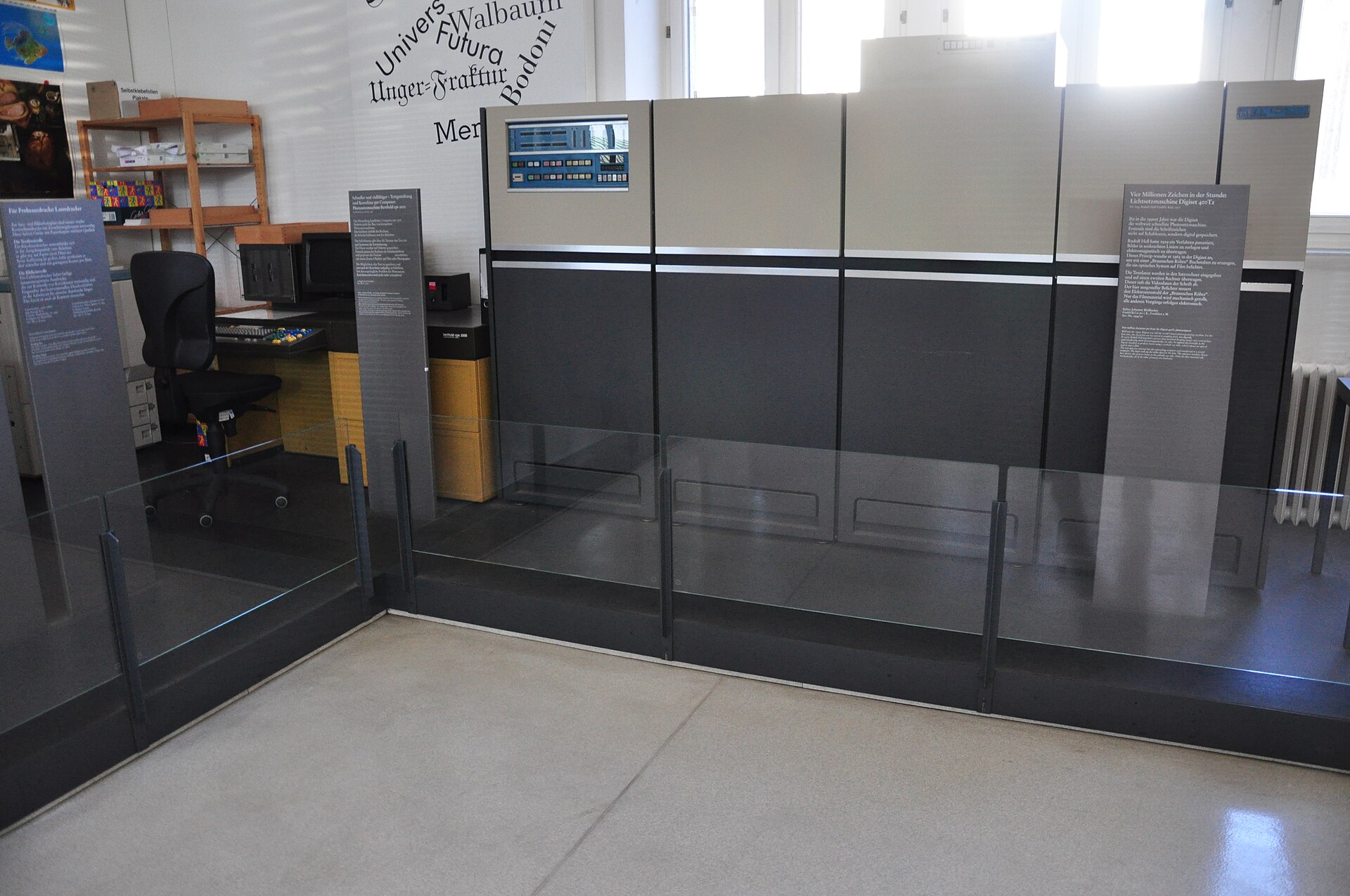
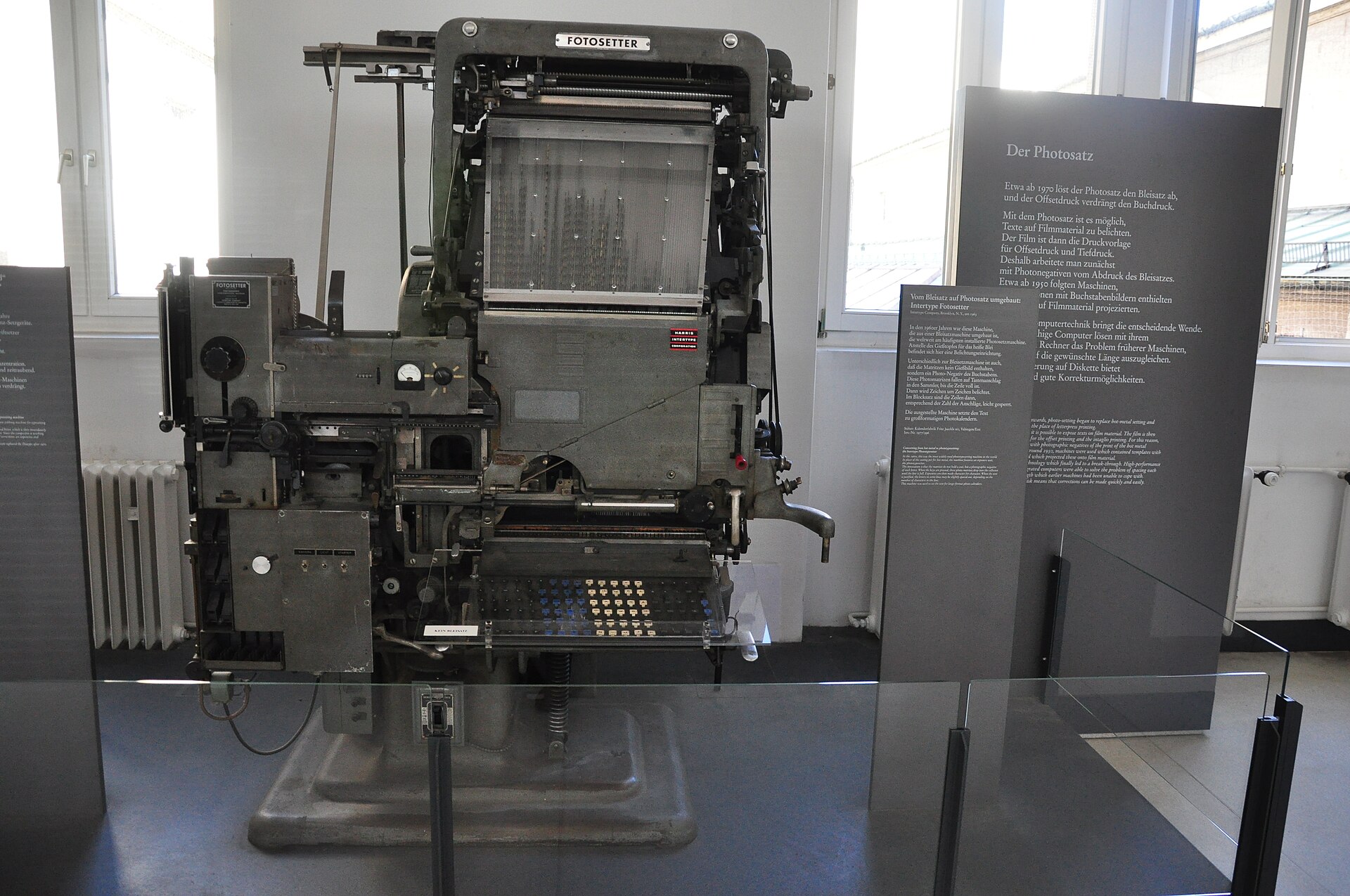
From the Lumitype and Intertype Fotosetter onward, a machine that set type with beams of light onto film — bridging hot-metal type and the desktop-publishing computer that finally retired it.
Born
1949 CE
Died
1995 CE
Lived
46 years
Dead for
31 yrs
At its peak
Standard typesetting method from the 1960s into the 1980s
Cause of death
Replaced
Replaced by
Desktop publishing and digital imagesetters (PostScript)
The Obituary
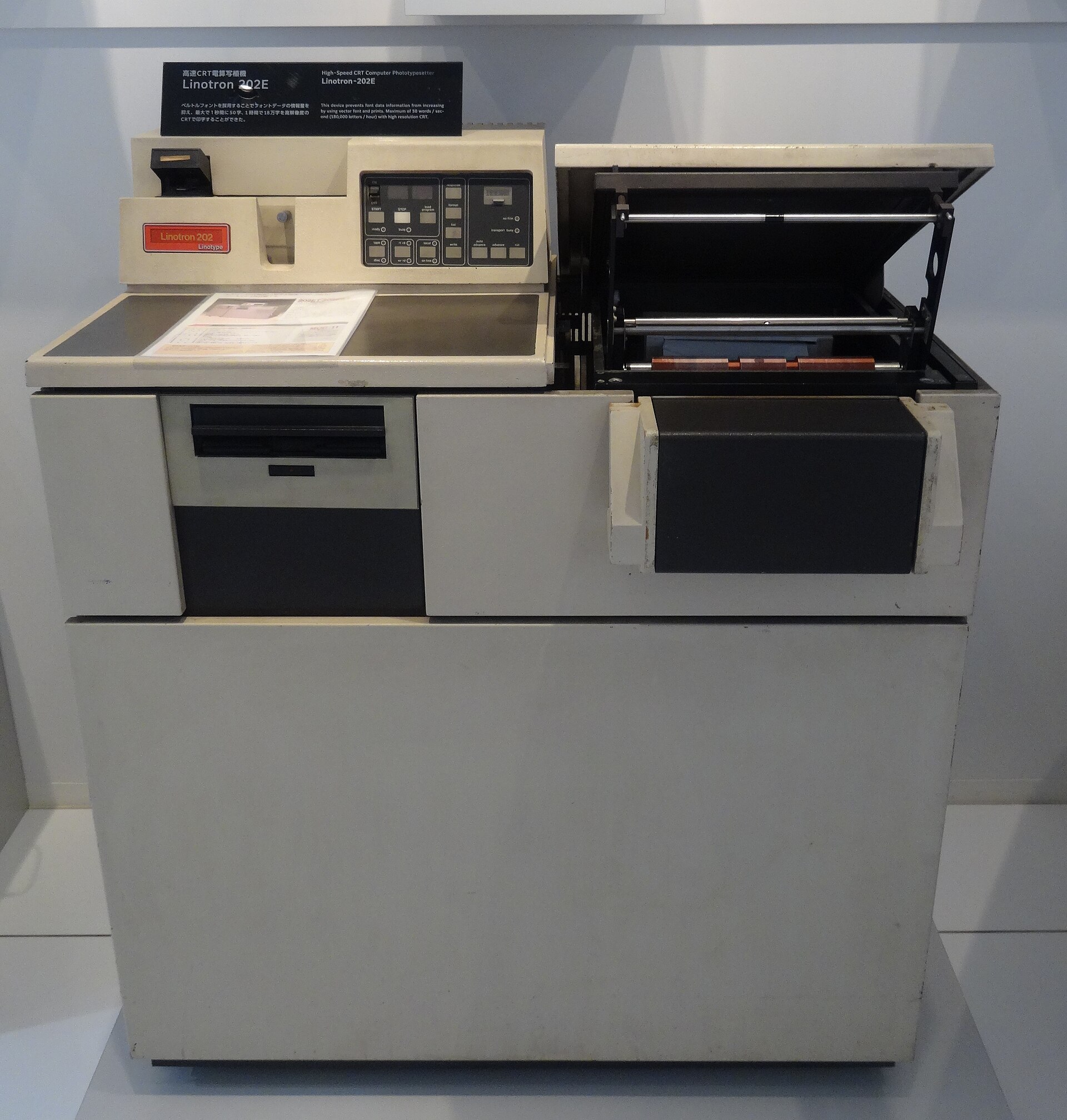
Phototypesetting replaced hot metal with light. Emerging around 1949-1950 with machines like the Intertype Fotosetter and the Lumitype, it stored each character as a small photographic image — on a spinning disc, drum, or film strip — and flashed it through a lens onto light-sensitive paper or film. The exposed sheets were developed and pasted up into pages. Without molten lead, type could be enlarged, condensed, and overlapped freely, and composing rooms grew quieter and cleaner. It reigned from the 1960s into the 1980s, then desktop publishing put the whole process inside a personal computer driving a digital imagesetter, and the photographic machines were retired.
Worth remembering
Early units flashed type through a spinning disc or film strip of character images onto light-sensitive paper.
It freed designers from fixed metal sizes — type could be scaled and overlapped on film.
Gallery
A Linotron 202E high-speed CRT computer phototypesetterうぃきの郎 · CC BY-SA 4.0An Intertype Photosetter phototypesetting machineFox Wu from Baden-Baden, Germany · CC BY 2.0
Sources
Phototypesetting projected characters onto photographic film or paper Wikipedia
Phototypesetting replaced hot-metal type and was itself replaced by digital DTP Britannica
Phototypesetting compositors set type photographically as a skilled trade until desktop publishing displaced them in the 1980s. CreativePro
A graveyard tradition: leave a stone to show you came, and remembered.
Buried nearby — by shared fate or a neighbouring lifespan.